Headline
Trump’s trade tariffs take center stage at ASEAN summit as leaders seek new markets

ASM, Philippine Canadian Inquirer
November 16, 2026
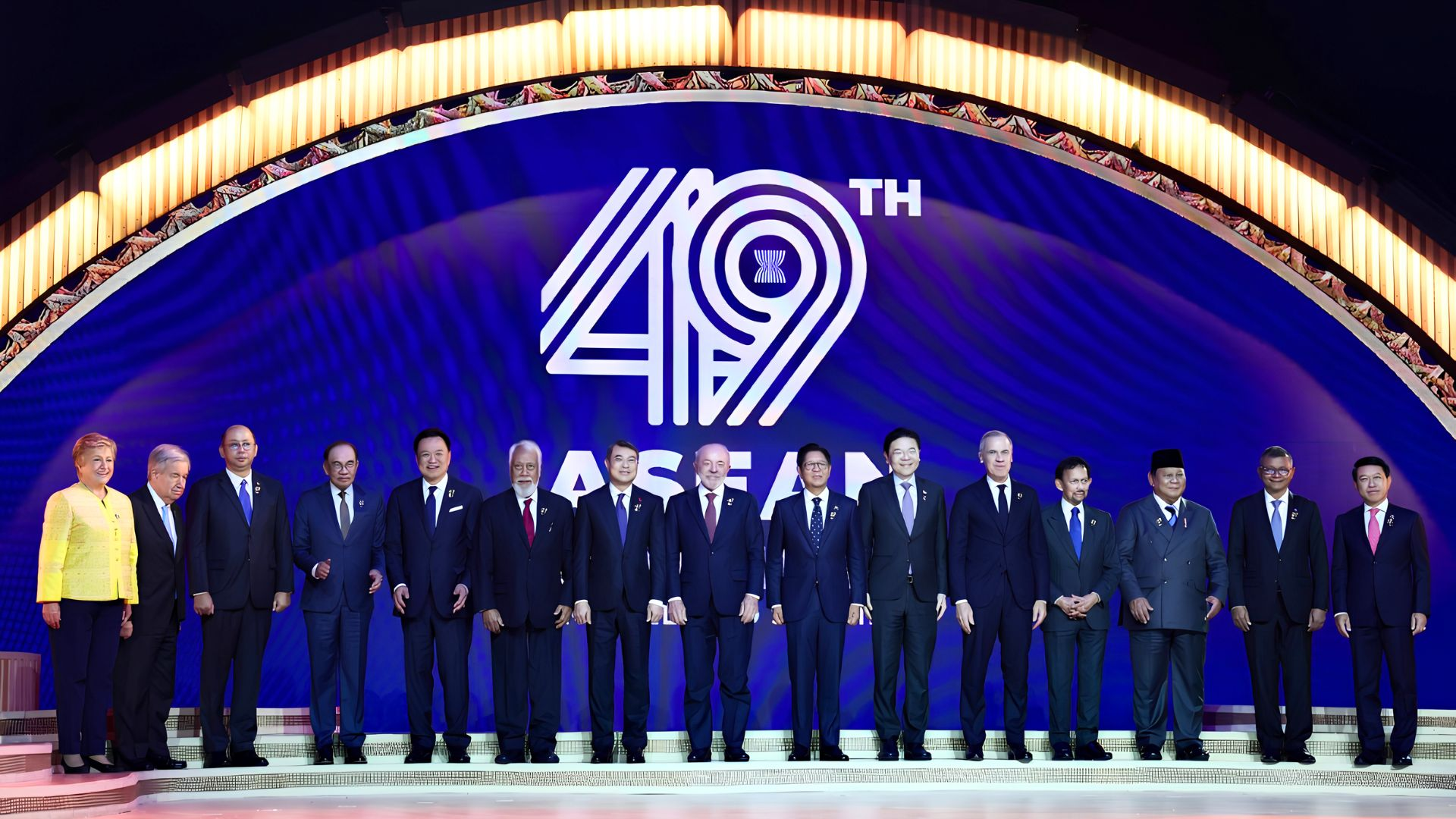
Photo courtesy: AFP
MANILA, Philippines — Rising trade tensions with the United States have become a major focus of the 49th ASEAN Summit in Manila, with leaders from Canada and Brazil seeking stronger economic partnerships to reduce their dependence on the American market.
The discussions come ahead of US President Donald Trump’s expected arrival on November 17, as Southeast Asian leaders also address regional security concerns, the South China Sea dispute and the ongoing crisis in Myanmar.
Brazilian President Luiz Inácio Lula da Silva said Washington’s tariffs had pushed his country to pursue new trading partners instead of relying heavily on the United States.
Speaking to reporters during the summit on November 15, Lula said Brazil had learned an important lesson from the US decision to impose higher tariffs on foreign goods.
He pointed to growing trade with Southeast Asian economies, reporting increases of 15% with Indonesia and 13% with Vietnam.
The figures, cited by Lula, reflect Brazil’s efforts to expand its commercial relationships as countries respond to changes in US trade policy.
Canada strengthens economic ties with Asia
Canadian Prime Minister Mark Carney has also made reducing reliance on the United States a priority of his government’s trade strategy.
During his visit to Manila, Carney announced that Canada had completed negotiations for a bilateral free trade agreement with the Philippines and substantially concluded negotiations for a separate agreement with the Association of Southeast Asian Nations (ASEAN).
The agreements are intended to reduce trade barriers, open new markets and create more opportunities for Canadian businesses.
According to the Canadian government, the proposed ASEAN agreement could add nearly C$2 billion to Canada’s economy and support approximately 14,000 jobs once implemented.
The Philippines and Canada are working toward signing their bilateral agreement in 2027. Canada is also targeting 2027 for the signing of its agreement with ASEAN.
Carney said building a broader network of international partners would help Canada strengthen its economy and become less dependent on the US market.
He also met with Lula on the sidelines of the summit on November 15.
Lula later confirmed that he had invited Carney to visit Brazil and expressed interest in doubling trade between the two countries.
Canada’s official schedule confirmed that the meeting between the two leaders was arranged for November 15.
Trump’s arrival draws protests in Manila
Trump’s upcoming visit has also prompted demonstrations in the Philippine capital, particularly over a US-backed supply chain initiative known as Pax Silica.
The program seeks to strengthen supply chains for semiconductors, artificial intelligence technologies and critical minerals.
Critics have raised concerns about a proposed 1,620-hectare industrial development north of Manila, including its possible effects on Indigenous communities.
Around 200 protesters gathered near the summit venue on November 15, with some carrying signs opposing Trump’s visit and the proposed project.
Police blocked demonstrators attempting to approach the summit site. At least three protesters were seen being taken into custody during the confrontation.
Nearly 20,000 police personnel have been deployed across Metro Manila to provide security during the high-level meetings.
US Ambassador to the Philippines Lee Lipton previously clarified that there had been no plan to sign a Pax Silica agreement during Trump’s visit, despite speculation about a possible announcement.
Regional security remains on the agenda
Beyond trade, ASEAN leaders are dealing with unresolved disputes that could carry into Singapore’s chairmanship in 2027.
Negotiations between ASEAN and China over a proposed South China Sea Code of Conduct remain unfinished.
Foreign Affairs Secretary Ma. Theresa Lazaro said the draft was approximately 80% complete, but disagreements have prevented the parties from reaching a final agreement.
The proposed code aims to establish rules for managing maritime activities and reducing the risk of confrontations in disputed waters.
ASEAN members are also divided over how to address the continuing conflict in Myanmar.
The country’s military has been excluded from high-level ASEAN political meetings since the 2021 coup, although some member states have called for greater engagement with Myanmar’s authorities.
Lazaro said there had been no change in ASEAN’s approach toward Myanmar despite those calls.
Trump set for high-level meetings
Trump is scheduled to arrive in Manila on November 17, near the conclusion of the three-day summit.
His visit is expected to include talks with leaders of the Quadrilateral Security Dialogue, known as the Quad, which brings together the United States, India, Japan and Australia.
The meeting would be the first involving the four leaders during Trump’s second presidential term.
A separate bilateral meeting between Trump and Philippine President Ferdinand Marcos Jr. is scheduled for November 18.
The US president’s visit comes as Canada and other trading partners pursue new economic agreements across Asia, while ASEAN continues negotiations on regional security and maritime disputes.
The Canada-Philippines and Canada-ASEAN trade agreements have not yet been signed. Both are targeted for signature in 2027, following the completion of their remaining procedures.