Headline
US trade policies take center stage at ASEAN summit ahead of Trump’s Manila visit

Floyd Brenz., Philippine Canadian Inquirer
November 15, 2026
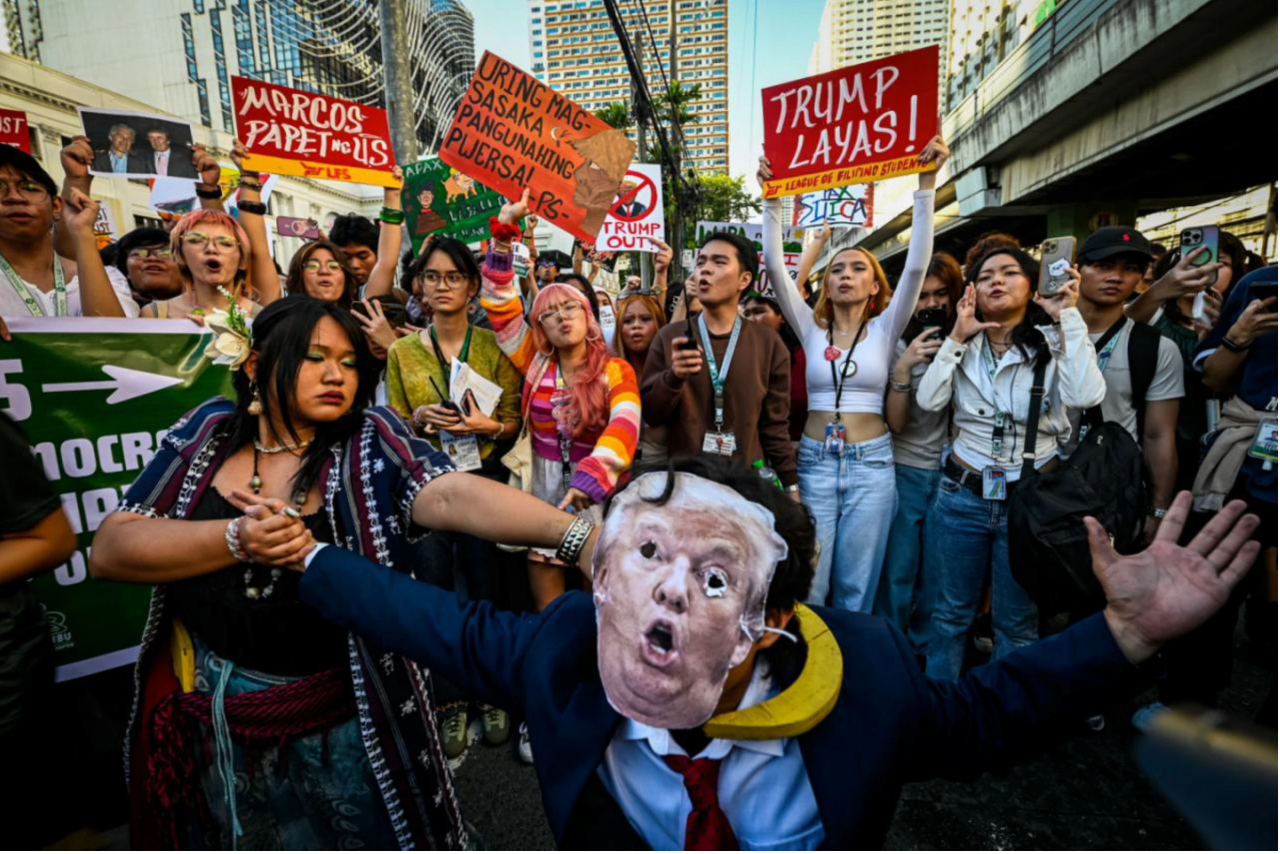
Photo Courtesy: Maria Tan
Trade tensions and the impact of US tariff policies are emerging as key issues at the 49th ASEAN Summit in Manila, as Southeast Asian leaders prepare for the arrival of US President Donald Trump.
The discussions come amid uncertainty over Washington’s trade direction and the possible economic consequences for countries across the region, many of which depend heavily on exports and international supply chains.
ASEAN leaders are expected to explore ways to protect regional economies from external trade disruptions while strengthening cooperation among member states.
The issue has gained urgency as Trump prepares to visit Manila on November 17, before proceeding to China for the Asia-Pacific Economic Cooperation (APEC) summit, where he is expected to meet Chinese President Xi Jinping.
Trump’s tariff measures have raised concerns among Southeast Asian economies over possible disruptions to exports and supply chains. US imports from ASEAN reached $453.6 billion in 2025, while the US trade deficit with the bloc widened to $327.4 billion, according to US trade data.
Trade experts have also cautioned that the region’s recent export growth may be vulnerable. Much of the increase has come from electronics, which have largely been exempt from existing tariffs, leaving other industries exposed to possible additional trade restrictions.
The Philippines and other ASEAN members are also navigating separate trade arrangements with Washington, balancing access to the US market with the need to protect local industries and maintain stable economic partnerships.
ASEAN is meanwhile looking to strengthen commerce within the region. One major initiative under discussion is the Digital Economy Framework Agreement, which aims to facilitate cross-border data transfers and electronic payments among member states.
The agreement is also expected to help small businesses participate in the digital economy, simplify online transactions and improve regional connectivity.
The Philippines has likewise been expanding its trade partnerships beyond Southeast Asia. Manila and Ottawa recently concluded negotiations for a bilateral free trade agreement, with formal signing targeted for 2027.
Analysts say the summit offers ASEAN leaders an opportunity to coordinate their responses to shifting global trade policies and reduce the risks of relying too heavily on individual markets.
While trade is a major concern, leaders are also expected to tackle regional security, the South China Sea dispute, Myanmar’s political crisis and the economic effects of conflicts in the Middle East.
Trump’s participation is expected to draw attention to Washington’s economic and strategic priorities in the Indo-Pacific, as ASEAN seeks to maintain dialogue with major powers while protecting regional interests.