Breaking
B.C. Conservatives return to power after 93 years in historic election victory

ASM, Philippine Candian Inquirer
October 25. 2026
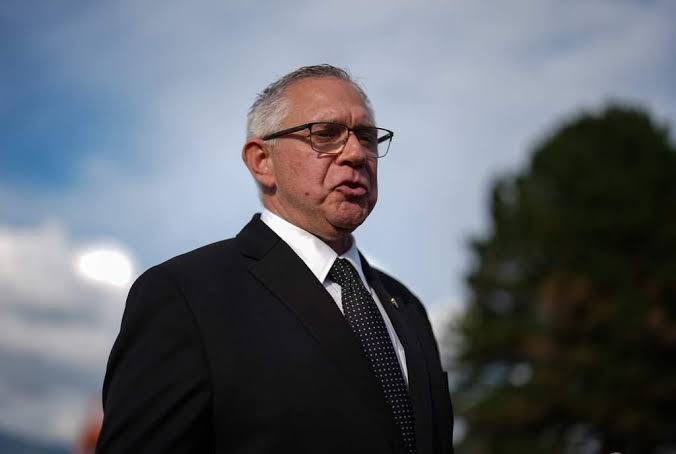
Photo Courtesy: Global News
VANCOUVER, British Columbia — British Columbia is set for a historic change in leadership after the Conservative Party secured a projected majority victory in the October 24 provincial election, paving the way for the province’s first Conservative premier since 1933.
Conservative interim leader Lorne Doerkson is expected to become the next premier, ending nine years of BC NDP government under former premier John Horgan and outgoing Premier David Eby.
The result marks a major political turnaround for the Conservatives, who narrowly missed forming government in 2024 before facing months of internal disputes and leadership changes.
During election-night counting, the Conservatives were leading in 64 of the province’s 93 electoral districts, compared with 27 for the BC NDP and two for the BC Greens. A party needs at least 47 seats to secure a majority.
The outcome is a sharp contrast to the 2024 election, when the NDP retained power with 47 seats against the Conservatives’ 44, leaving Eby with the narrowest possible majority.
A snap election that backfired
Eby called the early election on September 22, nearly two years ahead of schedule, seeking a stronger mandate to address economic uncertainty and challenges facing the provincial government.
He initially pointed to threats from U.S. trade policies under President Donald Trump. He later emphasized the difficulty of advancing legislation with such a narrow majority.
Instead of strengthening the NDP’s position, the election delivered a decisive victory for the Conservatives.
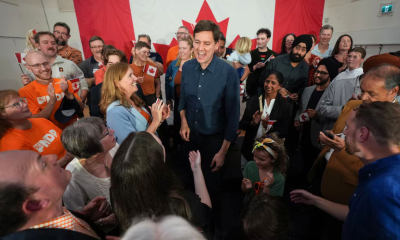
Eby conceded defeat and announced that he would step down as BC NDP leader, accepting responsibility for the result.
“The people of B.C. have asked us to be the official Opposition,” Eby told supporters in Vancouver, acknowledging that the outcome was not what his party had hoped for.
Meanwhile, Doerkson celebrated with supporters, declaring, “B.C. is definitely blue!”
He thanked voters for their confidence and pledged to work toward a stronger provincial economy, improved public services and better opportunities for British Columbians.
The Conservatives gained ground in key electoral battlegrounds, including Surrey and other parts of the province, helping secure their projected majority.
Doerkson’s rise to power
Doerkson’s victory is particularly significant given how recently he took over the Conservative leadership.
The 58-year-old politician became interim leader on September 20 following Kerry-Lynne Findlay’s resignation. At the time, the party was struggling with internal disagreements and the departure of several legislators from its caucus.
Within days of his appointment, Doerkson helped bring several former Conservative members back into the party, strengthening its position ahead of the election.
He had previously represented Cariboo-Chilcotin as a BC Liberal and later under the BC United banner before joining the Conservatives in 2024.
His rise also reflects the broader resurgence of the BC Conservative Party.
In the 2020 provincial election, the party received less than two percent of the popular vote. Four years later, it emerged as the official opposition with 44 seats, benefiting partly from the collapse of BC United.
Now, the Conservatives are preparing to lead the province.
First Conservative premier since 1933
The victory carries considerable historical significance.
British Columbia’s last Conservative premier was Simon Fraser Tolmie, who served from 1928 to 1933. Although Conservatives later participated in coalition governments, the party has not held the premiership since Tolmie’s administration.
Doerkson’s projected victory would end that 93-year gap and mark a new chapter in the province’s political history.
It also brings a close to the NDP’s nine-year period in government, which began under Horgan in 2017. Eby succeeded Horgan as premier in November 2022.
What a Conservative government could mean for B.C.
With a majority government within reach, attention is turning to the policies Doerkson promised during the campaign.
Affordability and economic growth were central to the Conservative platform. The party pledged to reduce provincial income taxes, offering savings of up to $1,000 annually for individual workers and $2,000 for a typical working couple.
The Conservatives also promised to accelerate housing development, reduce barriers to business investment and expand job opportunities.
In healthcare, the party pledged to protect existing spending while improving access to doctors, nurses and emergency services. Its proposals include a $50-million emergency fund to help rural medical practices remain open and recruit healthcare workers.
Other major commitments include expanding natural gas development, changing the province’s automobile insurance system and repealing the Declaration on the Rights of Indigenous Peoples Act, a measure that could significantly change B.C.’s approach to Indigenous rights and reconciliation.
However, the incoming government will face financial challenges. British Columbia is dealing with a projected deficit of approximately $14 billion, raising questions about how the Conservatives will deliver tax relief, improve services and reduce government spending pressures.
What happens next?
Despite the projected Conservative majority, the election results remain preliminary.
Elections BC is scheduled to conduct its final count from November 6 to 10, including mail-in ballots, certain absentee ballots and other votes not included in the initial count.
The final count could change results in closely contested ridings, although the Conservatives’ substantial lead places them firmly on course to form government.
Another issue to be resolved is Doerkson’s status as interim party leader. The Conservative Party’s constitution restricts interim leaders from seeking the permanent leadership, but party officials have indicated they intend to pursue measures that would allow him to remain in charge.
For now, Doerkson is preparing to lead a province facing major decisions on housing, affordability, healthcare and economic development.
His projected victory represents not only a change in government but also the return of Conservative leadership to British Columbia after more than nine decades.