Canada News
B.C.’s snap election puts cost, care, and economic direction before voters

ASM, Philippine Canadian Inquirer
October 01, 2026

VANCOUVER, British Columbia – British Columbia’s October 24 snap election arrives at a moment when no single issue fully defines the province.
Health care, housing affordability, and the economy are all competing for voters’ attention. Public finances are under strain.
Trade tensions with the United States have added uncertainty. And the province is trying to balance major investments in infrastructure and services with a projected $13.8-billion deficit for 2026-27.
That mix of pressures makes this election less about one dominant question and more about how British Columbians want the province to manage several difficult ones at once.
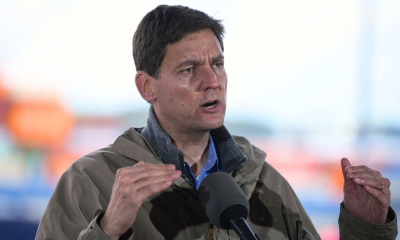
Premier and B.C. NDP Leader David Eby called the election on September 22, about two years ahead of the previously scheduled 2028 vote. Final Voting Day is set for October 24, with one MLA to be elected in each of B.C.’s 93 ridings.
Eby has argued that changed economic circumstances, particularly U.S. trade pressure, justify seeking a new mandate.
Opposition parties have challenged both the timing of the vote and the government’s record. Those competing arguments are now part of the campaign itself.
For voters, however, the more practical question may be what happens after the campaign rhetoric ends.
Voters are worried about different things
Recent polling suggests British Columbians are not rallying around one overriding concern.
A Leger survey conducted from September 24 to 28 found health care was the most commonly named top issue at 15 percent, followed by housing prices and affordability at 14 percent and the economy at 13 percent. The online survey included 1,003 B.C. adults and was weighted by age, gender, region and education; because it used a non-probability sample, a conventional margin of error does not apply.
That relatively narrow spread matters.
It means a voter in Vancouver struggling with rent may be approaching the election from a very different perspective than a senior concerned about medical access, a worker in northern B.C. focused on resource jobs or a family watching grocery, mortgage and transportation costs.
Leger also found that priorities vary by age and political support: housing matters more to younger residents, while health care becomes more prominent among older respondents.
That helps explain why attempts to reduce the election to one label – whether an “affordability election,” “health-care election,” or “economy election” – risk missing the broader picture.
The fiscal backdrop touches nearly every promise
B.C.’s finances are one of the clearest constraints facing whoever forms the next government.
The province’s September fiscal update projected a $13.8-billion deficit for 2026-27, up $450 million from the forecast in the February budget. Taxpayer-supported debt is projected at about $141.1 billion, while total provincial debt is forecast at roughly $180.9 billion.
Those figures do not, by themselves, determine what policy should be.
But they do affect the practical questions behind campaign promises.
Expanding health services requires staff and operating money. Housing growth often depends on transportation, utilities and other infrastructure. Tax reductions can change revenue. Major projects may support future growth but can require large upfront spending.
The province is still planning substantial capital investment: $12.9 billion in taxpayer-supported capital spending in 2026-27 for hospitals, schools, transportation, housing and other projects.
So the campaign debate is not simply about whether government should spend.
It is also about what should be funded first, how quickly deficits should be reduced and what level of borrowing is acceptable while services and infrastructure continue to expand.
The economy is stronger in some areas, weaker in others
British Columbia’s economic picture is similarly mixed.
The provincial government reported that goods exports had increased year-to-date, while exports to markets outside the United States rose strongly. At the same time, exports to the U.S. weakened, with softwood lumber among the sectors affected by tariffs and trade pressure.
Housing activity has also softened. The province reported that housing starts were down 9.3 percent and home sales down 6 percent year-to-date through July, citing affordability challenges, economic uncertainty and labour-market softness among the factors.
Those mixed signals help explain why resource development has become a major campaign theme.
Eby has proposed expanding critical-mineral exports and Prince Rupert port capacity, while interim Conservative Leader Lorne Doerkson has promoted increased LNG production.
Both have presented resource expansion as a path toward stronger revenues and economic growth, though they differ in policy approach.
For communities tied to LNG, forestry, mining or ports, those debates can translate directly into jobs, investment and local tax bases.
For other voters, the same proposals raise questions about environmental impact, infrastructure demand, Indigenous consultation and how quickly new projects can produce measurable benefits.
Housing still matters – even if it no longer dominates
Housing remains one of B.C.’s most persistent political issues, even though polling suggests it is no longer as dominant as it was two years ago.
Leger found 14 percent of respondents now identified housing prices and affordability as the province’s most important issue, compared with 27 percent in its August 2024 polling.
That change does not necessarily mean the underlying pressures have eased.
For renters, first-time buyers and families trying to remain in high-cost communities, housing can still shape daily life more directly than broader economic indicators.
The practical questions are therefore less about the number of units announced and more about how quickly homes can actually be delivered, whether infrastructure can keep up with new density and whether new supply reaches people at prices they can afford.
Health care has moved to the front
Health care’s position at the top of Leger’s issue ranking is equally important.
Access to care is one of the areas where provincial politics becomes very personal: finding a family doctor, waiting for surgery, accessing emergency care or obtaining services outside major urban centres.
That also makes implementation more complicated than headline commitments suggest.
New hospitals require construction, but they also require physicians, nurses, technicians and long-term operating budgets. Expanding services can take years even after funding is approved.
For voters assessing competing health-care promises, a useful distinction is therefore between capital announcements and actual service capacity – what can be delivered, by when and with which workforce.
The election itself is part of the debate
The timing of the vote has also become politically significant.
B.C. was not due for another provincial election until 2028, but the legislature was dissolved in September after Eby sought an early vote. AP reported that Eby linked the decision to worsening Canada-U.S. trade tensions and argued that B.C. needed a renewed mandate to respond.
Opponents have criticized the early call, and Leger found 57 percent of respondents disapproved of holding an early election.
That does not determine how people will vote, but it means the election call itself is part of what voters are evaluating alongside policy.
Two elections, one week apart
The timing is unusual for another reason.
British Columbians will vote in local elections on October 17, followed by the provincial election just seven days later.
The two contests are separate.
Local elections choose officials such as mayors, councillors and school trustees. The provincial election chooses MLAs, who deal with areas including health care, provincial taxation, highways, many housing policies and large portions of education funding.
For readers, that distinction is practical.
A local zoning issue belongs in one election. A provincial hospital-funding decision belongs in another.
With both ballots arriving so close together, understanding which level of government controls which issue may be just as important as following party platforms.
The province-wide race is really 93 local contests
Another important point can be lost in leader-focused coverage: British Columbians do not directly elect a premier.
They elect one MLA in each of 93 ridings, and the composition of those seats determines who can command the confidence of the legislature and form government.
That means provincial narratives matter, but local candidates matter too.
Economic development in northern B.C., transportation in Surrey, housing in Metro Vancouver or health-service access on Vancouver Island may carry very different weight from riding to riding.
The candidate field is still being finalized. Elections BC says nominations close at 1PM on October 3, and its current list includes only candidates whose nomination packages have been completed and accepted.
What this election ultimately asks of voters
B.C.’s snap election does not present voters with one simple trade-off.
Instead, it asks them to weigh a series of connected questions:
How much should the province spend now to address health care and infrastructure? How quickly should deficits be reduced? What kind of economic growth should B.C. pursue? How should housing supply be expanded? And how should the province respond to external pressures, including trade uncertainty with the United States?
Those questions will not produce the same answer for every household or region.
But they offer a more practical way of reading the campaign than slogans alone.
Advance voting runs from October 16 to 21, followed by Final Voting Day on October 24. To vote, a person must be a Canadian citizen, at least 18 years old on Oct. 24 and a resident of British Columbia since April 23, 2026.
The next major milestone comes on October 3, when nominations close and voters will have the final list of candidates seeking office across all 93 ridings.