Headline
Malaysia eyes stronger Sabah defenses as Balabac military buildup advances
ASM, Philippine Canadian Inquirer
September 29, 2026

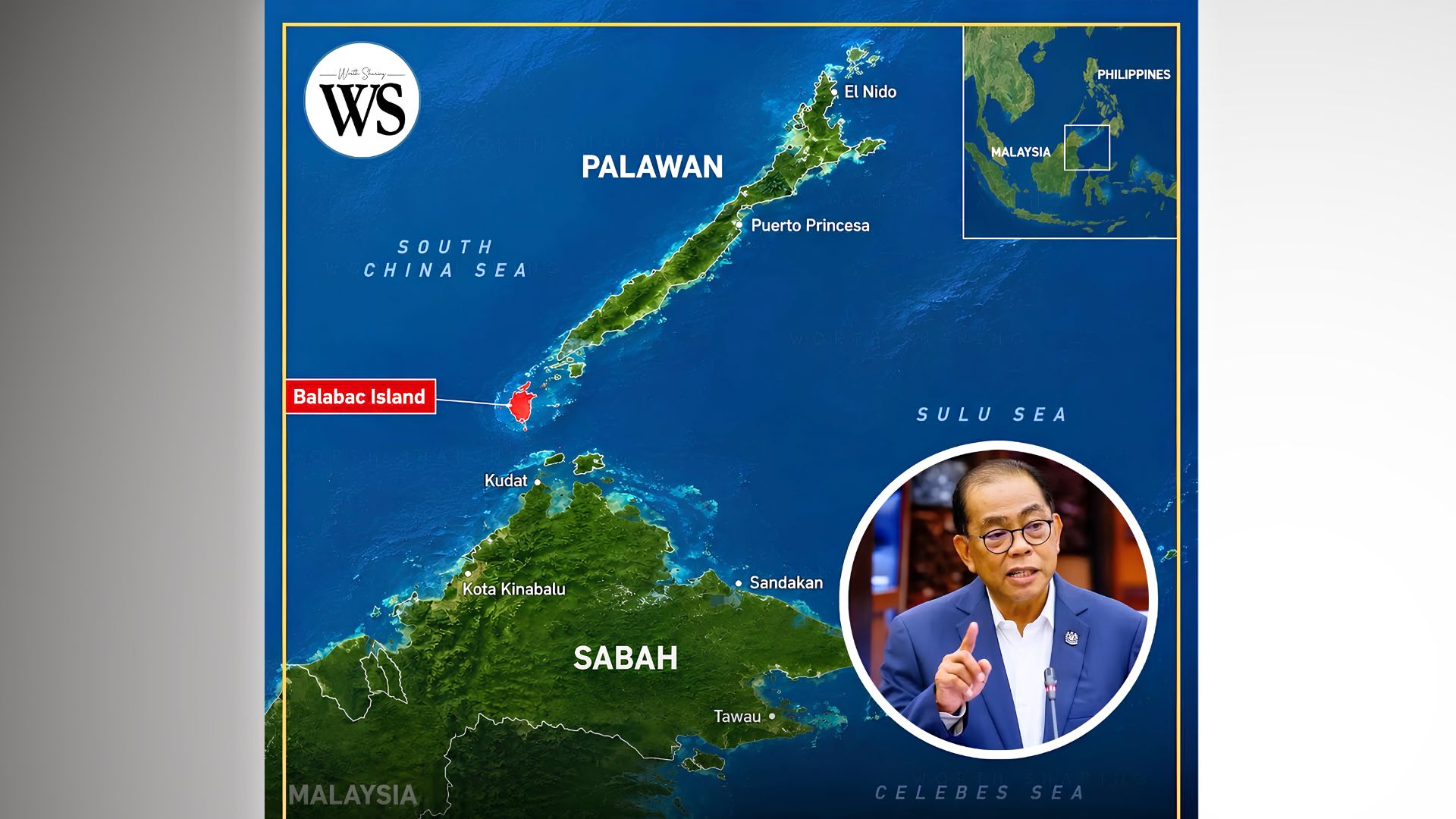
Photo courtesy: Worth Sharing
KOTA KINABALU, Malaysia — Malaysia is looking to strengthen its defense posture in Sabah as military infrastructure expands on the Philippine island of Balabac, located about 50 kilometers from Malaysia’s Pulau Banggi.
Malaysian Defense Minister Mohamed Khaled Nordin said on September 26 that Kuala Lumpur needs to improve its own defense capabilities as military activity increases around Balabac and tensions persist in the South China Sea. He stressed, however, that the Philippines has the right to choose its defense partners and develop measures to protect its territory.
“For us in Malaysia, we need to take our own measures to build up our defence,” Khaled said.
He said Sabah could experience spillover effects if wider tensions in the South China Sea escalate, particularly because of Balabac’s proximity to Malaysian territory. Khaled said an increased presence of foreign military forces in the area means Malaysia also needs to strengthen its defenses in Sabah.
Balabac, at the southern tip of Palawan, is one of the nine Philippine locations covered by the Enhanced Defense Cooperation Agreement, or EDCA, which allows rotational access by US forces and the development of agreed facilities while the sites remain under Philippine ownership and control. The island was one of four additional EDCA locations announced in 2023.
Military facilities on Balabac have been undergoing improvements, including work on an airstrip and other infrastructure that could support Philippine and allied operations.
The island’s location gives it strategic significance because it sits near maritime routes linking the South China Sea and Sulu Sea, while also placing military activity relatively close to Sabah.
Balabac has also been used for Philippine-US military exercises. The island was already an exercise location during previous editions of Balikatan and has increasingly figured in discussions over Manila and Washington’s expanding defense cooperation.
Malaysia’s concern is focused less on an immediate Philippine threat than on the possibility that growing military activity around Balabac could affect Sabah if competition among major powers in the South China Sea intensifies.
Khaled said the increased military presence in a relatively confined area could create security implications for Malaysia should an unpredictable regional crisis develop.
Other Malaysian officials have sought to temper concerns.
Sabah Chief Minister Hajiji Noor said in August that the enhancement of military facilities on Balabac should not be considered a direct cause for concern for Malaysia, adding that developments on Philippine territory were a matter for Manila.
Sabah Finance Minister Masidi Manjun likewise urged a measured response, saying Malaysia should avoid fueling unnecessary speculation while ensuring that its borders remain properly defended.
The statements reflect Kuala Lumpur’s effort to balance concern over regional military competition with continued recognition of the Philippines’ sovereign right to strengthen its own defenses.
Malaysia has not publicly identified the Philippines, the United States or China as a direct military threat in connection with Balabac. Instead, its officials have emphasized improving readiness and deterrence in Sabah amid uncertainty surrounding the broader South China Sea security environment.