Headline
Death toll from Luis, Maymay and habagat climbs as OCD reports nationwide damage

Abi Sarabia M., Philippine Canadian Inquirer
August 17, 2026
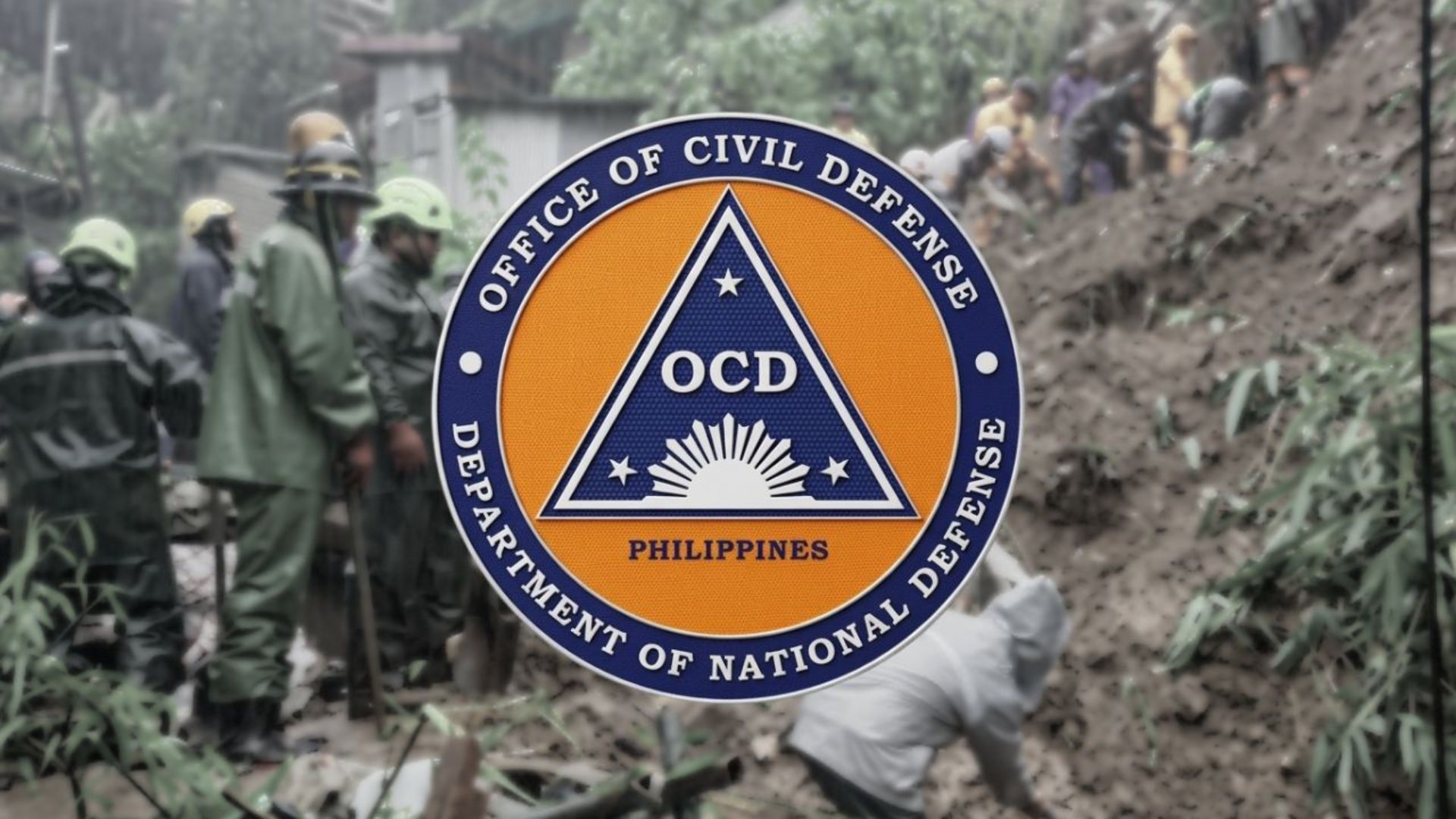
Photo courtesy: Philippine News Agency
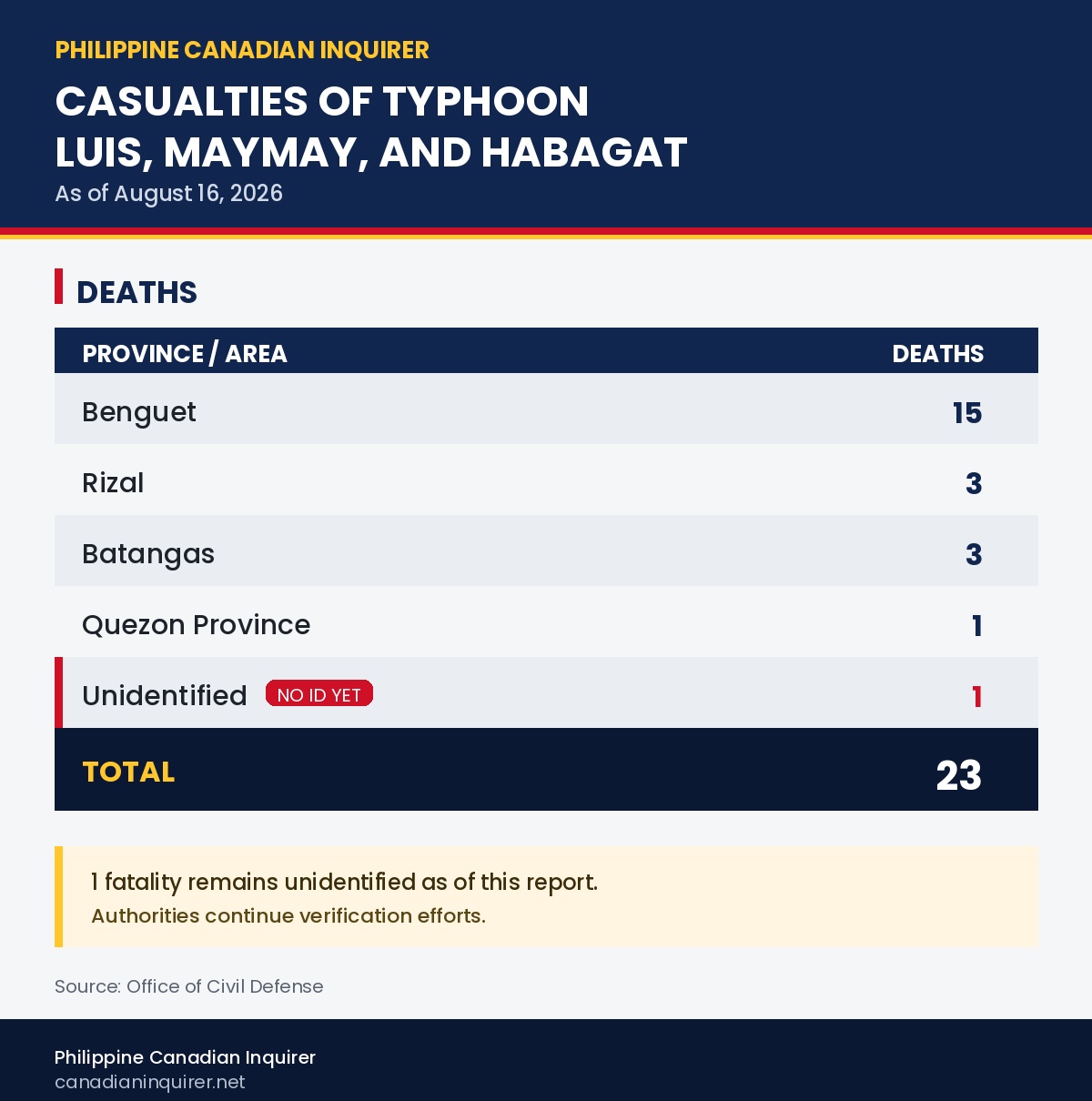
MANILA, Philippines — At least 23 people have died as tropical cyclones Luis and Maymay combined with the southwest monsoon, or habagat, to batter wide areas of the Philippines, the Office of Civil Defense (OCD) reported Sunday, August 16.
According to OCD data as of 6 AM. Sunday, Benguet recorded the highest number of fatalities at 15, followed by Rizal and Batangas with three deaths each, and Quezon with one. The deaths were attributed to landslides, drowning, rockslides, a falling tree and electrocution.
Seventeen people were injured across Ilocos Sur, Benguet, Abra, Rizal and Cavite, while three individuals from Batangas remained missing, the OCD said.
Nearly five million affected
The weather disturbances affected an estimated 1,410,800 families, or 4,903,086 people, across multiple regions, including Ilocos Region, Cagayan Valley, Central Luzon, Bicol Region, Western Visayas, Zamboanga Peninsula, CALABARZON, the Cordillera Administrative Region, Metro Manila and MIMAROPA.
As of the same reporting period, 9,101 families, or 31,456 people, were sheltering in 407 evacuation centers nationwide.
The OCD also reported damage to 1,845 houses, of which 178 were totally destroyed. Agricultural losses from the storms and monsoon rains have reached 689.66 million pesos, according to the agency.
Two systems being monitored
Separately, the Philippine Atmospheric, Geophysical and Astronomical Services Administration (PAGASA) said two low-pressure areas were being tracked outside the Philippine Area of Responsibility as of 2 p.m. Sunday.
PAGASA said one of the systems was unlikely to develop into a tropical depression within 24 hours, while the other had a medium chance of intensifying into one within the same period.
The OCD said it continues to coordinate relief and monitoring efforts as affected communities assess the damage from the back-to-back weather systems.