Headline
Why the U.S. is sending 2,500 marines to the Gulf — and what they might do there

Verity Stevenson, CBC News, RCI
(Unsplash photo)
Arrival will mark first ground troops deployed in widening Middle East conflict.
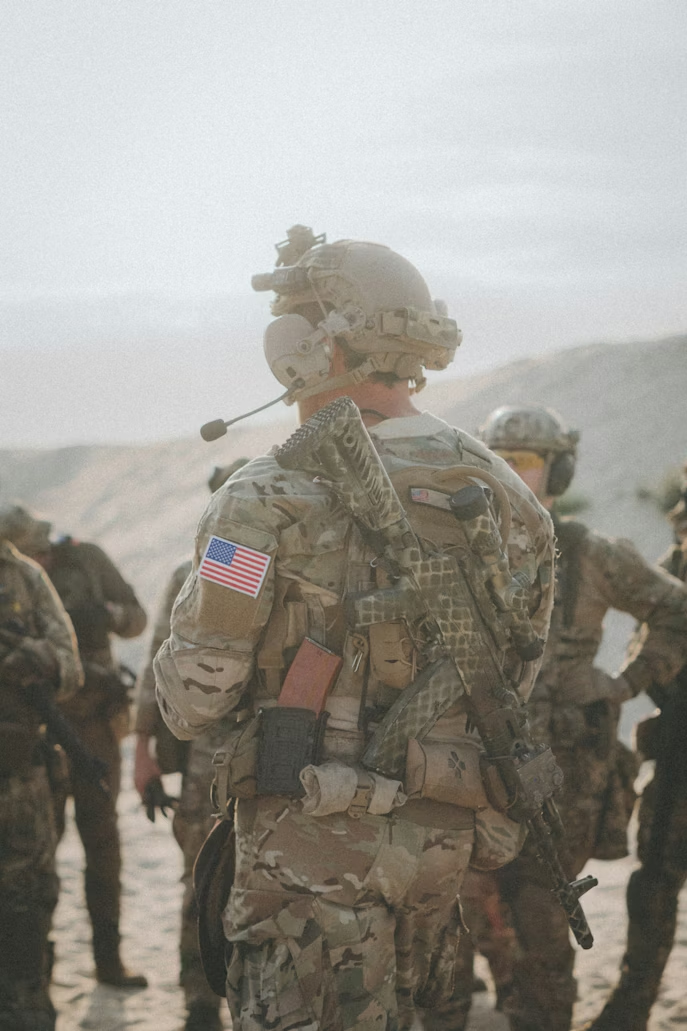
While U.S. President Donald Trump tries to convince allies to help reopen the Strait of Hormuz, he is also sending 2,500 marines to the region — the first deployment of U.S. troops since it and and Israel first attacked Iran on Feb. 28.
The deployment is a major military operation,
said Mark Cancian, a senior adviser at the Washington-based Center for Strategic and International Studies, who spent three decades in the U.S. Marine Corps.
Cancian says the U.S. appears to have recognized that bombing alone
can’t entirely protect commercial ships from Iranian drones and missiles, and that it should have had troops ready sooner.
Washington should have had the marines started before the war, so they would be there now, rather than waiting two-plus weeks,
he told CBC News. The marines are expected a few weeks from now.
Iran’s ability to choke off traffic through the strait, a conduit for a fifth of the world’s oil and liquefied natural gas, has rattled energy markets and helped drive oil prices above $100 US a barrel.
Trump warns NATO, demands countries help secure Strait of Hormuz
U.S. President Donald Trump is demanding NATO countries help secure the Strait of Hormuz, warning the intergovernmental military alliance of a ‘very bad’ future if they don’t follow his country’s lead. Iran has maintained strict control of the key shipping channel after it was attacked by a U.S. and Israeli-led bombing campaign that began in late February.
What the marines might do
The troops are part of a rapid-response force based in Japan, Cancian said. The unit includes roughly 2,500 marines, built around an infantry battalion supported by artillery, vehicles and logistics units.
Once they arrive, the marines could be used in several ways — but Cancian says their most likely mission would be helping to reopen the strait, perhaps by seizing small islands near the shipping lanes and setting up air-defence systems.
That creates a dome or bubble over a certain part of the strait which helps the convoys defend themselves,
he said.
The effort would likely involve multiple branches of the U.S. military.
It would be navy ships escorting convoys, marines on the ground and aircraft flying cover overhead,
plus a cyber aspect, Cancian said.
Another possibility would be to seize Kharg Island, an Iranian oil hub which the U.S. struck (new window) over the weekend.
Cancian says taking the island could be a major bargaining chip,
but that the marines are more likely to focus on the Strait of Hormuz. Iran has vowed to retaliate for the Kharg attack by striking U.S. sites throughout the United Arab Emirates.
Securing the Strait of Hormuz: Why it’s harder than the U.S. suggests
As Iran escalates attacks in the Strait of Hormuz, the U.S. says it’s confident it will be able to get ships moving again. For The National, CBC’s Lyndsay Duncombe breaks down why reopening the vital waterway likely won’t be as simple, fast or as safe as the White House wants.
Why the strait is so difficult to secure
Even a large military effort may struggle to fully secure the strait, which is just about 33 kilometres wide at its narrowest point — forcing ships to pass close to Iranian territory.
Iranian forces can take advantage of nearby islands and mountainous coastline to launch attacks, and Iran has a range of relatively inexpensive tools that can threaten shipping, including drones, small attack boats and naval mines (new window).
Cancian says drones are particularly common, though they carry relatively small explosive payloads.
They can damage a warship, but they won’t sink it,
he said.
A greater danger comes from anti-ship cruise missiles, which carry far larger warheads capable of sinking vessels.
Will 2,500 be enough?
Not according to Cancian. He says sending 2,500 Marines just isn’t enough,
and that it would be great to have other countries helping.
Trump is appealling to countries who purchase oil that’s shipped through the strait for assistance.
They should come and they should help us protect it,
the president said Monday. You could make the case that maybe we shouldn’t even be there at all because we don’t need it. We have a lot of oil.
Several have signalled reluctance to risk escalating the war, some making a similar case to Trump’s that they don’t need to be there.
We have a situation which we did not provoke, which we don’t cause at all,
German Defence Minister Boris Pistorius said. We can’t be at every place to support a war which we didn’t start.
United Kingdom Prime Minister Keir Starmer put it in different terms, saying Britain would protect its own people and forces in the region, but will not be drawn into the wider war.
Starmer added that the U.K. will prioritize “a swift resolution that brings security and stability back to the region.
The situation in the Strait of Hormuz has prompted questions about whether the Trump administration had considered the consequences on oil shipping before attacking Iran.
Cancian says someone certainly knew the risks because the navy’s been practising this for 40 years — and it’s astonishing to me that they weren’t ready.
This article is republished from RCI.