Headline
Canada keen to back PH vs. cyber threats ahead of 2028 polls

By Joyce Ann L. Rocamora, Philippine News Agency
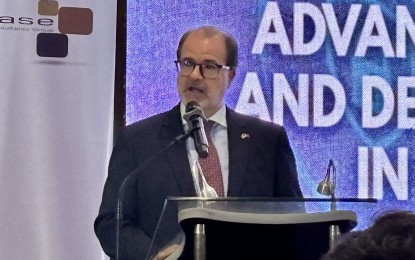
BOLSTERING CYBERSECURITY. David Hartman, Canadian Ambassador to the Philippines, delivers his remarks during the Stratbase ADR Institute forum “Navigating Digital Crossroads: Advancing Cybersecurity and Democratic Resilience in the Indo-Pacific” in Makati City on Thursday (Feb. 19, 2026). He reaffirmed Canada’s continued support to strengthen the Philippines’ cybersecurity efforts. (Photo: PNA)
MANILA – Canada will sustain its support in building the Philippines’ capacity against emerging cybersecurity threats, especially as the 2028 presidential election looms closer.
Under its Indo-Pacific Strategy, Canadian Ambassador to the Philippines David Hartman said Ottawa, as a like-minded partner, is willing to assist Manila in achieving “democratic resiliency.”
“We’re living in unprecedented times in terms of the threats to our respective democracies. So, now is the time when like-minded friends need to rise to the occasion and provide a measure of support to one another and for one another,” he told reporters on the sidelines of a Canada Embassy-sponsored forum on combatting foreign information manipulation and interference (FIMI) on Thursday.
At present, Ottawa supports Manila through various capacity-building measures, including training for cyber defenders, facilitating technical workshops and advancing discussions on countering FIMI.
“Cybersecurity and information integrity are no longer technical issues — they are national, regional, and democratic imperatives. Canada’s commitment to this agenda is long-standing and continues to grow,” Hartman said.
In the Philippines, Stratbase ADR Institute President Dindo Manhit said FIMI, enabled by advancements in technology, is operating as a “well-orchestrated system” designed to exploit political vulnerabilities, shape public perception, and behavior that serve “foreign strategic interests.”
“Technology should be — and will be — for the public good. We should never allow foreign agents to bring down our defenses and sway what our people feel, think and believe, which in turn influences their democratic decisions,” he said in the same forum.
“There should be no compromises in the protection of our sovereignty and our democracy,” he added.
Ahead of the 2028 elections, Manhit said measures must be taken early by securing both the country’s information environment and cyber domain.
“[Foreign interference and malign influence] use technology, and this technology is actually part of our lives, because we are all social media users,” Manhit said.
“And how we are shaped, shapes the future of our country. What’s the remedy? It’s for us to understand that this is a [cyber] war that is ongoing,” he added.
According to Manhit, at least 76 percent of Filipinos were shaped by social media in May 2026, up from 3 percent in 2016.