Headline
House leader seeks free electricity for low-consumption households

By Jose Cielito Reganit, Philippine News Agency
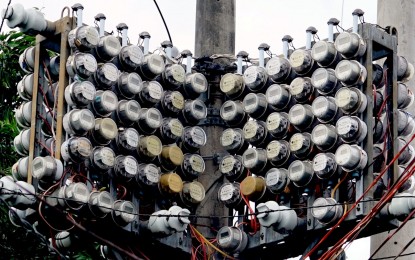
House Bill No. 2700, or the proposed Free Electricity for Low-Consumption Households Act, seeks to institutionalize a direct government subsidy that will fully cover electricity bills of eligible households within a defined monthly threshold, while exempting the subsidized portion from the 12 percent value-added tax (VAT). Under the proposed measure, an eligible household refers to a residential consumer whose average monthly consumption over the preceding three months does not exceed 135 kilowatt-hours (kWh), or whose monthly bill does not exceed PHP2,000, whichever is lower, subject to certification by the Energy Regulatory Commission (ERC) and the Department of Energy (DOE). “In enacting this measure, Congress affirms that electricity is a necessity which the State must make affordable and accessible,” Marcos said. (Photo: PNA)
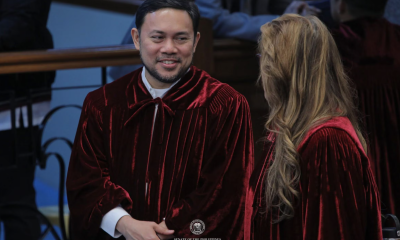
MANILA – House Majority Leader Ferdinand Alexander “Sandro” Marcos is pushing for the passage of a measure granting free electricity to low-consumption households, replacing the current cross-subsidy system with a direct government subsidy aimed at making power more affordable and equitable nationwide.
House Bill No. 2700, or the proposed Free Electricity for Low-Consumption Households Act, seeks to institutionalize a direct government subsidy that will fully cover electricity bills of eligible households within a defined monthly threshold, while exempting the subsidized portion from the 12 percent value-added tax (VAT).
Under the proposed measure, an eligible household refers to a residential consumer whose average monthly consumption over the preceding three months does not exceed 135 kilowatt-hours (kWh), or whose monthly bill does not exceed PHP2,000, whichever is lower, subject to certification by the Energy Regulatory Commission (ERC) and the Department of Energy (DOE).
“While unquestionably noble in intent, the current system of electricity subsidies — delivered through the lifeline rate for indigent consumers and the senior citizen discount — is implemented through cross-subsidies, where other consumers shoulder the cost,” Marcos said in a news release on Tuesday.
Citing a December 2024 study by the Philippine Institute for Development Studies, he said lifeline discounts vary per distribution utility (DU) due to differing financial capacities and customer characteristics.
He said HB 2700 aims to shift from cross-subsidization to a direct government subsidy to address distortions in the current system and remove the burden on other consumers.
The measure also allows transparent validation and exclusion of ineligible households based on a defined threshold, eliminate VAT on subsidized amounts, unify implementation, and ensure that public funds directly benefit eligible households.
If a household exceeds the threshold in a particular billing period, the household will shoulder the entire bill for that month without subsidy.
However, such temporary ineligibility will not automatically disqualify it from availing of benefits in succeeding billing periods, subject to continued compliance with eligibility criteria.
The bill mandates that distribution utilities issue zero-charge electricity bills to validated eligible households and submit verified reimbursement claims to the DOE, subject to stringent audit by the Commission on Audit to prevent leakage and ensure accountability.
To prevent duplication and disruption, the measure provides for a two-year transition period during which the direct government subsidy will coexist with the existing lifeline rate and other electricity subsidies.
During this period, the DOE and ERC, in coordination with other agencies, will review whether to fully replace the lifeline rate, allow both programs to coexist with separate beneficiary scopes, or adopt other recommendations.
“In enacting this measure, Congress affirms that electricity is a necessity which the State must make affordable and accessible,” Marcos said.