

By Marianne A. Larsen, Western University; The Conversation
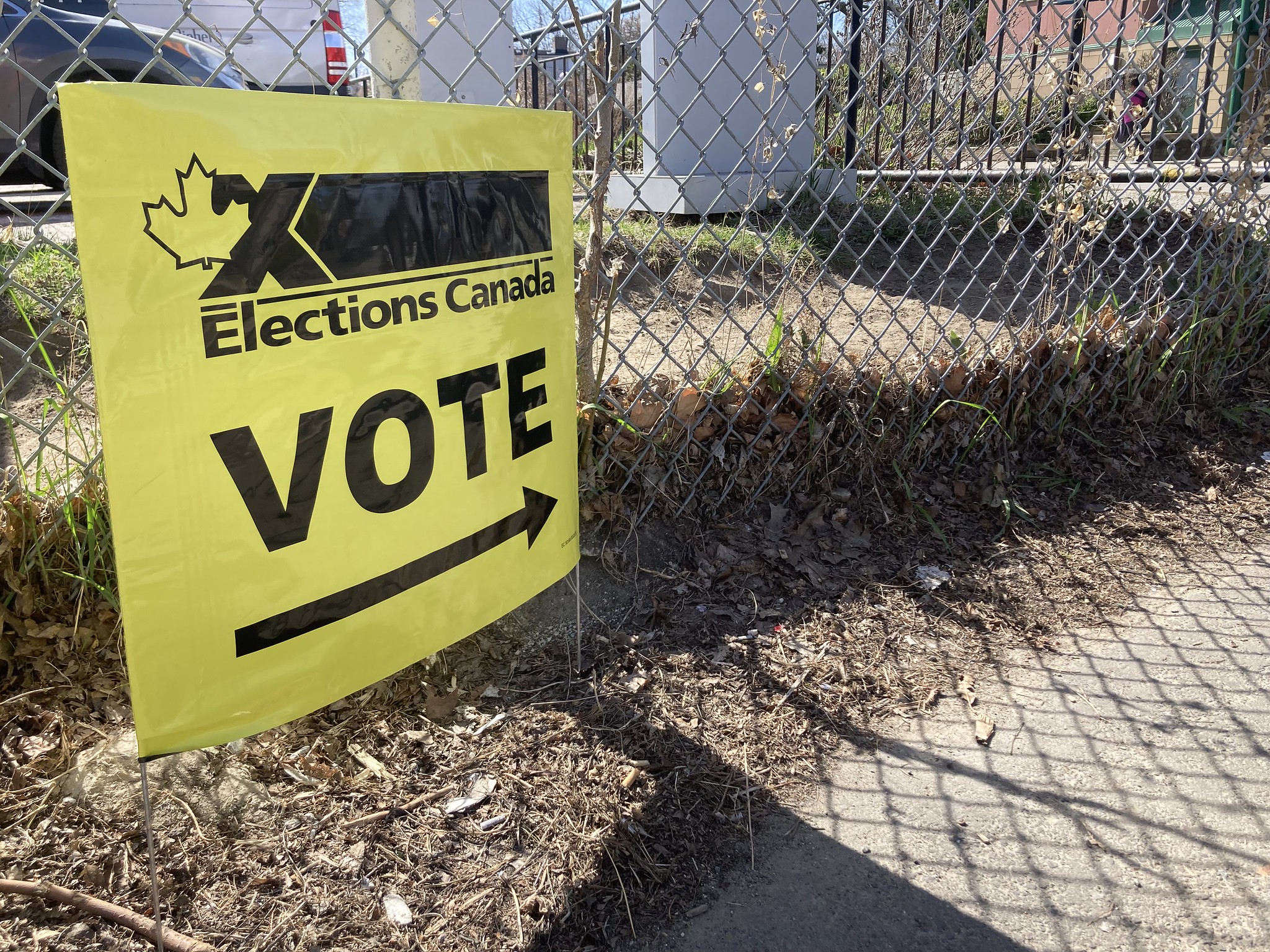
Based on my historical research, this article examines the broader history of provincial governments extending their control over democratically elected school boards. (File Photo by Can Pac Swire/Flickr, CC BY-SA 2.0)
Elected school boards across Canada are increasingly threatened. Ontario Education Minister Paul Callandra recently said he is open to eliminating elected trustees altogether. This would would follow the lead of Nova Scotia and Québec, where they have already been abolished.
As a temporary measure, Ontario has taken over the role of elected trustees in five boards by appointing supervisors to oversee their finances and operations.
I’m an educational historian who has studied the comparative history of teaching and development of educational systems and an elected school board trustee for the Thames Valley District School Board (TVDSB), which the province recently put under supervision following an investigation of the TVDSB’s financial affairs.
I cannot comment here on the specifics of the TVDSB or any other school board.
The province says it put the TVDSB and other four boards under supervision to address growing deficits, strengthen accountability and, in the case of the other four boards, to restore financial stability.
However, researcher Joel Westheimer, professor of democracy and education, writes that Ontario is the latest province to “have signalled its intent to eliminate or weaken” elected school boards and put decision-making more firmly with the ministry.
“In reality,” he writes, “it’s a power-grab — and another step toward centralizing authority in order to sideline communities, parents and students.”
Based on my historical research, this article examines the broader history of provincial governments extending their control over democratically elected school boards.
Local democracy rooted in elected boards
Local democracy rooted in elected school boards has a long history in Canada going back more than 200 years. Education legislation in Nova Scotia in 1811, New Brunswick and Ontario (formerly Upper Canada) in 1816, Prince Edward Island in 1825 and Newfoundland in 1836 established elected school boards even before a country called Canada, with federal and provincial governments, existed.
Much has changed in school boards across Canada over the last two centuries. The powers and responsibilities of elected school board trustees have been eroded considerably. Current moves to restrict the powers of school board trustees are a part of a longer history of broadening government control over local communities.
Familiarity with local conditions
In Canada, each province/territory has its own educational system with a ministry/department that oversees the organization, delivery and assessment of education, and each province is divided into school board districts.
Board members (trustees) who are familiar with local conditions are elected by supporters within each district to represent their community’s interests and provide a liaison between electors and their provincial government.
My research on teachers shows that in early 19th century settler-colonial pioneer settings in North America, schooling was closely integrated into local community life.
Early emigrants to Upper Canada valued education for their children and, as a result, a variety of small schools emerged in local communities. In response, the British colonial government passed the first Common School Act in 1816 that provided each of the 10 school districts with 6,000 pounds annually to establish schools where there were at least 20 pupils.
Empowering local communities
The 1816 act also stated that when a schoolhouse was built, local communities were empowered to elect three “fit and discreet persons” to serve as trustees to manage their school.
Trustees had the authority “to examine into the moral character and capacity of any person willing to become a Teacher of such Common School” and subsequently nominate and appoint teachers on behalf of the community.
Trustees not only had the power to hire, pay and remove teachers, but also “to make Rules and Regulations for the good government” of the school and notify the District Board of Education about the books used and general state of the local school. By 1841, trustees were authorized to tax local inhabitants to supplement the government grant.
State-controlled educational systems
Around the world throughout the late 18th and 19th centuries, governments began the work of building state-funded, public educational systems. Building standardized, state-controlled educational systems took place gradually as legislation was enacted to construct systems to educate the poor and working classes who did not have access to formal schooling. In colonial societies like Canada, building public educational systems was a part of the process of building a country.
The reasons governments got into the business of providing free education to the general populace included fear of social unrest, rising crime rates and the belief that government control of education would help create an obedient and moral Christian population.
Schooling underwent a gradual shift of being largely in the hands of local communities to being more under government control. This was the beginning of long process, still ongoing today, of centralizing educational authority at the expense of local autonomy and community, and the work of school board trustees.
Second World War and onwards
As Canadian historian Bruce Curtis has argued, building the educational state in Ontario in the 19th century necessitated eroding the close relationship between locally elected school board trustees and their communities.

A former school building in Elora, Ont. (Bill Badzo/Flickr), CC BY
That process continued during the post-Second World War period, as the organization and structures of schools boards were reformed to deal with the expansion and increasing complexity of educational systems.
This resulted in the amalgamation of many school boards. In Ontario, there were thousands of elected local school boards in the mid-19th century. Following many stages of amalgamation, the most significant being in the mid-1990s, the province has only 72 district school boards.
Loss of the local
As a result of school boards increasing in size alongside population growth and shrinking in number, the role of school board trustees has diminished. A report by the Education Improvement Commission in 1997 concluded because of 1990s-era educational reforms in Ontario, each trustee would represent more constituents over a larger area. They would therefore need to devote significant time to pulling their communities together to overcome the loss of their local board in favour of a district board.
The power to raise funds through local taxation, to determine teacher’s pay and working conditions and to determine what is and is not taught in local schools are no longer responsibilities of local school board trustees.
The Ontario government now aims to pass Bill 33, the Supporting Children and Students Act, which would substantially expand the education minister’s ability to investigate a board’s conduct, give directions and assume a board’s powers if those directions aren’t followed.
These moves are about enhancing government control over school boards and, according to educational researcher Sachin Maharaj, “part of the government’s ongoing bid to assert its own vision of schooling.”
Navigators and representatives
Such power plays have negative consequences for local democratic voices, public accountability and transparency and for schools.
Educational history sheds light on the close relations between early 19th-century elected school board trustees and their local communities. Over the last two centuries, governments have increased the number of constituents trustees serve and centralized powers once held by trustees.
But this has led to the severing of relations between local communities and elected school board trustees, which is neither good for grassroots democracy, nor for our schools, our students and their families.
Marianne A. Larsen, Professor Emerita, Faculty of Education, Western University
This article is republished from The Conversation under a Creative Commons license. Read the original article.




















