
Canada News
Greening the military: Why defence spending must align with climate action

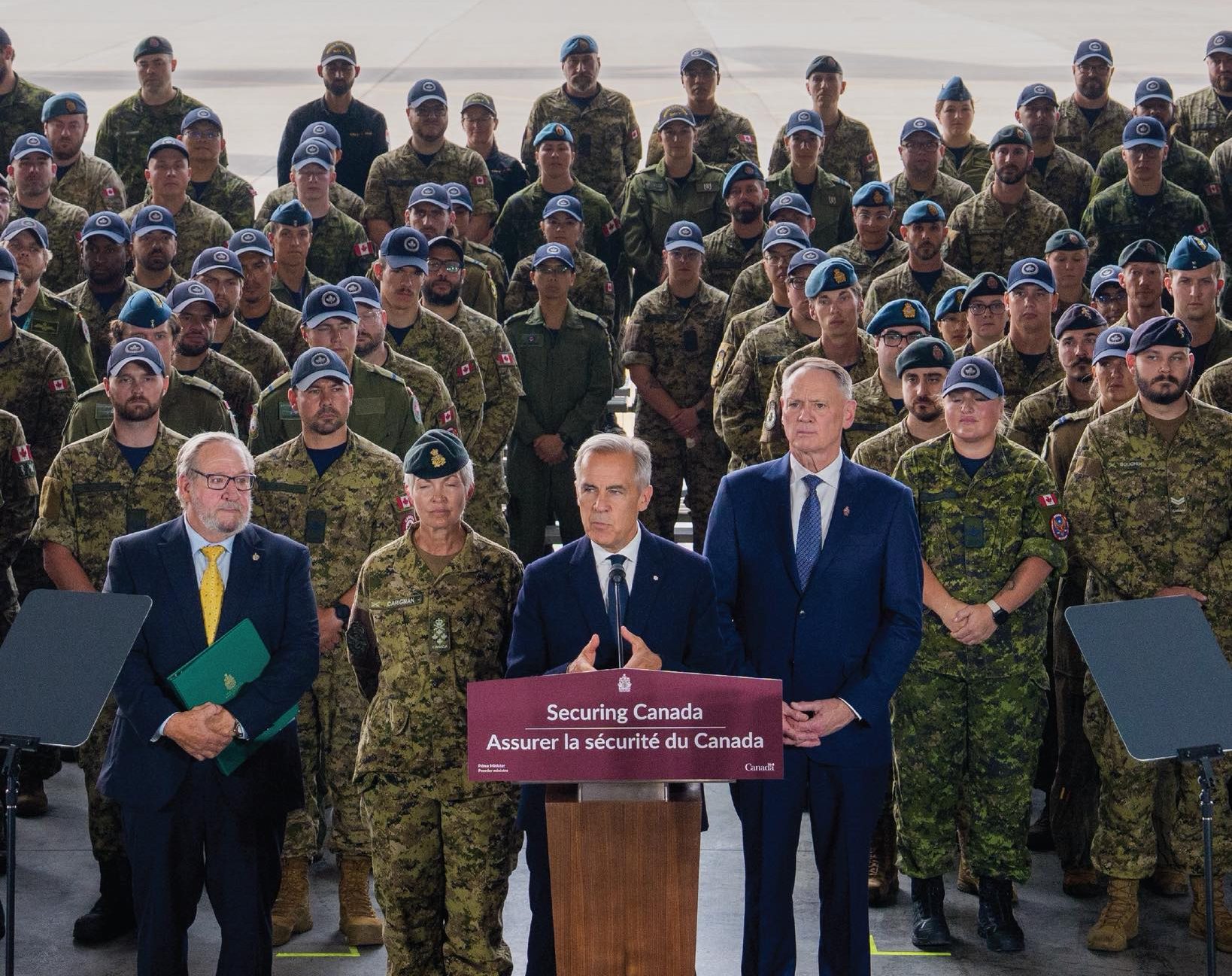
Canada can lead by example, demonstrating that national defence and climate responsibility can go hand in hand. (File Photo: Mark Carney/Facebook)
The world is currently gripped by growing geopolitical tensions, with global defence budgets expanding in many countries, including Canada.
From Russia’s invasion of Ukraine to instability in the Indo-Pacific region and the weaponization of emerging technologies, many countries are ramping up military spending at a pace not seen in decades.
But while these governments allocate billions to traditional notions of national security, a deeper incongruity is emerging: In preparing for future conflicts, we may be compromising our ability to confront the climate emergency already upon us.
Canada can lead by example, demonstrating that national defence and climate responsibility can go hand in hand.
For example, it can comprehensively track and disclose military emissions; prioritize green procurement; embed climate resilience in military planning and training; invest in dual-use infrastructure that serves remote communities; and promote the sustainable use of outer space.
The carbon cost of conflict
On June 25, Canada and its 31 NATO allies pledged to raise annual defence spending to at least five per cent of their respective GDP, gross domestic product. The U.S. is rallying its allies in Asia to do the same. Without safeguards, this could worsen the climate crisis. The European Union’s ReArm Europe Plan will increase its defence spending by 50 per cent to the equivalent of C$1.28 trillion (€800 billion) by 2028 but is also projected to increase NATO’s carbon emissions by 140 per cent compared to 2021.
Armed conflicts such as those in Ukraine, Gaza and Myanmar have devastated lives and have unleashed vast carbon emissions. They have destroyed ecosystems and crippled infrastructure critical for climate resilience.
An April study projected that just 15 months of Israel’s war in Gaza with its ensuing destruction and rebuilding could release a staggering 31 million tonnes of carbon dioxide equivalent (CO2e) – similar to Zimbabwe’s total emissions in 2023.
Globally, military activities are estimated to account for nearly 5.5 per cent of annual greenhouse gas emissions — a figure projected to rise as tanks, jets and warships are deployed in greater numbers and over longer distances. Yet, reporting these emissions under the Paris Agreement is voluntary and limited only to fuel use.
Five big moves Mark Carney must make to secure Canada’s place in the world
How Mark Carney is turning military spending into a force for economic renewal
Integrating environmental considerations is key to Carney’s seven priorities
Canada is no exception. The Canadian Armed Forces operate some of the most energy-intensive systems in the federal government, from aging buildings and fossil fuel-reliant bases to heavy equipment. Many of these assets are exempt from emissions tracking and reporting.
Canada has also committed to cutting emissions by 45 to 50 per cent by 2035 and reaching net-zero by 2050 – the same year by which it must also meet NATO’s emissions reduction target of net-zero while sustaining a defence budget at five per cent of GDP.
Rising sea levels, permafrost thaw, extreme weather and food insecurity are reshaping the global threat landscape. The Arctic — central to Canada’s defence posture — is warming nearly four times faster than the global average. Climate-related disasters from wildfires to floods are already stretching the Forces’ operational capacity.
Climate-smart defence: Five key actions
Defence and climate policy must no longer exist in separate silos. Every defence dollar spent today should help ensure a livable and secure tomorrow.
Here are five key actions Canada can take to lead in this space:
Comprehensively track and disclose military emissions:
This includes everything from fuel use in vehicles and aircraft to emissions from bases and infrastructure. The United Kingdom and Germany are already moving in this direction, showing that transparency is both feasible and necessary.
Without accurate data, there can be no accountability. Without accountability, meaningful action is impossible. Furthermore, NATO has pledged to reduce its military emissions by 45 per cent by 2030 and to achieve net-zero emissions by 2050. Canada should not merely aim to follow these targets. It should aim to lead by setting higher standards, pushing for stronger accountability and encouraging allies to do the same.
Prioritize green procurement and innovation:
Sustainability must be a core principle of defence-procurement strategy. This means prioritizing low-carbon technologies when purchasing new equipment and modernizing existing assets.
Investments should be directed toward hybrid and electric military vehicles, retrofitting buildings to meet net-zero energy standards and actively integrating clean-technology innovators from the private sector. Every new military purchase or infrastructure project should be aligned with Canada’s climate goals. By doing so, Canada can strengthen both its military capabilities and its green economy.
Embed climate resilience in military planning and training:
The Forces will increasingly be called upon to respond to climate-related emergencies, such as floods, wildfires and other extreme weather events. Preparing for this reality means integrating climate resilience into every aspect of military planning and training.
Spain has taken a major step in this direction by allocating 17 per cent of its defence budget to disaster relief, recognizing the growing intersection between national security and climate threats. Canada should follow suit, ensuring that climate-response capabilities are part of basic training, operational scenario planning and NATO joint exercises.
Additionally, the Forces must prepare for deployment in challenging and rapidly changing environments, such as the thawing Arctic and wildfire-prone regions, by investing in climate-resilient infrastructure and gear designed for these extremes.
Invest in dual-use infrastructure that serves communities:
Investments for defence purposes, especially in the Arctic and other remote regions, should also benefit local and Indigenous communities. For example, roads, airstrips, telecommunications networks and renewable-energy systems can serve both military and civilian needs, strengthening Canada’s sovereignty while improving access, safety and resilience for underserved populations.
Such dual-use infrastructure represents a strategic opportunity for a just transition. It addresses both national defence and social equity, ensuring that climate adaptation efforts uplift the communities most affected by environmental change.
Promote sustainable use of space:
As space becomes an increasingly critical domain for both national security and climate change, Canada must lead in promoting sustainability beyond Earth’s atmosphere.
Satellites play a vital role in environmental monitoring, defence early-warning systems and communications. But they must be deployed responsibly. This includes designing satellites with end-of-life plans, avoiding space debris and ensuring that military and commercial space activities do not contribute to long-term environmental harm.
By prioritizing sustainable satellite design and orbital practices, Canada can help ensure that space remains a safe and functional domain for climate monitoring and security co-operation well into the future.
A strategic opportunity, not a trade-off
The issue facing Canada today is not whether to invest in national defence. It is how to invest wisely. In a world of finite resources and growing global instability, every dollar spent on security must deliver long-term value.
If governments can marshal extraordinary sums of money for military institutions – which unlike other sectors such as health care or education offer limited long-term economic returns – then the persistent underfunding of climate action cannot be blamed on a lack of resources. Instead, it reflects a lack of political will. It is a conscious decision to prioritize short-term militarization over long-term planetary stability.
Globally and within Canada, climate finance remains woefully insufficient. Despite mounting evidence that climate change is a direct and growing threat to national and global security, climate mitigation and adaptation efforts continue to receive a fraction of the funding allocated to defence.
Canada must ensure that all defence investments are climate-compatible, forward-looking and built to withstand the environmental realities of the coming decades. This means designing infrastructure that can endure extreme weather, deploying technology that reduces emissions and planning operations that contribute to resilience rather than degradation.
To treat national and climate security as disconnected is to fail to grasp the nature of the challenges we face. In this pivotal moment, Canada has the opportunity to lead with vision, integrating sustainability into every aspect of its defence strategy. Anything less would not only be shortsighted. It would be a failure of leadership.
This article first appeared on Policy Options and is republished here under a Creative Commons license.




















