

By Malte Jauch, University of Essex; The Conversation
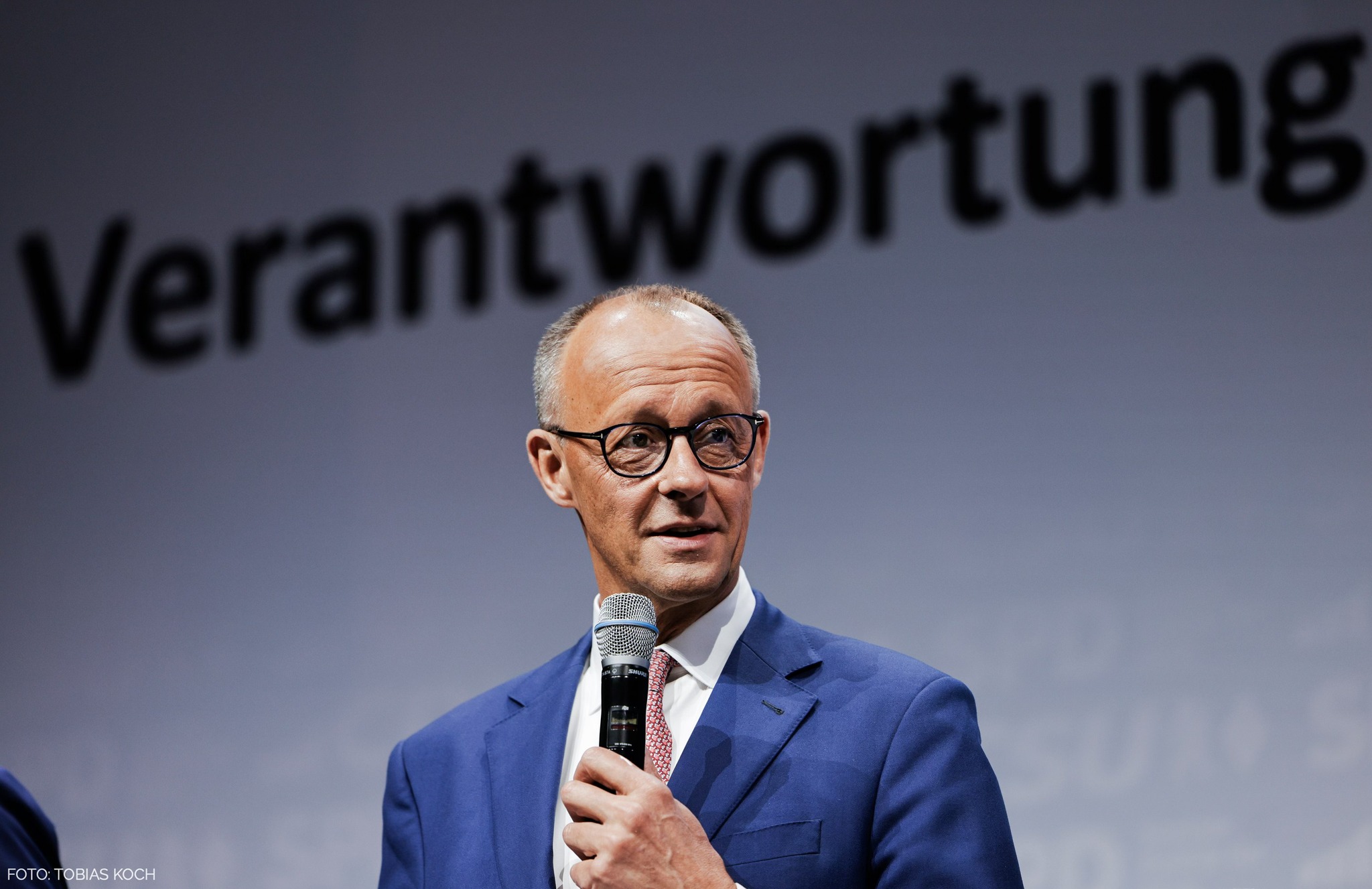
Merz has used these figures to make a seemingly straightforward argument. (File Photo: Friedrich Merz/Facebook)
People in Germany have taken the idea of a work-life balance too far. To get their economy back on track, they must work more.
Well, that’s what the country’s new chancellor, Friedrich Merz, thinks. And this controversial claim has triggered a debate in Germany over laziness.
So have Germans become complacent? Could working longer hours help to overcome sluggish growth? The short answer is no.
The true problem lies not with Germans’ work ethic, but with demographic change and the obstacles that prevent women from taking paid employment.
Get your news from actual experts, straight to your inbox. Sign up to our daily newsletter to receive all The Conversation UK’s latest coverage of news and research, from politics and business to the arts and sciences.
That said, Merz is right in one regard. Compared with other industrialised countries, Germans work relatively few hours. The average worker there spends 1,343 hours per year on paid employment – considerably less than in the US (1,799 hours), the UK (1,524) or Greece (1,897, the highest in the EU).
Merz has used these figures to make a seemingly straightforward argument. A country’s wealth is reflected in the amount of goods and services it produces. Producing goods and services requires work. The more people work, the more they can produce. Therefore, working more boosts prosperity.
In reply to this, some economists might note an inverse relation between working hours and wealth. In other words, the world’s richest countries have much lower average working times than the world’s poorer countries.
Mexicans work 2,207 hours per year, for example, but their average annual income is less than a third of what Germans earn.
However, this is not enough to refute Merz’s argument. Wealthy countries can generally afford to work less because they can rely on advanced technology and robust institutions to generate wealth. An example of this is Germany’s successful exportation of hi-tech manufacturing goods.
It would, though, be consistent to argue that wealthy countries might be even wealthier if they combined their technological and institutional advantages with additional work hours.
But Merz’s mistake goes beyond correlations between work hours and wealth.
For he doesn’t seem to have considered the unjust obstacles – like gendered social norms and lack of access to childcare – that women face when they seek full-time jobs. There are many reasons why women spend less time on paid work than men, but none of them has to do with laziness.
Second, longer work hours can have unintended negative consequences, because much of the country’s wealth is the result of unpaid labour. Care work, child-rearing, housework and voluntary work are all indispensable to a flourishing society. When politicians seek to expand paid work, this often comes at the expense of valuable contributions that are made outside formal labour markets.
A third reason for scepticism has to do with the phenomenon of diminishing returns – the familiar sense that people tend to become less productive as the length of their workday increases. Spending an additional hour in the office, hospital or factory does not translate into additional output if that worker is already exhausted.
All worked out
So, does this mean there is no reason to worry about how much Germans work? Unfortunately not.
One huge concern is demographic change. Over the coming decades, the number of people in Germany who retire will be much higher than the number of people who join its labour market. Other industrialised countries experience similar trends, but population ageing is particularly extreme in Germany.
This means that overall, less work will be done.
In response, a government can attempt to increase birthrates, and it can allow young people from abroad to enter the country.
But stimulating birthrates is notoriously difficult and very costly – not only in Germany but in many countries that are trying to achieve this goal.
As for the other option, Spain is among the few industrialised countries that has vowed to leverage migration to boost its economy. There are some indications that this strategy is proving successful, with Spain’s economy recently achieving a high growth rate of 2.7%, compared with -0.3% in Germany.
According to the president of the German Institute for Economic Research, Marcel Fratzscher, Germany should do something similar. He calculates that an additional 400,000 migrants per year over the coming four years are needed to stabilise Germany’s shaky economy.
In this sense, then, Germany does have problem with a lack of work. But Merz may end up making it even worse – as one of his main political goals is to curb migration.
Malte Jauch, Lecturer in Management and Marketing, University of Essex
This article is republished from The Conversation under a Creative Commons license. Read the original article.




















