

By Renata Roma, University of Saskatchewan; The Conversation
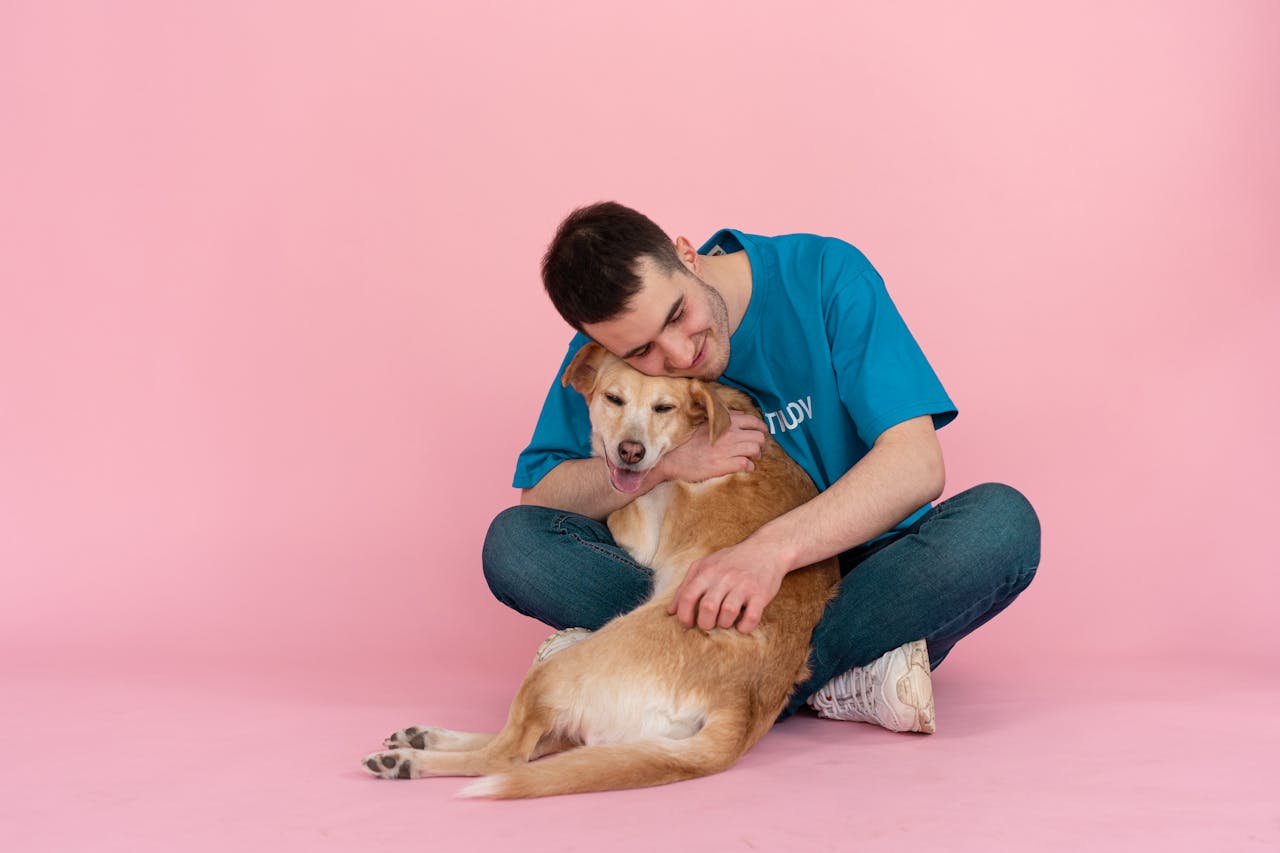
Looking further, some people seem to choose dogs that physically resemble them, particularly when choosing a purebred dog. (Pexels Photo)
Many dog owners wonder whether they share similarities with their dogs, including characteristics like a calm temperament, a sociable personality or even a bit of stubbornness. The idea that people and dogs resemble each other is not just a joke. In fact, some researchers have explored this question.
As a clinician and researcher who has been studying different aspects of the human–animal bond and works clinically with people grieving the loss of a pet, I understand how meaningful these relationships can be. I am particularly interested in how perceived similarities and emotional connections with dogs can shape the quality of the relationship.
Understanding what is known so far about the similarities between people and dogs is crucial, as this can reveal whether perceptions of similar physical and personality traits play a role in the quality of the relationship people share with their dogs.
What researchers says about it
Research on perceived similarities between people and their dogs aims to understand whether such perceptions are accurate and how they affect the relationship between people and their dogs.
A recent review synthesizes findings from 15 empirical studies that investigated similarities between dog-human pairs, both in appearance and personality. Regarding personality, the findings suggest that dogs and their guardians may have parallel traits, such as levels of extroversion, anxiety and sociability.
Looking further, some people seem to choose dogs that physically resemble them, particularly when choosing a purebred dog. Interestingly, there seems to be a link between women’s hair length and their preference for dogs with similar ear length, while short-haired women seem to favour short-eared breeds.
Another study suggests the similarity between guardians and their dogs may be particularly observed in the eye region. Other studies indicate a positive correlation between owners’ body mass index (BMI) and their dogs’ degree of overweight, possibly related to a shared lifestyle.
Importantly, many of these studies use questionnaires that the guardians themselves answer. That could lead some people to argue the findings only reflect the perceptions of the guardians.
However, a group of researchers asked participants who had never met the dog-guardian pairs to match photos of dogs and their guardians based on perceived similarities. Interestingly, the participants were able to correctly match most of the dog-guardian pairs. This finding suggests that similarity may not just be a matter of the guardian’s own perception.
Comparison to our relationships with people
But why does this happen? One hypothesis has to do with our evolutionary history, since we also tend to seek like-minded people.
In evolutionary contexts, being in cohesive and predictable groups increased co-operation and survival. These patterns continue to influence our relationships with others, favouring connections with people who appear to align with our values, behaviours or even physical traits. Apparently, similar mechanisms influence how we relate to dogs.
Similarities in are also observed for those living with purebred dogs. This might happen because people tend to choose breeds associated with certain behaviours and there is more behavioural predictability and stability in purebred dogs due to standardized breed characteristics.
Other explanations for personality similarities may be linked to emotional exchanges between people and their dogs, mutual regulation, behavioural reinforcement and learning through observation and imitation.
For example, people may reinforce certain behaviours in their dogs based on their own preferences or routines, and sometimes this may not even be intentional. At the same time, emotional exchanges between humans and dogs can also shape each other’s emotional states over time.
More than a scientific curiosity, understanding how perceptions of similarity shape people’s relationships with their dog can help foster more fulfilling relationships for humans and dogs. Such perceptions can lead to greater emotional investment in the bond and may even influence how people interpret and manage challenging behaviours in their dogs. For example, they might be more tolerant of certain behaviours when they identify a similar pattern in themselves.
On the other hand, while perceived similarities can strengthen the relationship, such perceptions may also shape people’s expectations, leading them to project human-like characteristics onto their dogs, rather than seeing them for who they truly are.
Beyond similarity: What brings us together
Even when the personalities of people and their dogs are not alike, they can still match perfectly. Imagine a dog who is playful and energetic, living with someone who may be more reserved or introverted.
The dog’s energy can encourage the person to be more active, which can lead to healthier habits such as walking or spending time outdoors. Sharing moments of joy, frustration or even sadness with a beloved dog can also provide a sense of companionship and emotional support.
Although people and their dogs sometimes resemble each other, research suggests that compatibility may be another key element to build a positive relationship with dogs. Factors such as attachment style and aspects of the human’s personality may be equally relevant.
Also, the sense of similarity is not always immediate and may emerge through co-regulation and mutual reinforcement, similarly to what happens in close human relationships. In this context, compatibility can exist even when people and dogs are not alike.
Just like in relationships between people, resemblance is not necessarily what holds us together. Although resemblance plays a role, sometimes the most meaningful bonds are not between those who are alike. What seems to matter the most is how well we connect, support each other, embrace potential differences and build mutual understanding.
Renata Roma, Postdoctoral Fellow, Center of Behavioural Sciences and Justice Studies/Pawsitive Connections Lab, University of Saskatchewan
This article is republished from The Conversation under a Creative Commons license. Read the original article.




















