News
G7 Finance Talks Seek Unity as U.S. Tariffs Loom Over Allies

PCI
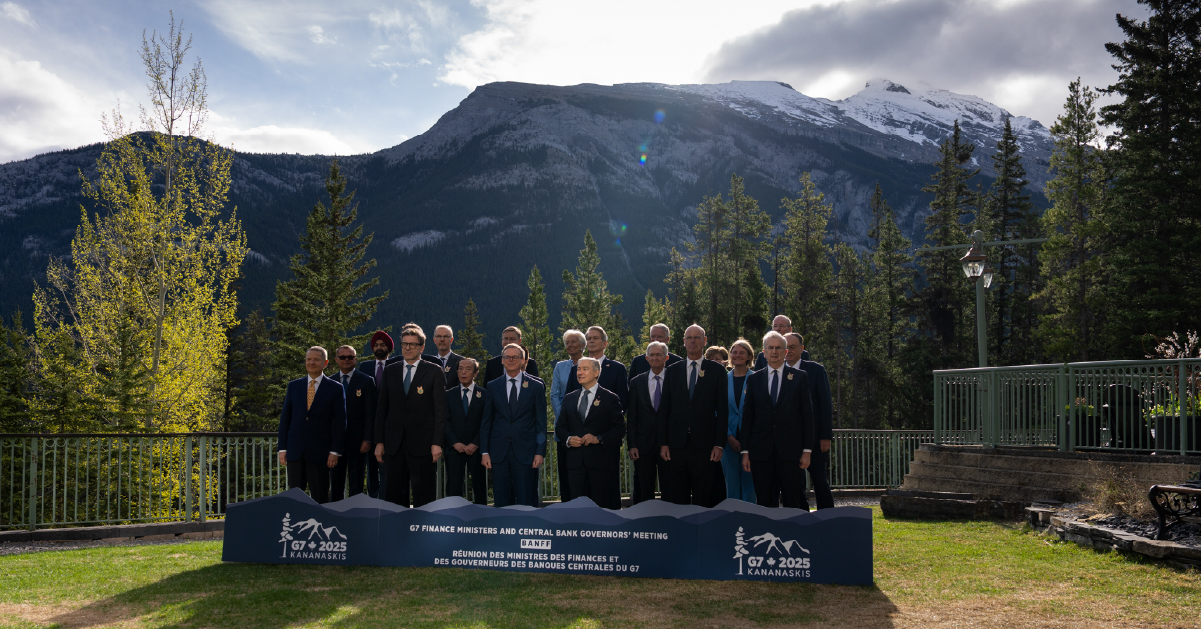
The G7’s ability to show global economic leadership now depends on resolving these internal conflicts. (Photo: G7/Facebook)
In a bid to preserve cohesion within the Group of Seven (G7), finance ministers gathered this week in Banff, Canada, attempting to bridge widening divisions over U.S. trade policy. As tensions over President Donald Trump’s revived tariffs loom, officials sought to shift focus toward shared global concerns, ranging from Ukraine’s reconstruction to economic threats posed by non-market policies from China.
U.S. Treasury Secretary Scott Bessent’s presence was central to the delicate diplomacy on display. While past G7 summits have been derailed by U.S. protectionism, most notably in 2018, Bessent’s more measured tone helped keep dialogue open. Ministers emphasized cooperation over confrontation, avoiding another episode of fractured alliances.
Still, disagreements remain stark. U.S. tariffs, potentially doubling key imports from Japan, Germany, France, and Italy, are straining long-standing economic ties. British and Canadian officials also face lingering tariffs from Trump’s earlier trade policies. European leaders made clear that they view tariffs not as a fix for trade imbalances but as exacerbating instability at a geopolitical urgency.
A significant issue arose over how to describe Russia’s invasion of Ukraine. U.S. officials did not want to use the word “illegal” in their draft statement. This worried European allies, who wanted to condemn Moscow. Italy suggested that any country supporting Russia’s war should not participate in Ukraine’s rebuilding after the war.
China’s role also caused disagreement. Several G7 members criticized Beijing for supporting Russia indirectly by allowing the flow of dual-use goods and avoiding sanctions. These actions and concerns about China’s state subsidies creating industrial overcapacity led to calls for a united G7 response to economic pressure.
There is a possibility of lowering the $60 price cap on Russian crude oil, which is part of broader EU sanctions. Although no agreement was reached, the discussions showed a common goal to increase economic pressure on Moscow while keeping the G7 united.
Despite the tensions, Bessent’s willingness to hold extended talks with officials from Canada, Germany, and Japan was viewed as a positive factor. Many described Bessent as “flexible” because he used a more agreeable tone than previous envoys from the Trump administration.
However, Washington still insisted that any agreement aligns with U.S. strategic interests.
Discussions about currency took place, especially between the U.S. and Japan. Japan wants a trade deal that could lower tariffs. However, details about the foreign exchange policy were missing from public statements.
The G7’s ability to show global economic leadership now depends on resolving these internal conflicts. As global challenges—from war to economic coercion—intensify, the stakes for cohesion have rarely been higher. Whether the group can produce a unified message—or even a joint statement—may signal its resilience or fragility in the face of renewed nationalist pressures.