

By Harshit Gujral, University of Toronto; Meredith Franklin, University of Toronto; Steve Easterbrook, University of Toronto; The Conversation
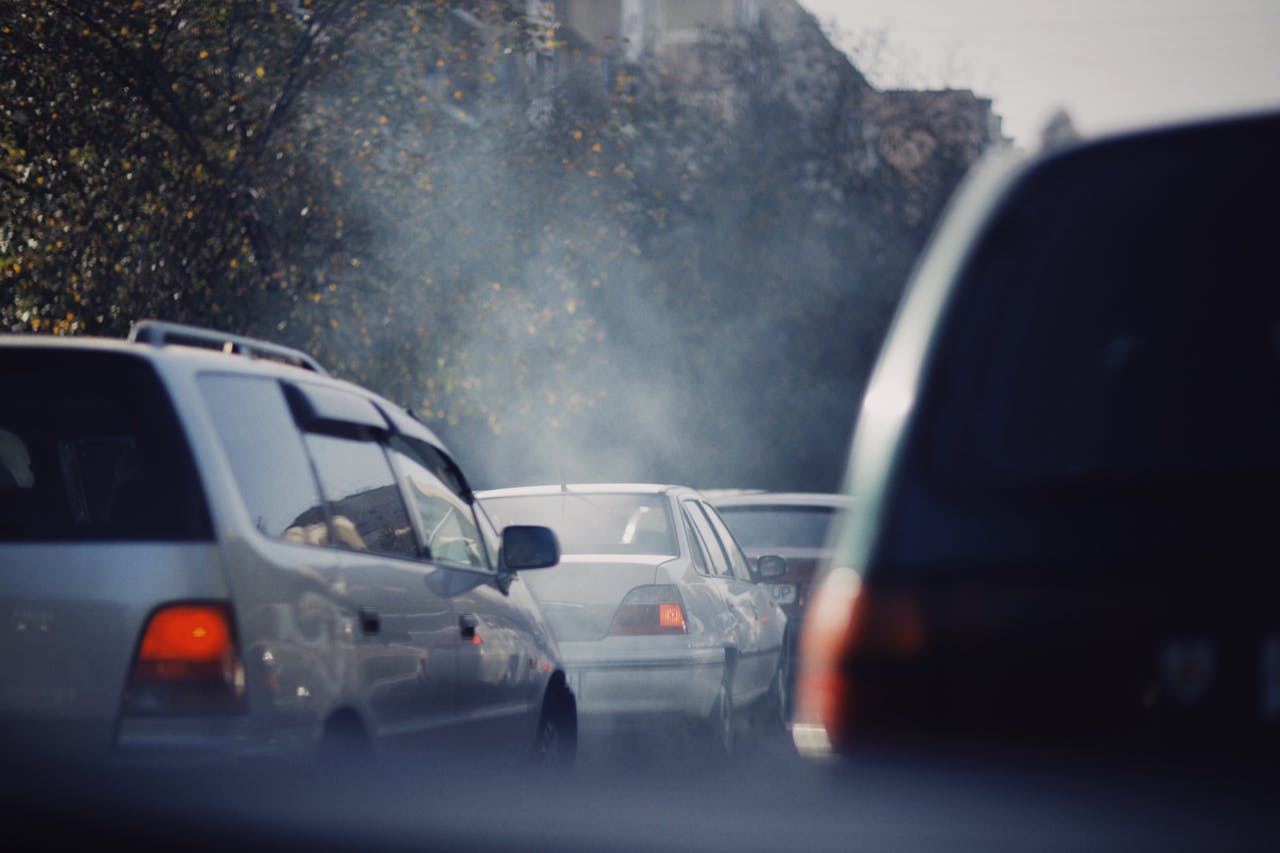
Our study builds on this by examining the number of gas-powered and electric vehicles on the road, and the number of new childhood asthma cases annually. (Pexels Photo)
Up to one-third of all new asthma cases each year are attributed to the harmful air pollutants that are emitted by gas-powered automobiles.
To address this, our recent study has found that replacing around half of all gas-powered vehicles with electric vehicles could be sufficient to minimize childhood asthma cases linked to pollution from vehicle exhausts.
As researchers studying the intersection of transportation, climate change and public health, we wanted to understand whether electric vehicle sales were having any impact on human health. Given the growing electric vehicle market in the United States, we investigated the impact this growth is having on population health.
We chose childhood asthma as a proxy due to its widespread impact on the population. Around five million American children suffered from asthma in 2019. This statistic hasn’t changed considerably since then.
Numerous studies have shown that exposure to air pollutants such as nitrogen dioxide and particulate matter, which are emitted from the tailpipe of gas-powered automobiles when they burn fossil fuels, is linked with an increased risk of developing asthma. Our study builds on this by examining the number of gas-powered and electric vehicles on the road, and the number of new childhood asthma cases annually.
Examining vehicle sales
We used publicly available data on childhood asthma from the U.S. Centers for Disease Control and Prevention. Then, we built a burden-of-disease model to isolate new cases of childhood asthma that were linked to traffic-related air pollution. We included data collected between 2013 and 2019 from all 50 U.S. states and the District of Columbia.
We found that for every 1,000 new gas-powered vehicles sold, there was one new case of childhood asthma. Our research revealed that replacing approximately 21 per cent of these sales with electric vehicles appears to be sufficient to halt rising asthma rates caused by new vehicle sales. However, this number varied depending on the state and various factors — such as population density and the number of existing gas-powered vehicles on the road.
For instance, in some states, replacing just seven per cent of gas car sales with electric vehicles might be enough to halt rising asthma rates caused by new vehicle sales. But in other states, 42 per cent of new car sales had to be electric vehicles in order to have any impact.
States with a higher population density and a larger proportion of older, gas-powered vehicles on the road would likely see the greatest health gains from switching to electric vehicles.
Our findings indicate there’s already a measurable public health benefit being seen in the U.S. from the increase of electric vehicles on the road. This impact would be profound in states with a zero-emission vehicle program, because 63 per cent of all new electric vehicles were sold in states with these mandates between 2013 and 2019.
In 2021 (at the time of this study), 10 American states had rules promoting electric vehicles, including: California, Connecticut, Massachusetts, Maryland, Maine, New Jersey, New York, Oregon, Rhode Island and Vermont.
Our findings underscore the urgent need for policies that accelerate the replacement of older, fossil-fuel powered vehicles with electric vehicles. It will also be important for policymakers to find ways of making electric vehicles more accessible for lower-income households, as they’re disproportionately affected by traffic-related air pollution.
Not the only solution
We don’t want readers to assume that putting more electric vehicles on the road is the only solution for improving children’s health.
First, it’s important to note that a reduction in childhood asthma rates only manifests when electric vehicles are sold as replacements for gas-powered vehicles. This means that when people buy an electric vehicle as a second car, it won’t be linked to the same health benefits.
Second, electric vehicles — as with any other vehicle — still contribute to air pollution emissions in other ways. This is why our research doesn’t point towards completely replacing all gas-powered automobiles with electric vehicles for the sake of public health.
While a 36-77 per cent fleet share of electric vehicles should minimize the asthma burden due to reducing the amount of nitrogen dioxide emitted from gas-powered automobiles, this doesn’t eliminate all the pollutants that are produced by vehicles.
For example, particulate matter from brake wear, tire wear and road dust are all linked with adverse health impacts — such as respiratory and cardiovascular illnesses. The actual reduction in pollution also depends on driving behaviours, as plug-in hybrids can operate on both gas and electricity.
Alternative forms of transportation are still important for reducing the total number of cars on the road and ultimately improving public health.
For electric vehicles to be truly beneficial, it’s also important to ensure the electricity needed to charge their batteries comes from clean sources. If the electricity comes from coal or other fossil-fuel-based sources, then we’re just moving the pollution from the urban centres to communities living near power plants.
Other critical limitations of electric vehicle technology include battery recycling, social injustices in acquiring raw materials for battery production and restrictions on the right to repair.
The bottom line is that while electric vehicles are needed to move away from fossil fuel-based vehicles, they aren’t the whole solution. We need to promote and invest more in public transit and biking infrastructure to improve air quality and public health.
Harshit Gujral, Ph.D. Student, Department of Computer Science, University of Toronto; Meredith Franklin, Associate Professor in the Department of Statistical Sciences, University of Toronto, and Steve Easterbrook, Director, School of the Environment, University of Toronto
This article is republished from The Conversation under a Creative Commons license. Read the original article.




















