
News
The dangerous rise of “might makes right”

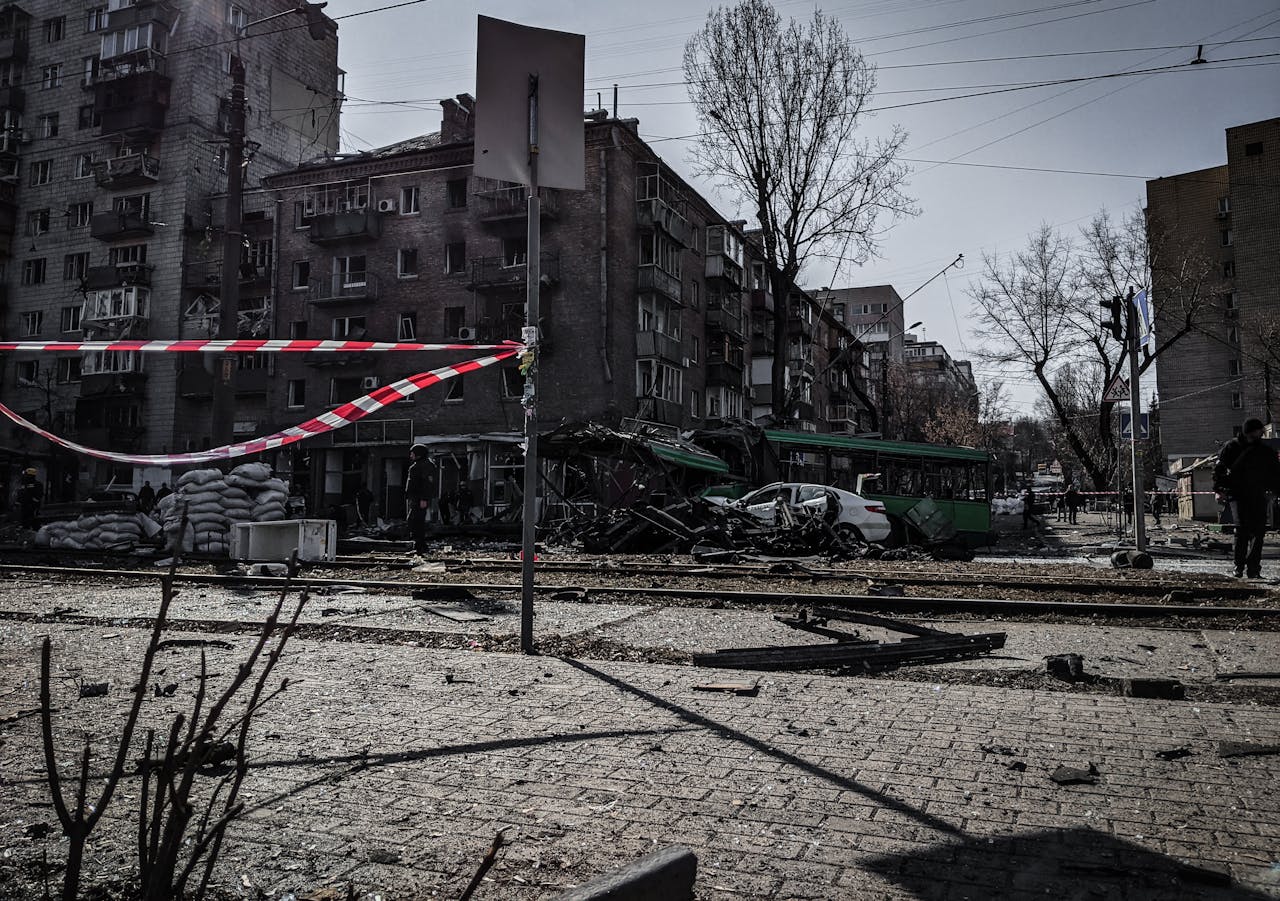
This has created unprecedented levels of violence against civilians and destabilized countries and entire regions. Conflicts in the Middle East in particular have dominated media attention. (Pexels Photo)
The Geneva Conventions signed 75 years ago ushered in an era of universal agreement on the rules of war, otherwise known as international humanitarian law. Yet we are seeing an increasing impunity and indifference to the rules-based international order, its institutions, and its treaties and conventions, particularly as it relates to protection of civilians in conflict.
Canada can and should act now to prevent further harm.
The International Committee of the Red Cross says there are over 120 conflicts waging in the world today. This has created unprecedented levels of violence against civilians and destabilized countries and entire regions. Conflicts in the Middle East in particular have dominated media attention.
While the regional conflict between Palestine and Israel has a long and complex history, the situation escalated Oct.7, 2023, with a large-scale attack by the militant group Hamas. Some 1,200 civilians were killed and about 250 were taken hostage. This was met with swift and brutal retaliation by Israel in Gaza. One year later, the United Nations Office on the Coordination of Humanitarian Affairs has reported over 40,000 persons killed in Gaza and nearly 100,000 injured.
Both parties to the conflict have committed serious breaches of international humanitarian law as judged by the International Court of Justice and outlined in reports from the United Nations Human Rights Council. These breaches include but are not limited to:
- Indiscriminate attacks on private property and civilian infrastructure in densely populated areas.
- Large-scale forced displacement.
- Restrictions on entry of humanitarian aid and the obstruction of food delivery causing malnutrition and famine.
- Besieging of and attacking hospitals, ambulances and medical staff.
- Hostage-taking.
- Rape as a method of warfare.
- Disregard for humanitarian spaces and the protection of humanitarian workers.
A major feature of the conflict in the Middle East has been bombing and shelling in populated areas. There have been regular rocket launches on Israeli territory by Palestinian armed militant groups or other regional groups supporting them. Israel has responded with heavy blasting — using American one-tonne bombs — which has led to large numbers of civilians killed or injured, as well as to the destruction of civilian infrastructure in Gaza and Lebanon.
A generation of children with disabilities
In Gaza we are witnessing an entire generation of persons with disabilities emerging from this conflict, particularly children.
A recent analysis by the World Health Organization found that about 25 per cent of all those injured in Gaza are likely to have acute and ongoing rehabilitation needs and face a strong possibility of developing a long-term disability. This includes patients with major-extremity injuries, amputations, head and spine injuries and burns.
This percentage is in addition to the 21 per cent already living with disabilities prior to the events of October 2023. This means the disability rate is estimated to have increased to 46 per cent of the population in Gaza — primarily because the destruction of health networks has led to injuries being left untreated and becoming permanent disabilities.
The Middle East is not the only place where explosive weapons are being used in populated areas. Ukraine is another conflict that has seen catastrophic harm to civilians by bombing and shelling of towns and cities, landmines banned by the 1997 Ottawa Convention and cluster munitions banned by the Convention on Cluster Munitions signed in Oslo in 2008. The use of these weapons has had a devastating impact on Ukrainian civilians and communities.
Canada should walk the talk to help shield civilians from violence
Protecting civilians in both Israel and Gaza is critical for peace and justice
More female peacekeepers essential to protect children in conflict zones
Global use of explosive weapons in populated areas surged by 70 per cent in 2023 compared with 2022, according to a report by the British non-governmental organization Action on Armed Violence. There was also a 67 per cent spike in civilian casualties and a staggering 130-per-cent increase in civilian fatalities.
The threat to civilians is worse when these explosive weapons are used in populated areas. Some 90 per cent of people reported killed and injured by such weapons in towns and cities were civilians. The statistics for civilian deaths and injury are similar for landmines and cluster munitions, which also lead to decades of contamination and danger to civilian life.
Humanity and Inclusion and Mines Action Canada have long focused on targeting weapons and tactics of war that are particularly harmful to civilians. This started with a campaign against landmines, then cluster munitions, and more recently with work to bring about a political declaration endorsed by 87 countries so far on the use of explosive weapons in heavily populated areas.
These agreements continue to have on-the-ground benefits for affected communities. However, governments need to act as well.
Canada can better support the protection of civilians
A roundtable held in Montreal in 2024 with participation from the federal government, civil society and academic sectors developed recommendations for how Canada can help to protect civilians. The ideas include:
- Invest in peacekeeping and strengthen Canada’s active presence in the world. More than 125,000 Canadians have served in over 50 peacekeeping missions since 1989. As of August 2024, Canada provided 31 uniformed personnel, including 17 women, to six United Nations peace operations. With so many conflicts in the world today, peacekeeping is more relevant than ever. In addition to monitoring and observing ceasefires, UN peacekeeping operations are frequently mandated to establish necessary security conditions for the free flow of people, goods and humanitarian assistance.
- Enhance co-operation with civil society, survivors and multisectoral coalitions. Building on the legacy of the Ottawa Convention to ban landmines, Canada should better position itself as an advocate for civil society organizations and survivors in disarmament discussions. They should be included to provide input, to participate in negotiations on disarmament and to participate in international coalitions focused on advocacy and policy development. Meaningful consultations must be part of Canada’s foreign policy to create lasting change. Canada can also help build large coalitions of countries working to uphold humanitarian law and protection of civilians.
- Champion global compliance with international humanitarian law. Canada should be proactive in promoting the law and relevant disarmament treaties. Specific measurable targets need to be identified and pursued. Canada can also address chronic underfunding of victim assistance. Helping survivors of indiscriminate weapons supports sustainable development, helps restore dignity and reduces displacement. This includes working with allies to ensure all countries uphold their obligations under international humanitarian law. The same set of rules must be enforced for all nations, whether friend or foe. Canada can lead discussions that emphasize the importance of accountability and upholding criminal-court proceedings for violations of the law.
- Emphasize the obligation to protect civilians. Canada must make certain that discussions among allies emphasize that international humanitarian law and treaties are not merely about compliance, but about driving meaningful change. Responsible militaries in other countries must ensure that humanitarian personnel can carry out their activities. Protection of civilians or humanitarian workers is not an obstacle to be negotiated in warfare.
Canada can make the world safer for those living in conflict — and for Canadians — by reducing displacement caused by wars, fighting impunity from international law and reducing global tensions. We should solidify our role as a leader to protect civilians and strengthen humanitarian norms. To not do so is to make us vulnerable in a violent world where laws are dismissed and disregarded.
Nations and militant groups allowed to act without consequences come to believe that the strong have the right to dominate the weak. We must safeguard treaties and international humanitarian law or witness the rise a of more dangerous world where “might makes right.”
This article first appeared on Policy Options and is republished here under a Creative Commons license.




















