

By Tom Whyman, University of Liverpool; The Conversation
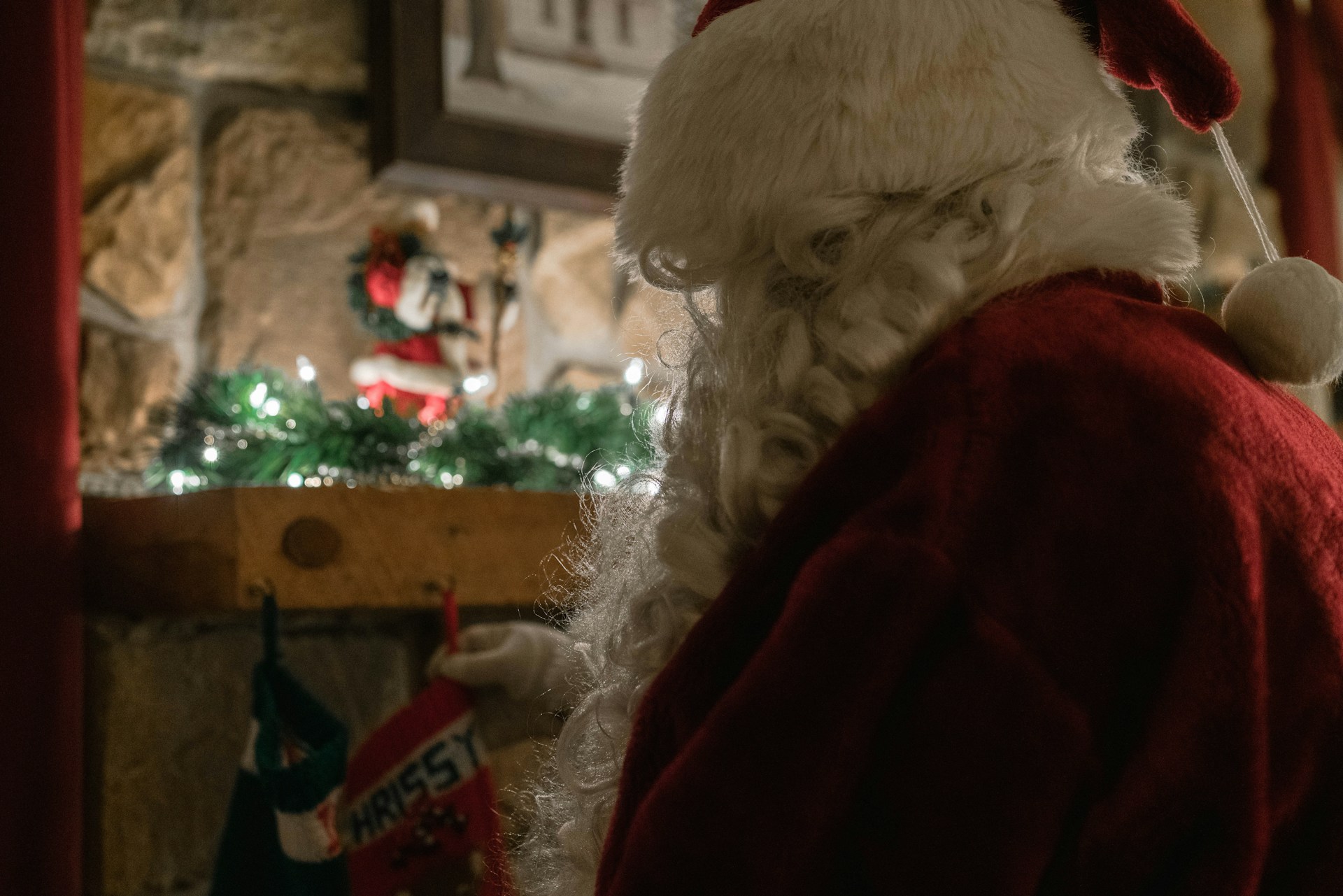
We shouldn’t be honest about Santa – at least not at first. (File Photo: Alicia Slough/Unsplash)
I have a vivid memory of the moment I realised Santa didn’t exist. I was around six years old, it was the height of summer, and I was sitting on the step outside our back door, thinking about God. The existence of God, back then, was something that annoyed me: it meant that every Sunday, we had to go to church.
Then I realised: there isn’t actually any evidence God exists. I only think God exists, because this is something people have told me.
I remember bounding up, excited, ready to share with my family this wonderful news. No longer would we be forced to endure the drudgery of weekly Sunday schools and sermons. But then I remember checking myself and thinking, oh no. If God doesn’t exist, by the same logic, Santa must be made up as well.
Perhaps this was the moment I became a philosopher (though I should say that as an adult, I no longer think that the analogy between God and Santa really holds). Certainly it gave me a slightly ridiculous sense of my intellectual superiority to those around me – not least the other kids in my class who hadn’t seen through this hoax.
But now the tables have turned. Now I am a parent of young children, and I am the one enforcing hegemonic myths about Santa.
We all do it, of course. Our culture expects parents, basically, to lie to our children that their presents were left by a jolly fat man who flies in a sleigh pulled by reindeer through the sky. And so of course one might ask, is this OK? We all surely want our children to grow up to be honest people. Shouldn’t we set a good example, as far as possible, by telling them the truth?
To which I would say: well, no. We shouldn’t be honest about Santa – at least not at first. It is morally OK, to the point of being actively morally good, for parents to participate in the grand Santa lie.
Why kids need Santa
When you think back to your first experiences of Christmas, do you really think they would have been improved if your parents had been honest about Santa? Without that sweet embellishment, there would be no ritual of writing to him, of leaving out sherry and mince pies, of waiting desperately to see if “he’s been” on Christmas morning.
Without the Santa myth, what would Christmas for the average child even be? An arbitrary date when they are finally allowed to play with presents their parents maybe bought months in advance. What would be the point?
This also bears on the question of to what extent one ought to be honest with one’s children in general. What, after all, would being “fully honest” really mean?
If I felt compelled to tell my children everything, I would pull no punches in relating the wretched state of the world, of existence, of my still-deepening resignation that nothing positive can be done about it. I would inflict the full brunt of my money worries, my health concerns, my (mostly irrational) worries about them.
And this would leave them, what? Emotionally healthier than the children of parents who gifted them a moderately sugar-coated sense of the world? Think of Nietzsche’s argument in his early essay On Truth and Lies in a Non-Moral Sense, to the effect that we need to be at least somewhat deluded about reality in order to be able to bear it.
As we’re growing up, we probably do on some level need to believe that the world is good and just: the sort of place where a jolly man runs a workshop staffed by elves, rewarding the nice children and (lightly) punishing the naughty.
If not, would youngsters really find it in themselves to fight for a better world?
When the lying should end
And when our children do finally see through the myth? This is surely good for their moral development as well. It was very positive for me to realise that I had seen through my parents’ lies. I didn’t feel angry at them – and research suggests only a minority of children do, in this situation. Instead, I was left with a healthy suspicion for the received wisdom being ventriloquised by my parents.
This I guess is the extent to which I think lying about Santa is justified. Parents should surely maintain the myth while their children remain small, but answer honestly when confronted directly. When a child finally asks, at the age of six or seven, “is Santa real?” – that’s when they no longer need the noble lie.
Ultimately in raising children, our concern should always be with how we are shaping them. If we want to raise critical citizens, with a powerful sense that the world can be improved – and with a healthy suspicion of those in charge – the Santa myth is surely one mechanism through which this might possibly be achieved.
Tom Whyman, Lecturer in Philosophy, University of Liverpool
This article is republished from The Conversation under a Creative Commons license. Read the original article.




















