By Ruth Deyermond, King’s College London, The Conversation
The outgoing Biden administration recently reversed a ban on Ukraine’s use of long-range missiles to strike targets inside Russia. The ban had been imposed by the White House and observed by Washington’s allies out of fear that Russia could escalate the conflict to involve nuclear weapons.
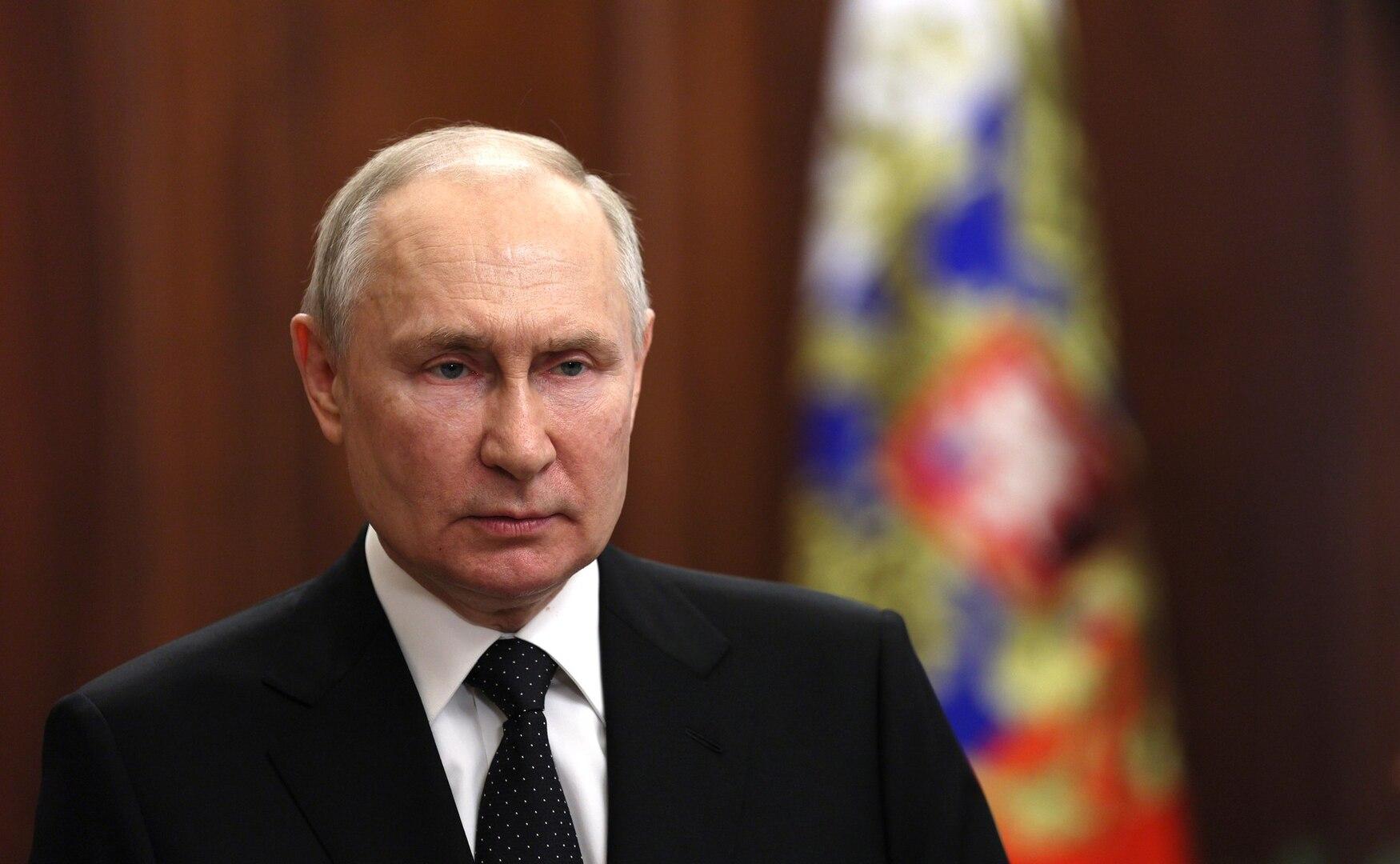
The Russian president, Vladimir Putin, responded by signing into law changes to Russia’s nuclear doctrine, lowering the threshold for the use of nuclear weapons. Russia then struck Ukraine with an apparently new, nuclear-capable intermediate-range missile, the Oreshnik. Putin then announced that Russia had the right to attack the military installations of states allowing Ukraine to use their weapons to attack Russia – in other words, the US and UK.
Putin’s nuclear threats and the use of the Oreshnik missile were reported with alarm around the world. In the UK, news media asked if Putin was “ready to reach for the nuclear button” and invoked the possibility of world war three.
UK and US stories that amplified Putin’s threats were covered in detail in gloating Russian media reports. Reporting a story in the Guardian that suggested Putin was directly threatening London and Washington, the host of the 60 Minutes programme on the Russia 1 television channel commented that “they understand us correctly”.
Russia’s interest in British and US media coverage highlights something important about Russian strategy towards the west since the start of the war against Ukraine in February 2022.
The Kremlin has made it increasingly clear that it sees the west as the main existential threat to Russia. This is not just because Ukraine’s continued resistance on the battlefield has been made possible by western military support, or because severe western sanctions have forced Russia into a position of dependence on China. Opposition to the global influence of western states, above all the US, and to the spread of liberal values is now one of the main ideological planks of Putin’s presidency.
But Russia has neither the capability nor the appetite for direct military confrontation with Nato. That’s a confrontation that it would lose if it were conventional, while everyone – including Russia – would lose it if it went nuclear. So the Kremlin relies on other tools to try to limit support for Ukraine, weaken western states and fracture western societies. These include the sabotage of critical infrastructure and interference in its rivals’ domestic politics.
Climate of fear
One important tool is the attempted manipulation of public opinion – particularly by creating a climate of fear. Successfully shaping the domestic environment in which western governments make decisions about Ukraine and Russia would be both hugely beneficial and cost-free for the Kremlin.
This is a variant of an old Soviet-era military practice: reflexive control. Reflexive control is a technique that leads an opponent to make the decisions the Kremlin wants them to make through the targeted presentation of information.
This is what we can see happening now. The release of Russia’s new nuclear doctrine, Putin’s nuclear threats, and the amplification of western media alarm is intended to cause UK and other western decision-makers to rethink support for Ukraine because of public concerns. This has been evident since the start of the war. But it sharply increased once the Biden administration decided to call Putin’s nuclear bluff and allow long-range missile strikes against Russia.
Energy blackmail
This is not the first time since the start of the war that the Russian government has tried to pressure western governments by frightening citizens. In October 2022, the Kremlin threatened that Russia could shut down its gas pipeline to western Europe in the winter.
The aim was to pressure European governments into changing course on Ukraine and on sanctions. This is a tactic that Russia has used successfully for decades to pressure its weaker post-Soviet neighbours. But it backfired when many countries which had previously bought gas from Russia shifted to other energy sources.
Of course, attempting to use public anxiety about Russian threats to change western policy jeopardises the Kremlin’s credibility if it is unsuccessful because the threats are neutralised or because they are ignored. Despite the alarmism, the EU and other western European states have not suffered catastrophic energy failures and Putin has yet to use nuclear weapons in or outside Ukraine. The more frequently this happens, the weaker Russia looks to its opponents and to the rest of the world. That is a dangerous position for Putin to put himself in.
This recent round of threats, and Russia’s amplification of western media coverage, are a result of the Biden administration’s decision to finally call Putin’s nuclear bluff. They are an indication that more significant responses, including the use of nuclear weapons, are no more likely than they were before.
But while it remains highly unlikely that Russia will resort to using nuclear weapons, Russian attempts to pressure the UK and other European states through public opinion manipulation, sabotage, and other instruments may well increase after January 2025, as Trump returns to the presidency. A Russia-friendly White House will make the whole world less secure.
Ruth Deyermond, Senior Lecturer in Post-Soviet Security, King’s College London
This article is republished from The Conversation under a Creative Commons license. Read the original article.