

By Serag El Hegazi, University of Bradford; The Conversation
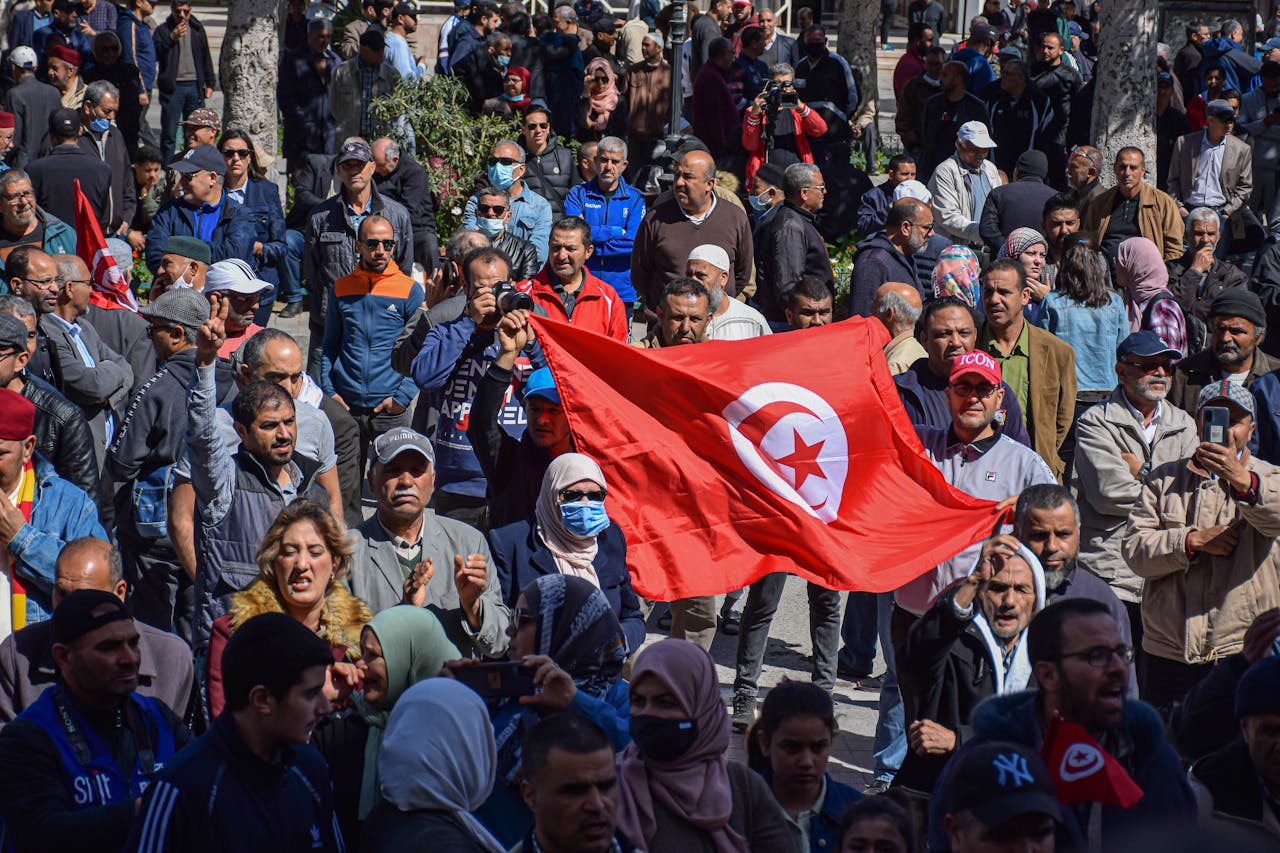
Saied’s presidency has been controversial, and the slide back towards centralised control is a sharp contrast to the pluralistic democracy Tunisians had hoped for following the Arab spring. (Pexels Photo)
There was tension hanging in the air as I walked through Tunisia’s capital city, Tunis, in July, just months before the country’s latest presidential election. The conversations I had in cafes and markets confirmed people’s uncertainty and apprehension about the state of their country.
Tunisia was the location of an uprising against corruption, poverty and political repression in 2011 that ousted longtime autocrat Zine al-Abidine Ben Ali. The uprising, which came to be known as the Jasmine Revolution, inspired a wave of pro-democracy protests throughout the Middle East and North Africa called the Arab spring.
But some Tunisian journalists, lawyers and members of non-governmental organisations have argued that the country has slowly returned to a dictatorship. Tunisia’s current president, Kais Saied, was elected democratically in 2019. However, since then he has suspended parliament and backed a referendum on a new constitution that has allowed him to rule by decree.
Shortly after the polls closed on Sunday, October 6, it became clear that Saied had again emerged victorious, securing a second term with more than 90% of the vote. His victory had been widely expected. Saied’s closest challenger, Ayachi Zammel, won 7% of the vote, but had been sentenced to 12 years in prison five days before the poll for allegedly falsifying documents.
Saied’s presidency has been controversial, and the slide back towards centralised control is a sharp contrast to the pluralistic democracy Tunisians had hoped for following the Arab spring. Yet for Saied’s supporters – of which there are many – this has been necessary in a country that has for years wrestled with political gridlock and economic stagnation.
The Jasmine Revolution ultimately failed to deliver a stronger economy and a government free from corruption. Tunisia’s 2019 score of 43 out of 100 on Transparency International’s Corruption Perceptions Index is, in fact, slightly higher than it scored in 2012.
Corruption remains a problem that affects every part of Tunisian society and is impeding economic growth and stability. Many Tunisians have expressed frustration over the past decade with widespread nepotism and favouritism, which have hurt efforts to address high unemployment and soaring public debt.
So, Saied’s move to control power and implement economic reforms, accompanied by promises to crack down on corrupt political elites, has given him some support among a population tired of the slow rate of change.
As one Tunisian told me during my visit: “We didn’t need more debates in parliament. We needed someone to act. And Saied acted.”
This is a view shared by others. In an interview with Al Monitor, a news website focusing on the Middle East, a server working in a cafe in the northern suburbs of Tunis described Saied as “modest and kind”, and said “he has put the country back on track”.
Falling support
However, in general, Saied’s support has waned since 2021. Living standards have fallen due to high inflation and the youth unemployment rate is on the rise.
Critics, both in Tunisia and elsewhere, have voiced concerns about Saied’s concentration of power. Amnesty International has denounced the “worrying decline in fundamental rights” under his government. And Saied’s main opponents in Sunday’s election, as well as many other hopefuls, were either imprisoned or left off the ballot.
Indeed, the election saw the lowest turnout in Tunisia since 2011. Tunisia’s election authority reported that only 27% of registered voters cast their vote, a significant drop from the 55% that turned out in 2019.
The current economic challenges facing Tunisia also require immediate action. In 2022, Saied’s administration negotiated a US$1.9 billion (£1.45 billion) bailout loan with the International Monetary Fund as Tunisia’s economy grappled with severe inflation, rising public debt and a lack of essential goods.
However, the deal now hangs in the balance. The loan was contingent on Tunisia implementing punitive reforms aimed at stabilising the country’s economy. Saied has expressed reservations about these conditions, saying that such measures would increase poverty, fuel social unrest and compromise Tunisia’s sovereignty.
While celebrating his victory, Saied told state television that his reelection was “a continuation of the revolution”. “We will build and will cleanse the country of the corrupt, traitors and conspirators,” he said. During his victory speech, he then pleaded with his fellow Tunisians to work together for the common good.
As I left Tunisia in the summer, I couldn’t help but feel the country was standing at the edge of a precipice. Saied will need to honour the promises he has made to restore the country’s economy and political systems, or else his presidency could come to a premature end.
Serag El Hegazi, Lecturer in the Department of Peace Studies and International Development, University of Bradford
This article is republished from The Conversation under a Creative Commons license. Read the original article.




















