
Environment & Nature
Arctic could be consistently ice-free as early as 2035

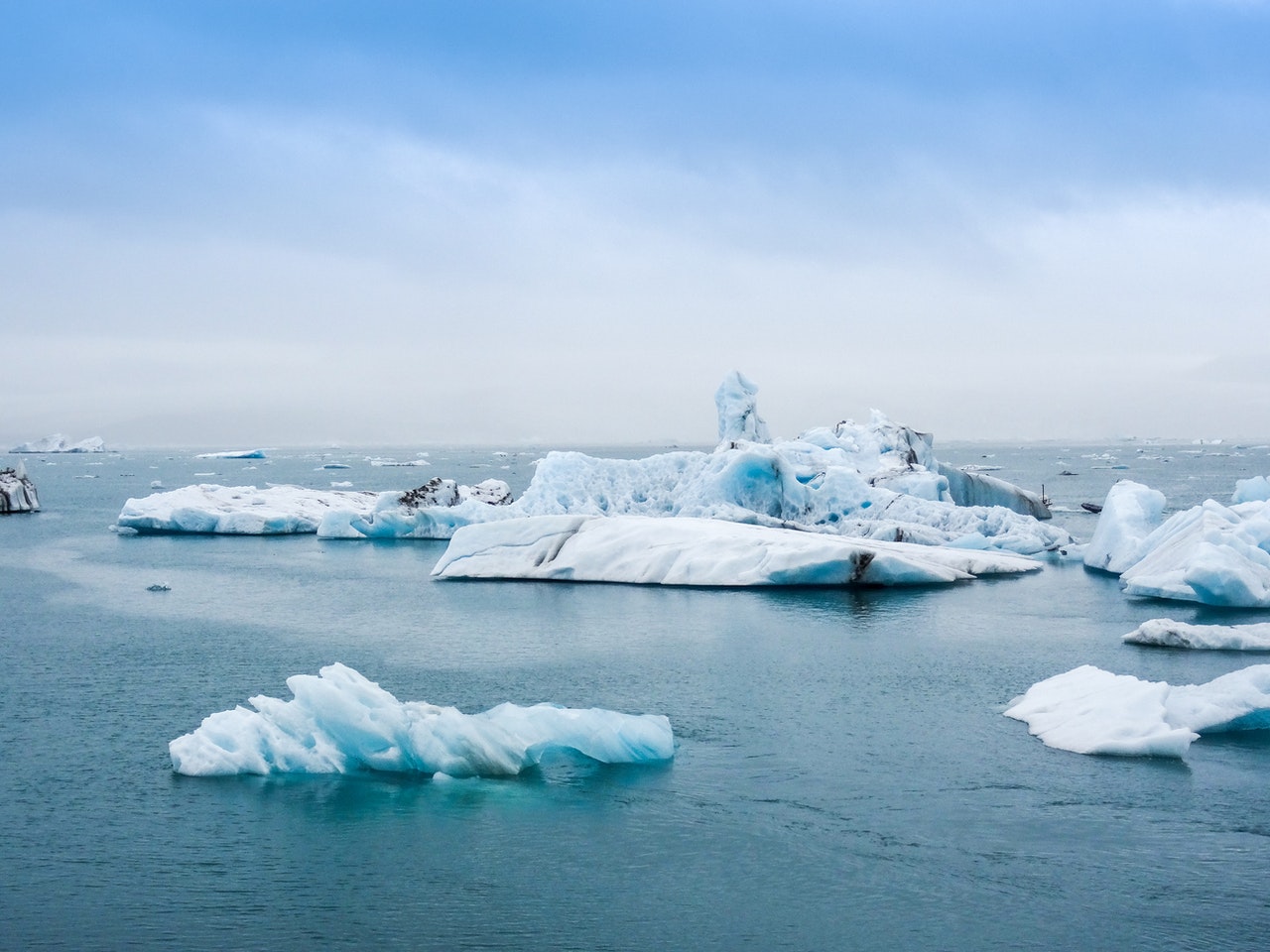
For the paper, the researchers defined ice-free as a sea-ice area of less than 1 million km2. (Pexels photo)
The Arctic could be consistently ice-free as early as 2035, several years earlier than previously thought, says new research published Tuesday.
When it comes to communicating what scientists expect to happen in the Arctic, it is important to predict when we might observe the first ice-free conditions in the Arctic, which will show up in the daily satellite data,
Alexandra Jahn, an associate professor of atmospheric and oceanic sciences at the University of Colorado at Boulder and the paper’s lead author, said in a statement.
To do the paper, scientists looked at studies and climate models to better understand the changing ice conditions in the Arctic. They focused on different aspects like when an ice-free Arctic might happen in September, how often it might occur, and if it could extend to other months.
September is often used as a reference point for researchers because it is the month where Arctic sea ice typically reaches its lowest annual extent.
For the paper, the researchers defined ice-free as a sea-ice area of less than 1 million km2.
Consistently ice-free conditions, which refers to the transition to a frequently ice-free Arctic, are expected to occur between 2035–2067 under the high-emission scenarios, with a small delay possible for lower-emission scenarios,
the researchers said.
In addition, under a low-emission scenario, the Arctic could experience ice-free conditions for a three-month period, from August to October, by the year 2100. Conversely, under a high-emission scenario, this period could extend up to nine months, spanning from May to January.
The study also stressed that while ice-free conditions are inevitable for the Arctic, the global community’s adherence to the Paris climate agreement for reducing emissions could significantly impact both the severity and duration of these ice-free scenarios in the long term.
If global warming is kept below 2 C, ice-free conditions in the Arctic might remain infrequent, the paper said, while if negative emissions are achieved keeping global warming to less than 1.5 degrees Celsius, there’s a possibility that ice-free conditions could reverse or even disappear in the future.
“Even if ice-free conditions are unavoidable, we still need to keep our emissions as low as possible to avoid prolonged ice-free (new window) conditions,” Jahn said.
“Unlike the ice sheet in Greenland that took thousands of years to build, even if we melt all the Arctic sea ice, if we can then figure out how to take CO2 back out of the atmosphere in the future to reverse warming, sea ice will come back within a decade.”
Central Arctic affected last
The scientists also looked a specific predictions for different regions of the Arctic and found all scenarios pointed to ice-free conditions starting in the European Arctic, followed by the Laptev Sea, the Chukchi Sea and the East Siberian Sea then to the Beaufort, with Central Arctic affected last.
Scientists say the study is the just the beginning of better understanding ice changes in the Arctic. Among their recommendations is that regional predictions should be refined and evaluated and that a criteria should be established by sea ice reachers on the definition of ice free.
Deciding on these criteria ahead of reaching ice free conditions is prudent given the various definitions as well as observational uncertainty in satellite-derived sea ice products,
the researchers said.
“Clarity on how this issue will be handled will facilitate communication around the occurrence of the first ice-free Arctic when it occurs.
The study, Projections of an ice-free Arctic Ocean
published in the journal Nature Reviews Earth and Environment. (new window)
Comments, tips or story ideas? Contact Eilís at eilis.quinn(at)cbc.ca
Related stories from around the North:
Canada: Hot and dry July saw temperature records topple in the Yukon (new window), CBC News
Greenland: Alarming, above-average ice loss in Greenland due to rising temperatures (new window), Eye on the Arctic
Norway: Polar heat record. July average above 10°C, (new window) The Independent Barents Observer
Sweden: High risk of wildfires in many parts of Sweden, including North (new window), Radio Sweden
United States: Bursting ice dam in Alaska highlights risks of glacial flooding around the globe (new window), The Associated Press
Eilís Quinn, Eye on the Arctic (new window) @arctic_eq
This article is republished from RCI.




















