TikTok says orange cats are ‘dumb’, and tortoiseshell cats have ‘an attitude’. But how true is that?

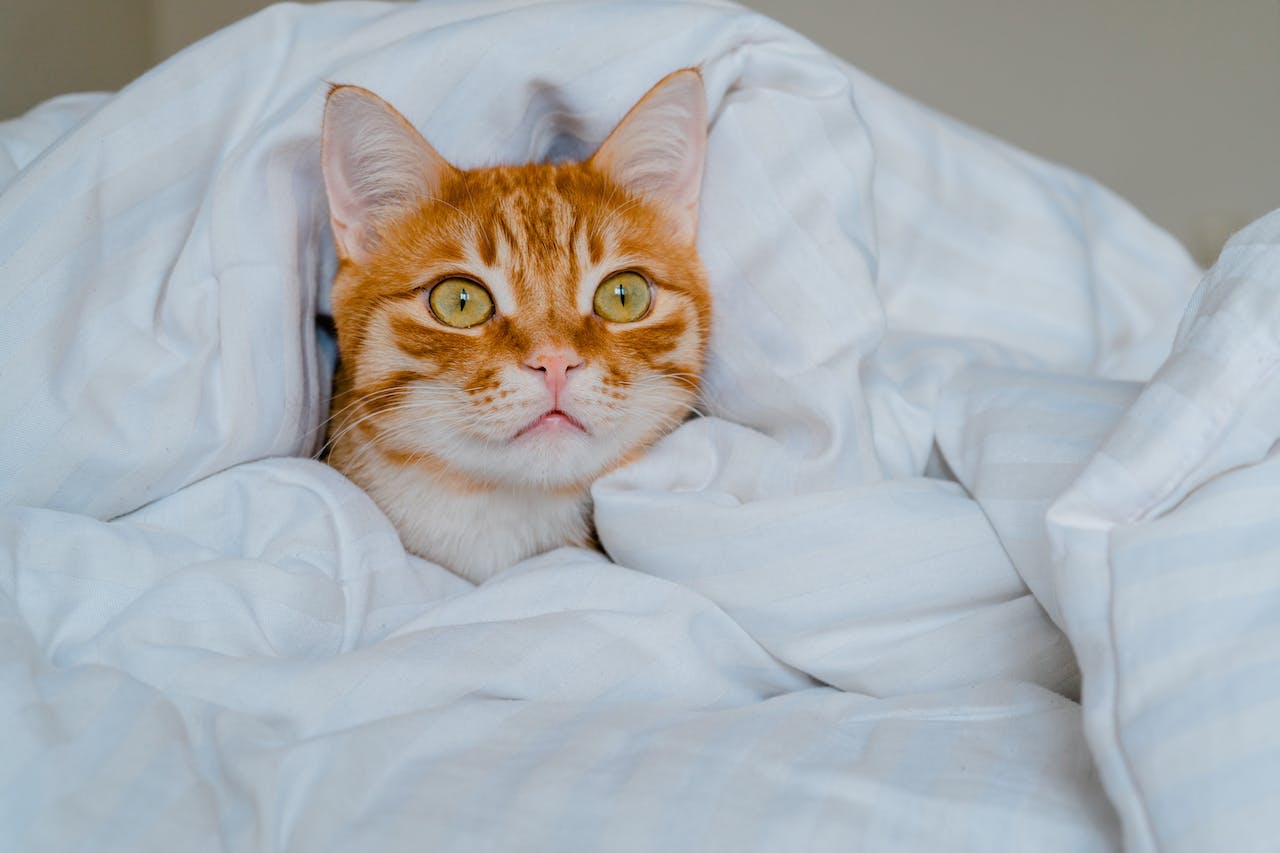
Orange cats are supposedly “dumb”, always falling off beds or getting themselves stuck in awkward places. (Pexels Photo)
If you’ve watched cat videos on social media lately, you may have encountered the idea a cat’s coat colour tells us something about their personality.
Orange cats are supposedly “dumb”, always falling off beds or getting themselves stuck in awkward places. Tortoiseshell cats are often said to have a strong-willed attitude (sometimes referred to as “tortitude”). Black cats are “smarter”, if social media is to be believed.
The idea a cat’s personality is linked to their coat colour isn’t new. In 2012 a study of human perceptions of cats reported people generally believe ginger cats are friendly, while tortoiseshell cats are seen as aloof and intolerant.
It’s important to note this is a reflection people believe, rather than how cats are. So what does the research actually say?
Surveys on cat personality are filled out by people
Research suggests that cats, like people, have different personality types. One study proposed the “feline five” personality traits for cats: neuroticism, extraversion, dominance, impulsiveness and agreeableness.
The researchers linked “neuroticism” in cats with being anxious, insecure, fearful of people and tense. Cats low in neuroticism were associated with being stable, trusting, calm and self-assured.
Cats categorised as impulsive scored highly for being erratic, reckless and distractible, while those low in impulsivity were considered to be predictable and constrained.
You might get a sense from these studies that these are not terms cats would choose for themselves, and you’d be right.
Surveys on cat personality are filled out by people. As such, results are affected by human perspectives, projections and biases.
Indeed, a review of methods used to define personality in cats concluded studies reporting differences in personality due to coat colour were likely to be affected by owner bias.
Breed personality
Instead of colour, it’s possible breed is more important when it comes to cat personality.
One study found British Shorthair cats were least likely to seek human contact, while Korat and Devon Rex cats were most likely.
Another study, however, found substantial variation exists within breeds, suggesting a cat’s breed may not fully explain personality.
Both of these studies were once again survey-based and so, again, human bias is likely affecting the results.
If it’s not coat or breed, what else is it?
Genetics is not the only factor influencing personality. The environment and how an animal is raised also has a big effect.
If kittens are not socialised with people by the age of around nine weeks, they are more likely to be anxious and shy around humans and other animals.
Whether your cat was hand-reared, purchased from a breeder or found in a box, they will likely behave differently depending on time spent with their mother.
In reality, humans tend to ascribe certain meanings to particular behavioural traits.
For instance, if a cat is fearful, they may come across as lacking intelligence because they are less likely to interact with their environment in ways we recognise as “smart”.
On the flip side, confident cats comfortable in their environment may seem “dumb”, as they act in a carefree way that registers as “stupid” to the human eye.
Don’t judge a book by its cover – or a cat by it’s colour
While funny social media videos linking personality with cat coat colour might be harmless, the biases they create can have more harmful results. For instance, black cats take longer to adopt from a shelter than cats of other colours, and so are at higher risk of being euthanised.
Black animals are more difficult to photograph, meaning they may not look as attractive in adoption photos. Some people also believe black cats symbolise bad luck, or are associated with witchcraft or evil. Stereotypes of black cats being less friendly may also stem from facial expressions on darker fur being harder to read.
Before you dismiss this as speculation, a study did confirm human bias against black cats using photos of cats of different colours.
We shouldn’t be surprised people make judgements about cats based on their coat colour. We also make judgements based on human hair colour – take the baseless “dumb blonde” and “fiery redhead” stereotypes, for example.
And just like with human stereotypes, putting our cats into arbitrary boxes isn’t useful for anyone.
Instead, it’s best to think of your cat, and any cat, as the individuals they are.
Cats are much more than their coats. People and cats form close emotional bonds.
A cat can be the reason somebody gets up in the morning. Cats can also be fiercely loyal, unwavering companions, friends and family. Let’s not reduce their complex, wonderful individuality to just a colour or type.
Susan Hazel, Associate Professor, School of Animal and Veterinary Science, University of Adelaide and Julia Henning, PhD Candidate, University of Adelaide
This article is republished from The Conversation under a Creative Commons license. Read the original article.