Headline
South Africa is taking Israel to court for genocide in Palestine. What does it mean for the war in Gaza?

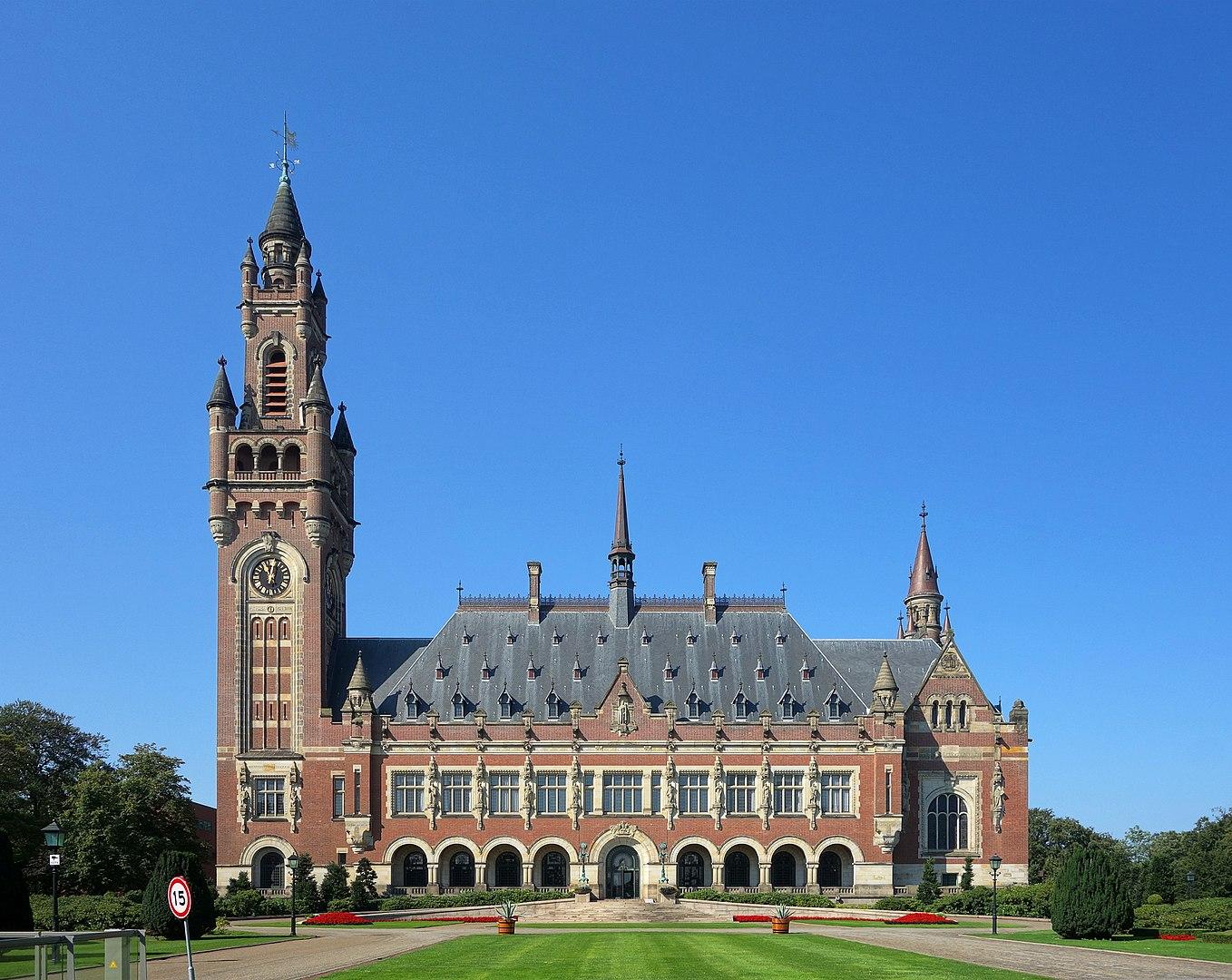
A charge of genocide before the court in the midst of a heated armed conflict is exceptional. (Photo By Velvet/Wikimedia Commons, CC BY-SA 4.0)
South Africa has taken Israel to the International Court of Justice (ICJ, also known as the World Court) in The Hague claiming genocide has been committed against Palestinians during the Gaza conflict.
A charge of genocide before the court in the midst of a heated armed conflict is exceptional.
Likewise, the significance of South Africa’s claim against Israel has immense cultural, diplomatic, historical, and political significance. Israel has rejected South Africa’s claim and vowed to contest the case against it.
International court cases such as these typically run for many years before a final judgement is reached, however South Africa has also requested provisional measures – a form of international injunction – and preliminary hearings will take place in The Hague on January 11 and 12.
A decision on South Africa’s provisional measures request will most likely be made by the end of January with the potential to have a profound impact on Israel’s military campaign in Gaza.
Which laws are in question?
The 1948 Convention on the Prevention and Punishment of the Crime of Genocide (Genocide Convention) was adopted following the 1940s holocaust by the Nazi regime, which resulted in the deaths of six million Jewish people.
The Genocide Convention was one of the most significant responses by the then fledgling United Nations to the holocaust. It was intended to clearly define genocide, prevent future genocides, and make nation states accountable for genocide.
There are a total of 153 parties to the Genocide Convention, including Israel and South Africa, and it is widely seen as one of the pillars of the United Nations human rights system.
States are accountable for genocide before the International Court of Justice, while individuals can be charged with the crime of genocide and placed on trial at the International Criminal Court.
Genocide is defined in the Convention as “acts committed with intent to destroy, in whole or in part, a national, ethnical, racial or religious group” and extends to:
- killing members of the group, or causing serious bodily harm to members of the group
- deliberately inflicting on the group conditions of life calculated to bring about its physical destruction
- imposing measures to prevent births.
What is South Africa’s case about?
South Africa’s case against Israel under the Genocide Convention was commenced on December 29 2023 following lodgement of an 84 page application instituting the proceedings.
South Africa has brought the case by relying on the principle that as a party to the Genocide Convention, it has an obligation to enforce legal rights owed to all people that genocide not be allowed. The claim could have been commenced by any other party to the convention, however, South Africa has been raising concerns about genocide in Gaza since October 30.
The claim gives an historical context to Israel’s conduct in Palestine, recounts the Hamas terrorist attacks on October 7, and details Israel’s subsequent Gaza military operations.
Particular attention is given to the actions and conduct of Israeli political and military leaders, especially their statements as to how Israel intended to respond to the Hamas attacks, and the extent and scale of Israel’s military operations and military objectives in Gaza.
South Africa then details Israel’s actual military conduct during the Gaza campaign and the consequences for Palestinian civilians. This conduct is linked directly back to acts of genocide as defined in the Genocide Convention.
South Africa’s court case takes two forms: a claim that Israel has committed genocide against Palestinians in Gaza, and the urgent request for provisional measures (international legal speak for expediting the process).
South Africa has requested that the court order that Israel’s political and military leaders, and Israel’s military, immediately cease any activities that amount to an ongoing campaign of genocide against the Palestinian people.
South Africa will need to prove, both in law and in facts, that the case is admissible, that the World Court has jurisdiction to hear this claim, and that the application is urgent, requiring orders to prevent irreparable harm.
Importantly at this stage, South Africa does not need to conclusively prove genocide has taken place. That comes at the later phase, called the Merits phase. South Africa does, however, need to demonstrate that Palestinians face irreparable harm and that, on the facts, Israel’s conduct could be considered to be acts of genocide.
Israel will no doubt robustly resist any assertion genocide is occurring and argue its political and military leaders are acting consistently with international law in response to the threat posed by Hamas. Particular attention will probably be given to Israel’s right of self-defence following the October 7 attacks.
How do cases like these work?
The International Court of Justice has been thrust into the middle of the Israel-Hamas conflict.
However, it is not being asked to play the role of the United Nations Security Council and settle that dispute. The court’s role, as a United Nations organ is purely to apply the Genocide Convention and international law.
It will, nevertheless, be acutely aware of the significance of its role, especially in the face of claims of an ongoing genocide. This has been reflected in how it has moved quickly to hear South Africa’s case.
There are two potential outcomes from South Africa’s provisional measures request.
The court may decline to order provisional measures. It may, for example, find it lacks jurisdiction and that South Africa’s case is inadmissible on technical legal grounds, or the facts do not support the claims made.
Or the court may uphold South Africa’s request and order provisional measures. Any provisional measures ruling against Israel would require a radical modification of Israel’s military operations in Gaza.
The court cannot, however, enforce its decisions. In 2022, for example, Russia ignored an International Court of Justice provisional measures order following its invasion of Ukraine.
No matter what the court orders, Israel will retain its right of self-defence against Hamas.
Donald Rothwell, Professor of International Law, Australian National University
This article is republished from The Conversation under a Creative Commons license. Read the original article.