
How using your phone at work helps to balance your home life – new research

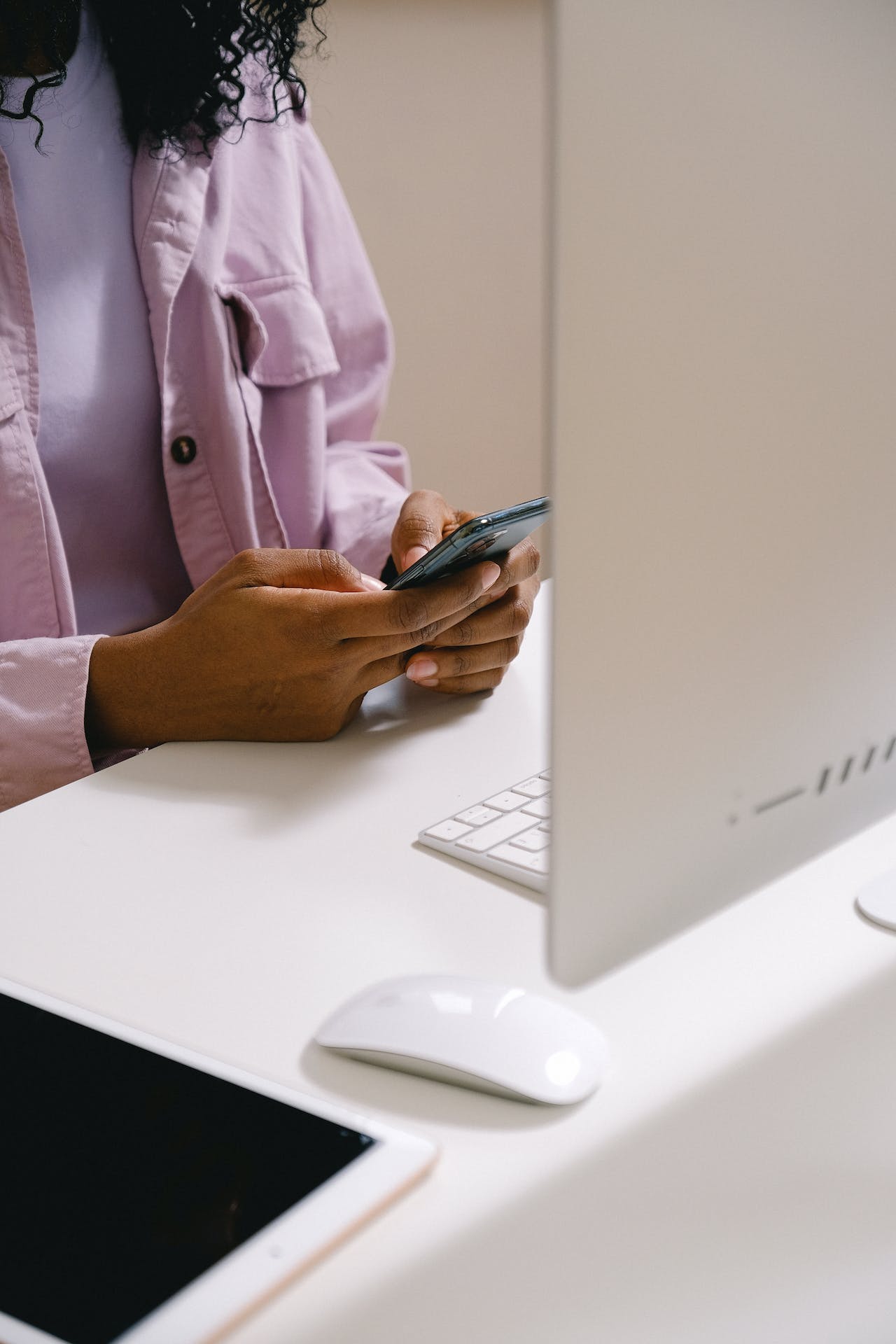
One survey suggests that employees use their phones for personal reasons for more than two hours during the average working day. (Pexels Photo)
You might not think twice about using your phone while you’re at work. Maybe you need to send a quick message to a family member or a friend, or catch up on the news. Then there’s that dental appointment which needs to be booked – and while you’re at it, you may as well get the online grocery shopping done.
It’s all very convenient, and means plenty of domestic tasks can be crossed off the to-do list while you’re on company time. And it appears to be widespread. One survey suggests that employees use their phones for personal reasons for more than two hours during the average working day.
But those hours add up. And with people reportedly checking their phones more than 100 times a day, some employers and companies will be understandably concerned about how much time (and productivity) is being lost.
As a result, some companies have banned the use of phones in the workplace. But how do these bans affect the work-life balance of their employees? Do they improve productivity, and if so, at what cost?
To find out, we worked with a pharmaceutical company to examine any changes that might emerge after it overturned a longstanding ban on smartphones in the workplace.
The ban was implemented in the mid 1990s for health and safety reasons, as there were concerns employees may be distracted by their phones while working around potentially dangerous chemicals. The subsequent decision to reverse the policy was fuelled by staff feeling disconnected from the outside world while they were at work.
Over a year we tracked employees who took advantage of the new policy and used their phones at work. We also gathered data from some of their colleagues who had decided to maintain a self-imposed ban by leaving their phones untouched after they began their working day.
Despite fears of the phones being a distraction (as suggested in other studies which point to falls in productivity), we found that job performance did not decline for those who used their phones at work.
And the new policy resulted in a noticeable benefit for those who started using their phones in a personal capacity while at work, who told us they enjoyed the feeling of being contactable. Work-life conflicts significantly declined for this group in comparison to those who left their phones alone,
As one employee explained: “People use their phone as a way to feel connected to others, even if they don’t use the phone at all during the day. Simply having the ability to be contacted is enough to remove stress.”
Screen sharing
Other employees who started using their phones at work said they welcomed the chance to assist with family issues during the day, reducing the domestic pressure which had previously been placed on their partners.
One told us this helped to reduce marital stress, saying: “For years, kindergarten and schools could not contact me directly unless I was at my desk. This meant that my husband had to take all the calls. He travels a lot and therefore there was always a worry when he could not be available as required.
[Access to my] smartphone allows equal sharing and less stress.”
Another benefit we noticed was employees enjoying being able to spread personal communications throughout the day. This meant they were not overwhelmed with messages as soon as they turned on their phone after work.
Of course, the working culture of the company we investigated may be different to that in other organisations. For even after the policy change, we noticed that the use of smartphones by employees remained fairly low.
The legacy of the ban and the habits it had created were clearly evident even a year after the new policy was implemented.
As long as employees there continue to use their phones in moderation, it seems likely that their work performance will remain unaffected.
But overall, what we learnt suggests that rather than banning employees from using their phones, a more effective strategy for companies would be to establish a culture in which expectations for use are clear (such as not using them during meetings).
Employers should also be aware of the potential unintended consequences of banning personal phone use. Being without access to phones can have a damaging effect on work-life balance, which in turn could have an impact on performance, job satisfaction and an employee’s general wellbeing.
Eoin Whelan, Professor in Business Analytics and Society, University of Galway
This article is republished from The Conversation under a Creative Commons license. Read the original article.




















