
Dreaming may have evolved as a strategy for co-operative survival

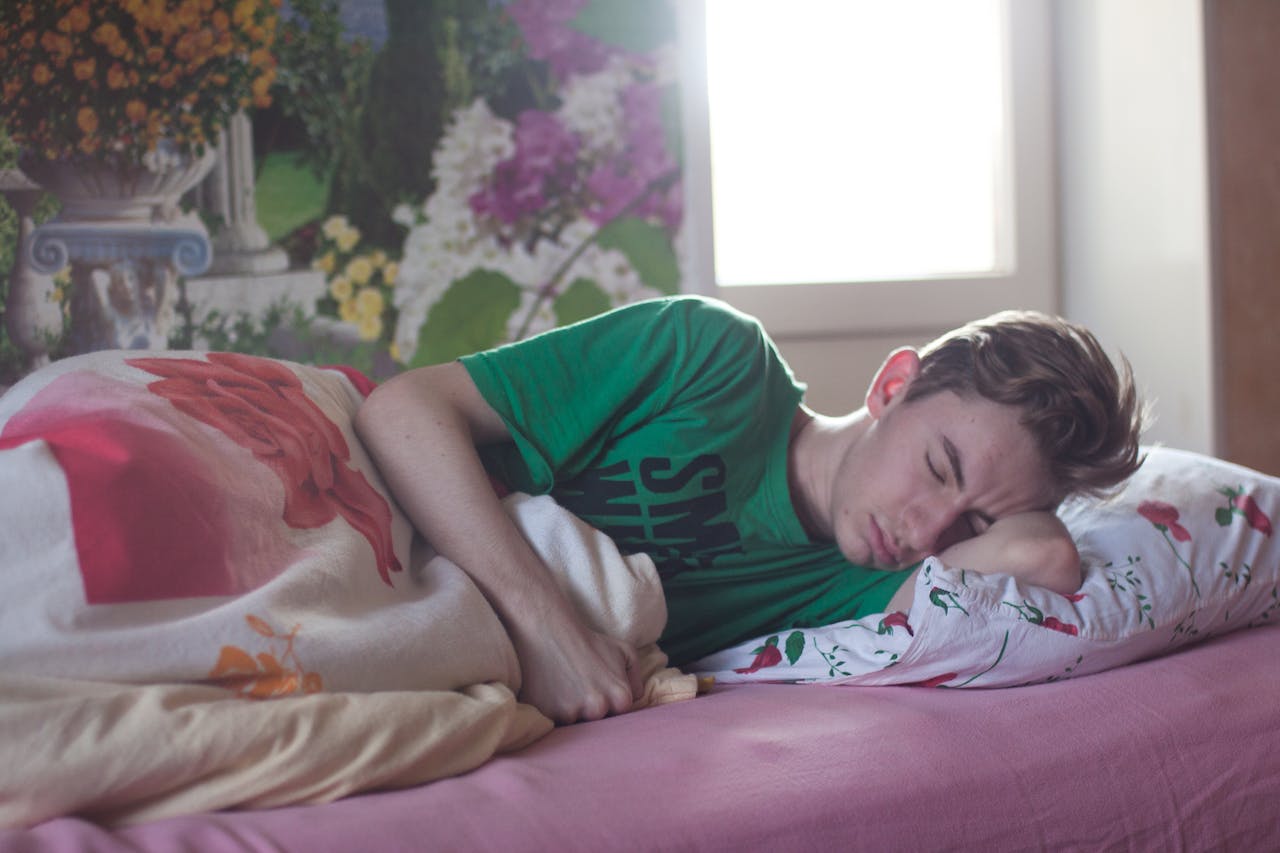
A comparison of dreams shows they play out much differently across various socio-cultural environments. (Pexels Photo)
Have you ever woken from a dream, emotionally laden with anxiety, fear or a sense of unpreparedness? Typically, these kinds of dreams are associated with content like losing one’s voice, teeth falling out or being chased by a threatening being.
But one question I’ve always been interested in is whether or not these kinds of dreams are experienced globally across many cultures. And if some features of dreaming are universal, could they have enhanced the likelihood of our ancestors surviving the evolutionary game of life?
My research focuses on the distinctive characteristics that make humans the most successful species on Earth. I’ve explored the question of human uniqueness by comparing Homo sapiens with various animals, including chimpanzees, gorillas, orangutans, lemurs, wolves and dogs. Recently, I’ve been part of a team of collaborators that has focused our energies on working with small-scale societies known as hunter-gatherers.
We wanted to explore how the content and emotional function of dreams might vary across different cultural contexts. By comparing dreams from forager communities in Africa to those from western societies, we wanted to understand how cultural and environmental factors shape the way people dream.
Comparative dream research
As part of this research, published in Nature Scientific Reports, my colleagues and I worked closely for several months with the BaYaka in the Democratic Republic of Congo and the Hadza in Tanzania to record their dreams. For western dreamers, we recorded dream journals and detailed dream accounts, collected between 2014 and 2022, from people living in Switzerland, Belgium and Canada.
The Hadza of Tanzania and the BaYaka of Congo fill a crucial, underexplored gap for dream research due to their distinct lifestyle.
Their egalitarian culture, emphasizing equality and co-operation, is vital for survival, social cohesion and well-being. These forager communities rely heavily on supportive relationships and communal sharing of resources.
Higher mortality rates due to disease, intergroup conflict, and challenging physical environments in these communities (without the kind of social safety nets common to post-industrial societies in the West) means they rely on face-to-face relationships for survival in a way that is a distinct feature of forager life.
Dreaming across cultures
While studying these dreams, we began to notice a common theme. We’ve discovered that dreams play out much differently across different socio-cultural environments. We used a new software tool to map dream content that connects important psychosocial constructs and theories with words, phrases, and other linguistic constructions. That gave us an understanding about the kinds of dreams people were having. And we could model these statistically, to test scientific hypotheses as to the nature of dreams.
The dreams of the BaYaka and Hadza were rich in community-oriented content, reflecting the strong social bonds inherent in their societies. This was in stark contrast to the themes prevalent in dreams from western societies, where negative emotions and anxiety were more common.
Interestingly, while dreams from these forager communities often began with threats reflecting the real dangers they face daily, they frequently concluded with resolutions involving social support. This pattern suggests that dreams might play a crucial role in emotional regulation, transforming threats into manageable situations and reducing anxiety.
Here is an example of a Hadza dream laden with emotionally threatening content:
“I dreamt I fell into a well that is near the Hukumako area by the Dtoga people. I was with two others and one of my friends helped me get out of the well.
order atarax online in the best USA pharmacy https://health.galenapharm.com/order-atarax.html no prescription with fast delivery drugstore”
Notice that the resolution to the dream challenges incorporated a social solution as an answer to the problem. Now contrast this to the nightmare disorder-diagnosed dreamers from Europe. They had scarier, open-ended narratives with less positive dream resolutions.
Specifically, we found they had higher levels of dream content with negative emotions compared to the “normal” controls. Conversely, the Hadza exhibited significantly fewer negative emotions in their dreams. These are the kind of nightmares reported:
“My mom would call me on my phone and ask me to put it on speakerphone so my sister and cousin could hear. Crying she announced to us that my little brother was dead. I was screaming in sadness and crying in pain.”
“I was with my boyfriend, our relationship was perfect and I felt completely fulfilled. Then he decided to abandon me, which awoke in me a deep feeling of despair and anguish.”
The functional role of dreams
Dreams are wonderfully varied. But what if one of the keys to humanity’s success as a species rests in our dreams? What if something was happening in our dreams that improved the survival and reproductive efforts of our Paleolithic ancestors?
A curious note from my comparative work, of all the primates alive, humans sleep the least, but we have the most REM. Why was REM — the state most often associated with dreams — so protected while evolution was whittling away our sleep? Perhaps something embedded in dreaming itself was prophylactic for our species?
Our research supports previous notions that dreams are not just random firings of a sleeping brain but may play a functional role in our emotional well-being and social cognition. They reflect the challenges and values of our waking life, offering insights into how we process emotions and threats. In forager societies, dreams often conclude with resolutions involving social support, suggesting that dreams might serve as a psychological mechanism for reinforcing social bonds and community values.
Why dream?
The ultimate purpose of dreaming is still a subject of ongoing research and debate. Yet these themes seem to harbour within them universals that hint at some crucial survival function.
Some theories suggest that dreaming acts like a kind of virtual reality that serves to simulate threatening or social situations, helping individuals prepare for real-life challenges.
If this is indeed the case, then it’s possible that the dreams of our ancestors, who roamed the world in the distant Paleolithic era, played a crucial role in enhancing the co-operation that contributed to their survival.
David Samson, Associate Professor, Anthropology, University of Toronto
This article is republished from The Conversation under a Creative Commons license. Read the original article.




















