Headline
A ceasefire is far from lasting peace – a national security expert on the Israel-Hamas deal

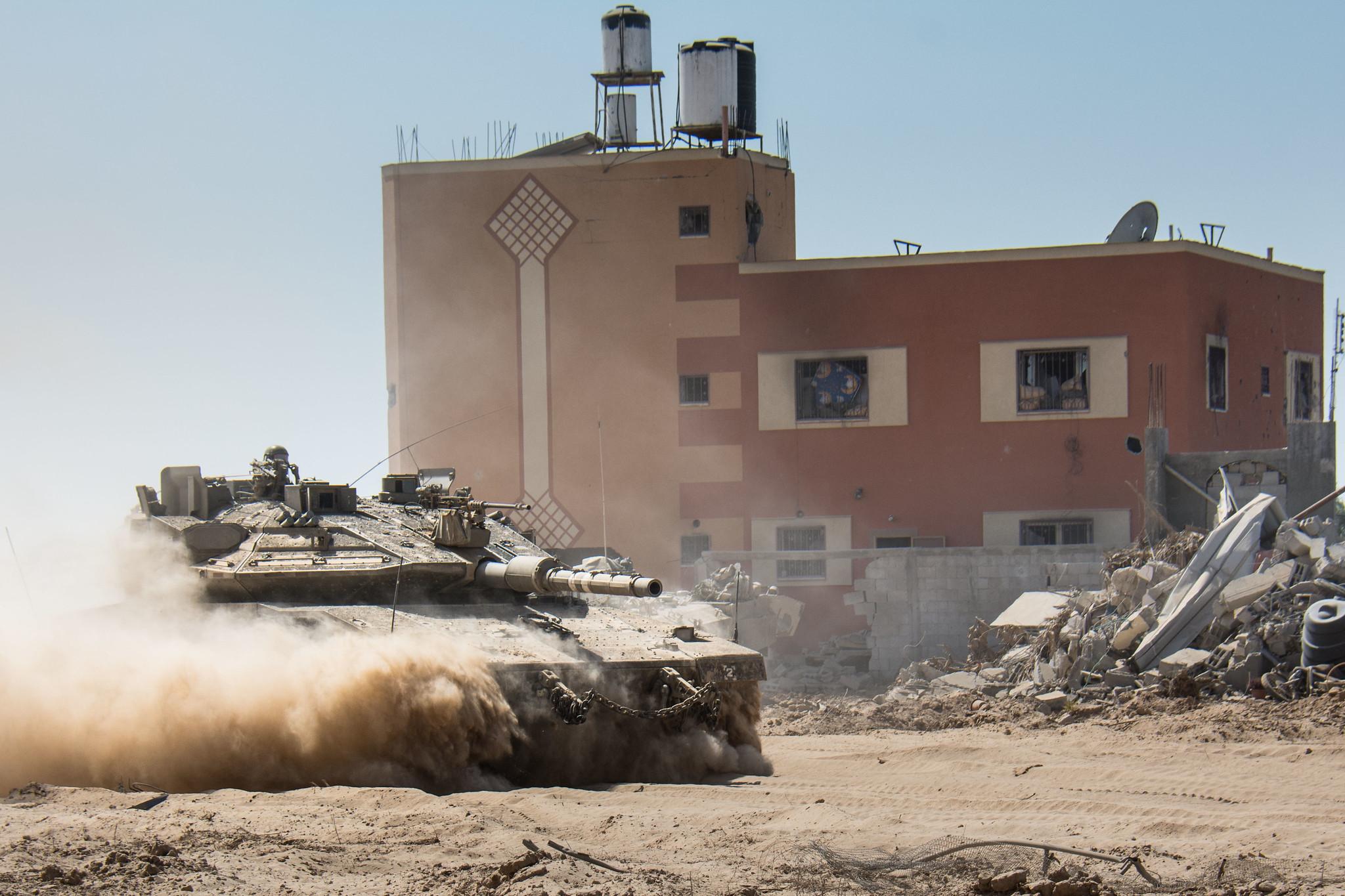
FILE: Armored corps operating in the Gaza Strip. (Photo: Israel Defense Forces/Flickr, CC BY-NC 2.0)
For the first time since the deadly attacks by Hamas on Israeli border towns on Oct. 7, 2023, that left at least 1,200 people dead, the Israeli government agreed on Nov. 22 to suspend its air and ground campaign in Gaza for four days in exchange for the release of at least 50 hostages held by Hamas.
Nearly six weeks in the making, the cease-fire deal also calls for the release of 150 Palestinians held in Israeli prisons.
The fate of the remaining hostages is still unclear.
What is clear is that the war will continue after the brief cease-fire. Israeli Prime Minister Benjamin Netanyahu said on Nov. 21 that the pause would allow the Israel Defense Forces to prepare further for the fighting.
“The war will continue until we achieve all of our goals,” Netanyahu said. Those goals include the return of all the hostages and the elimination of Hamas to ensure “Gaza will no longer be a threat to Israel.”
To make sense of the deal, The Conversation asked Gregory F. Treverton of USC Dornsife, a former chairman of the National Intelligence Council in the Obama administration, to share his thoughts on what it means for the ongoing war in Gaza.
Military goals unchanged
The agreement between Israel and Hamas – driven by U.S. pressure on Israel – to exchange 50 hostages for 150 Palestinian prisoners and to pause fighting for four days is surely a welcome break in a horrific war.
Not least, it will permit food and fuel to enter a devastated Gaza.
It does not, however, fundamentally change the awful geometry of the war: Netanyahu has pledged that Israel will continue the fight, and there seems little sign that Israel is any closer to a plan for what to do about Gaza or the Palestinians than when the war began.
For its part, events have played out much as Hamas might have planned.
They knew their barbarism on Oct. 7 would call forth a brutal Israeli response.
Hamas knew, cynically, that the more Palestinians who were killed, the better for its cause. Global opinion would shift against Israel, and its American patron, and it has. And Hamas likely expected the Palestinian statehood issue, all but forgotten by the world, including the Arab world, would return to international prominence.
In the process, Hamas probably anticipated it would, paradoxically, become more popular in Gaza, not less.
A distant hope for lasting peace
In the short run, the best that can be hoped is that this exchange and pause will be extended or be the first of more to come.
Certainly, Israel has been under global – and especially American – pressure to agree to some pause, and the Netanyahu “unity” government has felt the heat, domestically, for seeming to disregard the hostages.
In the longer run, after much more killing and suffering, the alternatives still remain dreary. Israel has no stomach for occupying Gaza and surely none for letting Hamas again pretend to govern. The Palestinian Authority remains corrupt, weak and inept in the eyes of those it governs, and as a result is a poor candidate to take on Gaza.
The best hope is a distant one – that some coalition of mostly Arab states but also perhaps including the U.S. could govern Gaza, perhaps exercising some tutelage over a reformed Palestinian Authority.
But that is a long way off, and the hostage exchange and pause does not take the region or the world much closer to a lasting peace.
Gregory F. Treverton, Professor of Practice in International Relations, USC Dornsife College of Letters, Arts and Sciences
This article is republished from The Conversation under a Creative Commons license. Read the original article.