
Lifestyle
I’ve researched time for 15 years – here’s how my perception of it has changed

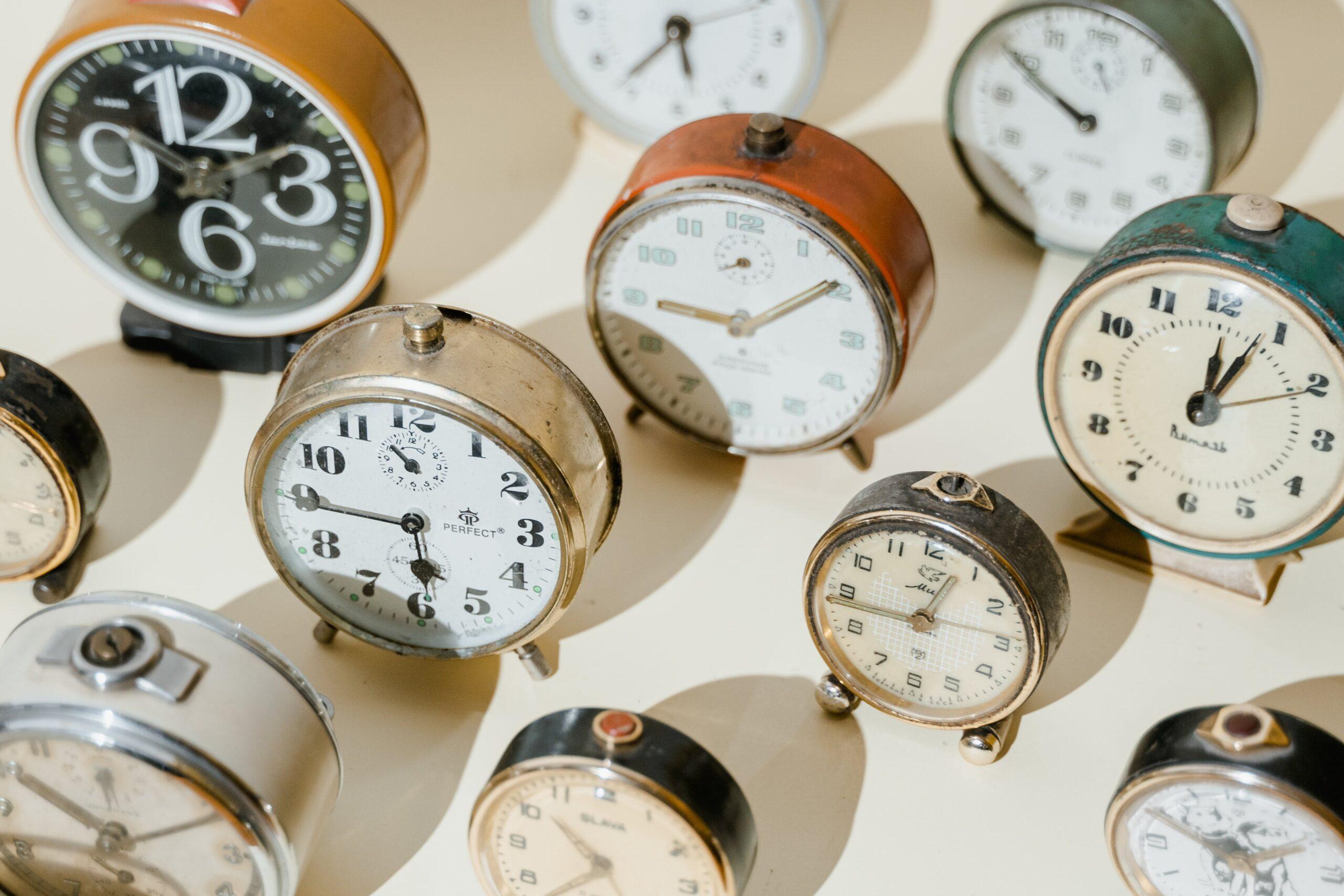
Time is one of those things that most of us take for granted. (Pexels Photo)
Time is one of those things that most of us take for granted. We spend our lives portioning it into work-time, family-time and me-time. Rarely do we sit and think about how and why we choreograph our lives through this strange medium. A lot of people only appreciate time when they have an experience that makes them realise how limited it is.
My own interest in time grew from one of those “time is running out” experiences. Eighteen years ago, while at university, I was driving down a country lane when another vehicle strayed onto my side of the road and collided with my car. I can still vividly remember the way in which time slowed down, grinding to a near halt, in the moments before my car impacted with the oncoming vehicle. Time literally seemed to stand still. The elasticity of time and its ability to wax and wane in different situations shone out like never before. From that moment I was hooked.
I have spent the last 15 years trying to answer questions such as: Why does time slow down in near death situations? Does time really pass more quickly as you get older? How do our brains process time?
My attempts to answer these questions often involve putting people into extreme situations to explore how their experience of time is affected. Some of the participants in my experiments have been given electric shocks to induce pain , others have traversed 100-metre-high crumbling bridges (albeit in virtual reality), some have even spent 12 months in isolation on Antarctica. At the heart of this work is an attempt to understand how our interaction with our environment shapes our experience of time.
Thinking time
This research has taught me that time’s flexibility is an inherent part of the way in which we process it. We are not like clocks which record seconds and minutes with perfect accuracy. Instead, our brain appears to be wired to perceive time in a way which is responsive to the world around us.
The way in which our brain processes time is closely related to the way in which it processes emotion. This is because some of the brain areas involved in the regulation of emotional and physiological arousal are also involved in the processing of time. During heightened emotion, the activation caused by the brain attempts to maintain stability, which alters its ability to process time.
So, when we experience fear, joy, anxiety or sadness, emotional processing and time processing interact. This results in the sensation of time passing more speeding up or slowing down. Time really does fly when you’re having fun and drag when you’re bored.
Changes in our experience of time are most profound during periods of extreme emotion. In near death experiences, like my car crash for example, time slows to the point of stopping. We don’t know why our brains distort sensory information during trauma.
Ancient adaptations
One possibility is that time distortions are an evolutionary survival intervention. Our perception of time may be fundamental to our fight and flight response. This insight into time has taught me that in times of crisis, knee jerk responses are unlikely to be the best ones. Instead, it would seem that slowing down helps me succeed.
Being a time-nerd, I spend a lot of time thinking about time. Before COVID, I would have said that I thought about it more than most. However, this changed during the pandemic.
Think back to those early lockdown days. Time started to slip and slide like never before. Hours sometimes felt like weeks and days merged into one another. Newspaper headlines and social media were awash with the idea that COVID had mangled our sense of time. They were not wrong. COVID time-warps were observed around the world. One study found that 80% of participants felt like time slowed down during the second English lockdown.
We no longer had a choice about how and when we spent our time. Home-time, work-time and me-time were suddenly rolled into one. This loss of control over our schedules made us pay attention to time. People now appear less willing to “waste time” commuting and instead place a greater value on jobs with flexibility over where and when you work.
Governments and employers still appear unsure how to grapple with the ever-changing time landscape. What does seem clear however is that COVID permanently altered our relationship with time.
Unfortunately, one downside to having greater awareness of time is greater realisation of just how finite it is. This year I turned 40, my eldest child started high-school and my youngest started primary school.
What made these events so sobering for me was the fact that in my head, I am still only 23 years old. How can I already be halfway to 80? Is there anyway that I can slow time down?
Knowing that my actions and emotions can have a profound impact on my sense of time opens the tantalising possibility that one day I might be able to control my own experience of time. I often wonder if we may be able to harness the brain’s ability to distort time and somehow re-purpose it so that we can control how we experience it. Then, trips to the dentist could feel like seconds not minutes and holidays would no longer be over in the blink of an eye.
Even though we may be a long way from controlling time, my research has taught me just how precious time is.
Ruth Ogden, Professor of the Psychology of Time, Liverpool John Moores University
This article is republished from The Conversation under a Creative Commons license. Read the original article.




















