
News
A reflexive act of military revenge burdened the US − and may do the same for Israel

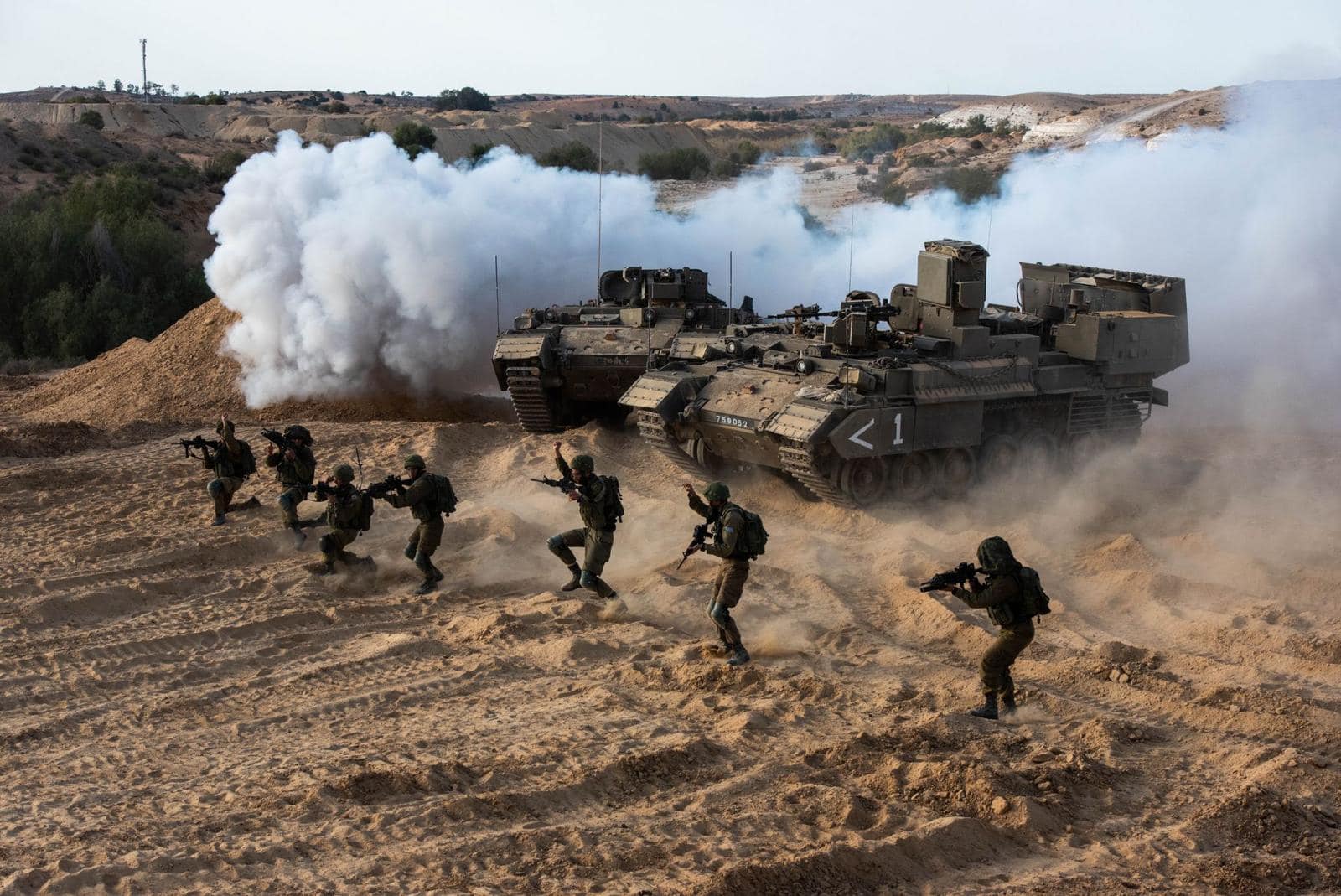
Wars that are based on revenge can be effective in punishing an enemy, but they can also create a power vacuum that sparks a long, deadly conflict that fails to deliver sustainable stability. (File Photo: Israel Defense Forces/Facebook)
In the wake of the shocking invasion of southern Israel by Hamas militants on Oct. 7, 2023, Israeli Prime Minister Benjamin Netanyahu vowed to destroy Hamas.
“We are fighting a cruel enemy, worse than ISIS,” Netanyahu proclaimed four days after the invasion, comparing Hamas with the Islamic State group, which was largely defeated by U.S., Iraqi and Kurdish forces in 2017.
On that same day, Israeli Defense Minister Yoav Gallant went further, stating, “We will wipe this thing called Hamas, ISIS-Gaza, off the face of the earth. It will cease to exist.” They were strong words, issued in the wake of the horrific terrorist attack that killed more than 1,300 Israelis and culminated in the kidnapping of more than 150 people, including several Americans.
And in a telling comparison, Israeli Ambassador to the U.N. Gilad Erdan compared the attack with the toppling of the World Trade Center and the attack on the Pentagon in 2001, declaring, “This is Israel’s 9/11.”
As a scholar of military history, I believe the comparison is interesting and revealing. In the wake of the 9/11 terrorist attacks by al-Qaida on the United States, President George W. Bush made a similar expansive pledge, declaring, “Our war on terror begins with al-Qaida, but it does not end there. It will not end until every terrorist group of global reach has been found, stopped and defeated.”
The U.S. response to 9/11 included the American invasion of Afghanistan in league with the Afghan United Front, the so-called Northern Alliance. The immediate goals were to force the Taliban from power and destroy al-Qaida. Very little thought or resources were put into what happened after those goals were attained. In his 2010 memoir, “Decision Points,” former President Bush recalled a meeting of the war cabinet in late September 2001, when he asked the assemblage, “‘So who’s going to run the country (Afghanistan)?’ There was silence.”
Wars that are based on revenge can be effective in punishing an enemy, but they can also create a power vacuum that sparks a long, deadly conflict that fails to deliver sustainable stability. That’s what happened in Afghanistan, and that is what could happen in Gaza.
A war of weak results
The U.S. invasion toppled the Taliban from power by the end of 2001, but the war did not end. An interim administration headed by Hamid Karzai took power as an Afghan council of leaders, called a loya jirga, fashioned a new constitution for the country.
Nongovernmental and international relief organizations began to deliver humanitarian aid and reconstruction support, but their efforts were uncoordinated. U.S. trainers began creating a new Afghan National Army, but lack of funding, insufficient volunteers and inadequate facilities hampered the effort.
The period between 2002 and 2006 was the best opportunity to create a resilient Afghan state with enough security forces to hold its own against a resurgent Taliban. Because of a lack of focus, inadequate resources and poor strategy, however, the United States and its allies squandered that opportunity.
As a result, the Taliban was able to reconstitute its forces and return to the fight. As the insurgency gained momentum, the United States and its NATO allies increased their troop levels, but they could not overcome the weakness of the Kabul government and the lack of adequate numbers of trained Afghan security forces.
Despite a surge of forces to Afghanistan during the first two years of the Obama administration and the 2011 killing of Osama bin Laden, the Taliban remained undefeated. As Western forces largely departed the country by the end of 2014, Afghan forces took the lead in security operations, but their numbers and competence proved insufficient to stem the Taliban tide.
Negotiations between the United States and the Taliban went nowhere, as Taliban leaders realized they could seize by force what they could not gain at the bargaining table. The Taliban entry into Kabul in August 2021 merely put an exclamation point on a campaign the United States had lost many years before.
A goal that’s hard to achieve
As Israel pursues its response to the Hamas attack, the Israeli government would be well advised to remember the past two decades of often indecisive warfare conducted by both the United States and Israel against insurgent and terrorist groups.
The invasion of Afghanistan ultimately failed because U.S. policymakers did not think through the end state of the campaign as they exacted revenge for the 9/11 attacks. An Israeli invasion of Gaza could well lead to an indecisive quagmire if the political goal is not considered ahead of time.
Israel has invaded Gaza twice, in 2009 and 2014, but quickly withdrew its ground forces once Israeli leaders calculated they had reestablished deterrence. This strategy – called by Israeli leaders “mowing the grass,” with periodic punitive strikes against Hamas – has proven to be a failure. The newly declared goal of destroying Hamas as a military force is far more difficult than that.
As four U.S. presidential administrations discovered in Afghanistan, creating stability in the aftermath of conflict is far more difficult than toppling a weak regime in the first place.
The only successful conflict against a terrorist group in the past two decades, against the Islamic State group between 2014 and 2017, ended with both Raqqa in Syria and Mosul in Iraq reduced to rubble and thousands of men, women and children consigned to detention camps.
Israel has the capacity to level Gaza and round up segments of the population, but that may not be wise. Doing so might serve the immediate impulse of exacting revenge on its enemies, but Israel would likely receive massive international condemnation from creating a desert in Gaza and calling it peace, and thus forgo the moral high ground it claims in the wake of the Hamas attacks.
Peter Mansoor, Professor of History, General Raymond E. Mason Jr. Chair in Military History, The Ohio State University
This article is republished from The Conversation under a Creative Commons license. Read the original article.




















