Travel
Bzzz, slap! How to treat insect bites (home remedies included)

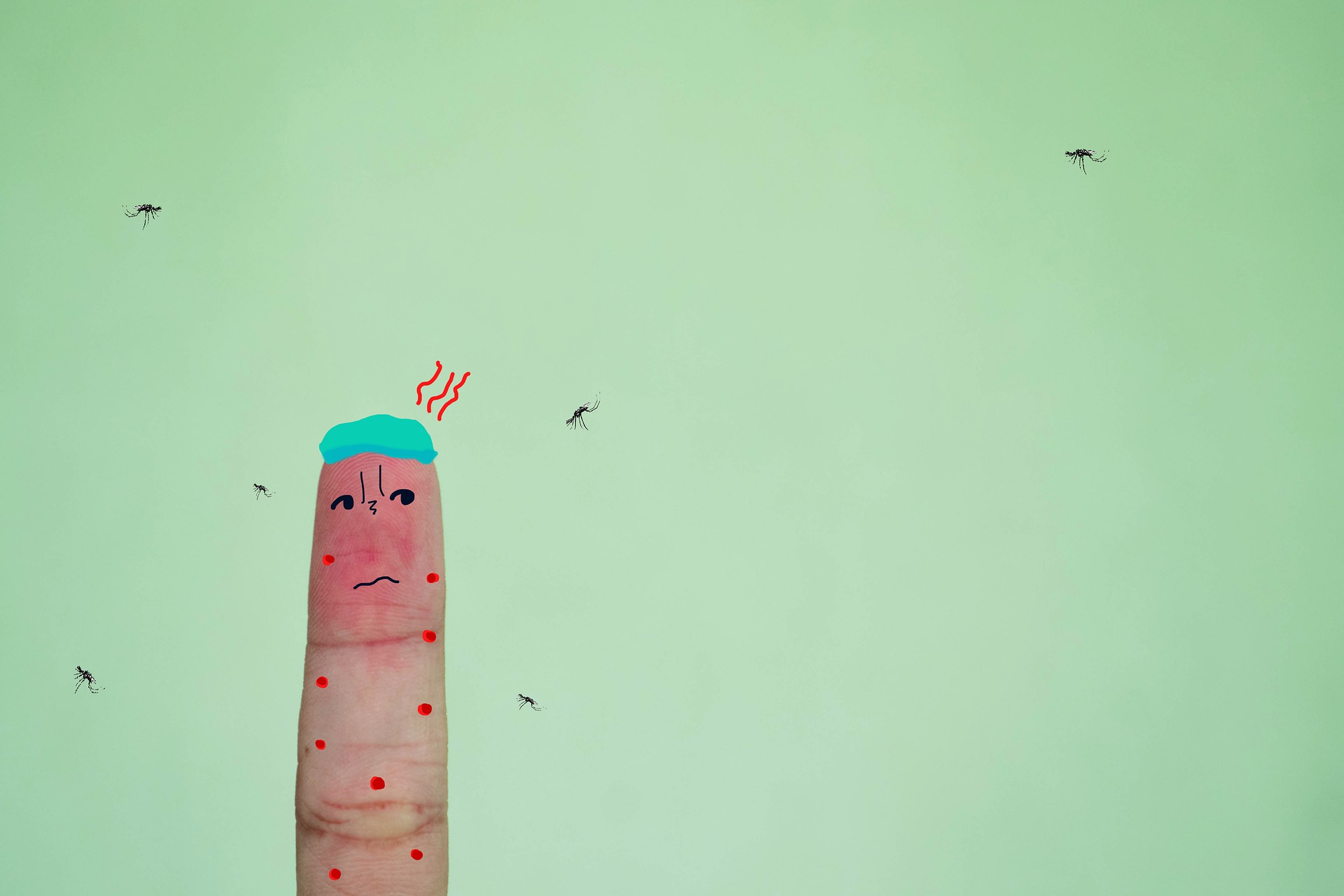
There are plenty of products at the local pharmacy to treat these. Some treat the initial bite or sting, others the itchy aftermath. (Pixabay photo)
It’s the holidays and we’re spending more time outdoors. This means we’re exposed to the more annoying and painful aspects of summer — insect bites and stings.
There are plenty of products at the local pharmacy to treat these. Some treat the initial bite or sting, others the itchy aftermath.
What about natural remedies? Few studies have actually examined them. But if they work for you, and don’t irritate already inflamed skin, there’s likely no harm in continuing.
Read more:
Buzz, buzz, slap! Why flies can be so annoying
Why do insects bite and sting?
When insects bite and sting, they are either defending themselves or need something from us (like blood).
Whatever the motivation, it can leave us with a painful or itchy reaction, sometimes a severe allergic reaction, or even a debilitating disease.
While insects sometimes get a bad rap, there are relatively few that actually pose a serious threat to our health.
Flies, mosquitoes
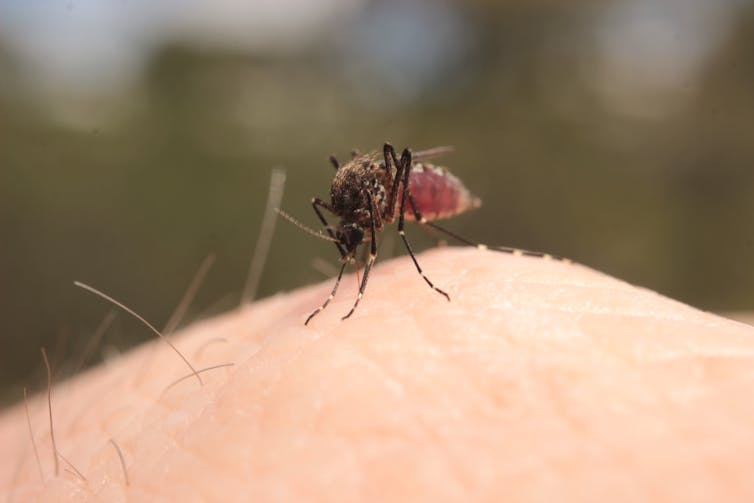
Many types of flies, especially mosquitoes, bite. In most instances, they need blood for nutrition or the development of eggs. The method of “biting” can vary between the different types of flies. While mosquitoes inject a needle-like tube to suck our blood, others chew or rasp away at our skin.
While researchers have studied what happens when mosquitoes bite, there is still much to learn about how to treat the bites.
So, avoiding mosquito bites is especially important given some can transmit pathogens that make us sick.
Read more:
Feel like you’re a mozzie magnet? It’s true – mosquitoes prefer to bite some people over others
A/Prof Cameron Webb
Fleas, lice, mites and ticks
There are lots of other insects (such as bed bugs, fleas, lice) and other arthropods (such as mites, ticks) that bite.
But it is difficult to determine which insect has bitten us based on the bite reaction alone. This is generally because different people react in different ways to the saliva injected as they start to suck our blood.
Bees, wasps, ants
Then there are stinging insects, such as bees, wasps and ants. These are typically just defending themselves.
But as well as being painful, the venom they inject when they sting can cause potentially severe allergic reactions.
How do you best treat a sting or bite?
If you suffer potentially severe allergic reactions from bites or stings, immediately seek appropriate medical treatment. But for many other people, it is the initial painful reaction and itchy aftermath that require attention.
Despite how common insect bites can be, there is surprisingly little formal research into how best to treat them. Most of the research is focused on insect-borne diseases.
Even for recommended treatments, there is little evidence they actually work. Instead, recommendations are based on expert opinion and clinical experience.
For instance, heath authorities promote some general advice on treating insect bites and stings. This includes using pain relief medication (such as paracetamol or ibuprofen). They also advise applying a cold compress (such as a cold pack, ice, or damp cloth soaked in cold water) to the site of the sting or bite to help reduce the inflammation and to ease some of the discomfort.
There is also specific advice for dealing with stings and removing ticks.
However, if you do nothing, the discomfort of the bite or sting will eventually fade after a few days. The body quickly recovers, just as it would for a cut or bruise.
If you’re still in pain for more than a couple of days, or there are signs of an allergic reaction, seek medical assistance.
What about the itch?
Once the initial pain has started to fade, the itch starts. That’s because the body is reacting to the saliva injected when insects bite.
For many people, this is incredibly frustrating and it is all too easy to get trapped in a cycle of itching and scratching.
In some cases, medications, such as corticosteroid creams or antihistamines could help alleviate the itchiness. You can buy these from the pharmacy.
Then there’s calamine lotion, a mainstay in many Australian homes used to treat the itchiness caused by insect bites. But there are few studies that demonstrate it works.
Read more:
Are itchier insect bites more likely to make us sick?
Do any home remedies work?
If you’re looking for a home remedy to treat insect bites and the itchiness that comes with it, a quick internet search will keep you busy for days.
Potential home remedies include: tea bags, banana, tea tree or other essential oils, a paste of baking soda, vinegar, aloe vera, oatmeal, honey and even onion.
There is little evidence any of these work. But not many have actually been scientifically evaluated.
Tea tree oil is one of the few. While it is said to help treat skin reactions, the oil itself can cause skin reactions if not used as directed.
However, if a home remedy works for you, and it’s not causing additional irritation, there’s no harm in using it if you’re getting some relief.
With so much uncertainty about how to treat insect bites and stings, perhaps it is best if we avoid exposure in the first place. There are plenty of insect repellents available at your local pharmacy or supermarket that do this safely and effectively.
Cameron Webb, Clinical Associate Professor and Principal Hospital Scientist, University of Sydney
This article is republished from The Conversation under a Creative Commons license. Read the original article.