Art and Culture
Pandemic sewing surge is a chance to rediscover the practical arts

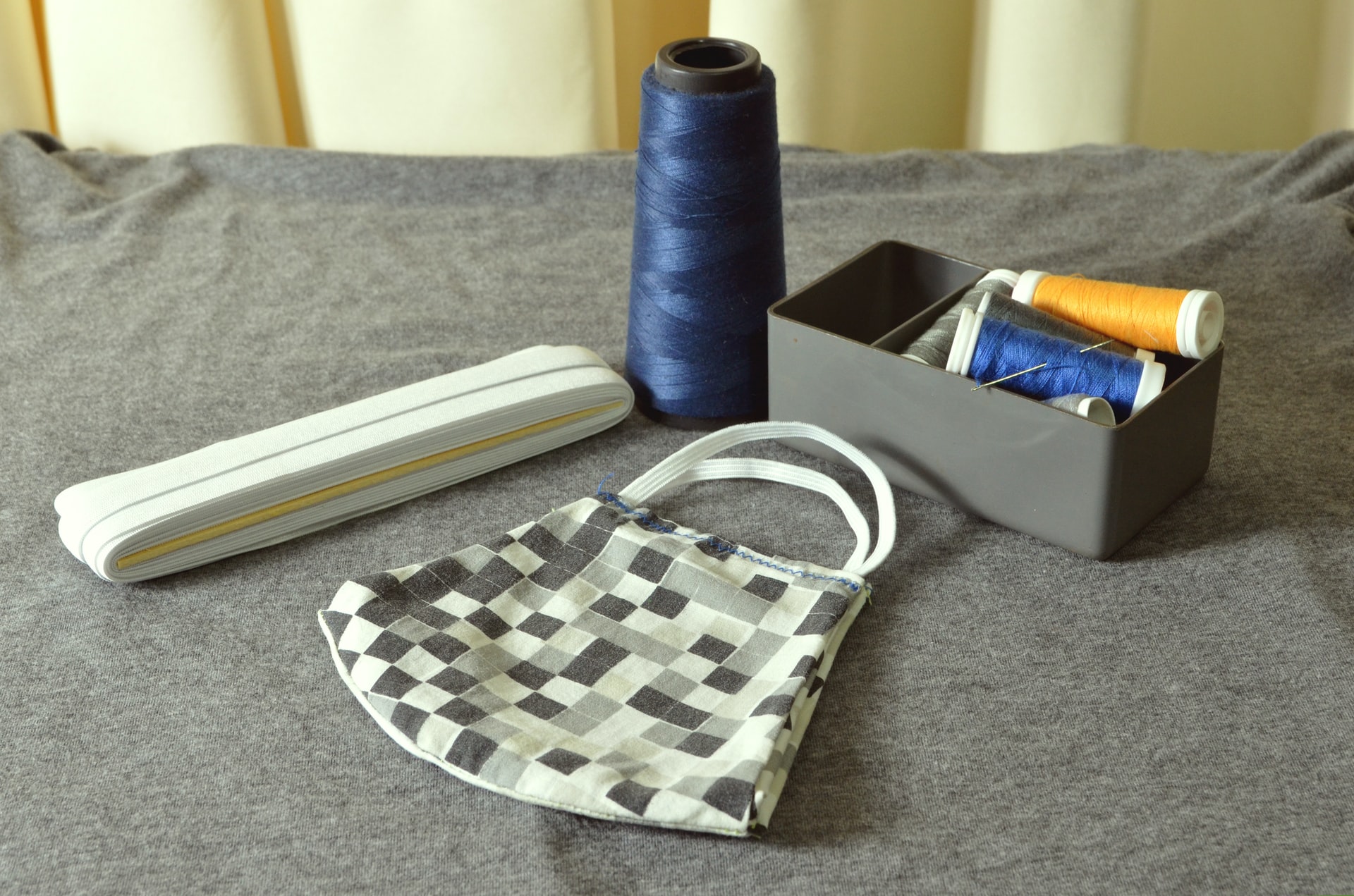
The COVID-19 pandemic has brought sewing and craft and their practical uses into the news. (File photo: Gabriel/Unsplash)
United Kingdom Prime Minister Boris Johnson sent Britons Googling this past fall when he said “a stitch in time saves nine” to describe actions to prevent the spread of COVID-19. The phrase means it’s better to spend a little time solving a little problem now to prevent spending more time on a bigger problem later. As the BBC reported, it’s a sewing reference that can be traced back to 1723.
The COVID-19 pandemic has brought sewing and craft and their practical uses into the news. Some sewing machine manufacturers saw a shortage as both big-box retailers and small shops experienced a pandemic sewing rush.
Many sewists and crafters dusted off their sewing machines or purchased new ones to begin sewing masks, whether for personal use, for front-line workers or for sale. Some fashion designers and large brands also ramped up mask production.
As a curriculum researcher and a retired home economics teacher, pandemic sewing is a chance for me to revisit the value of education in the practical arts.
Sustainability closer to home
“A stitch in time saves nine” was a favourite proverb of my grandmother, along with “waste not, want not.” She “turned coats,” painstakingly taking apart threadbare coats, so that she could turn the fabric inside out and re-stitch the coat to make it look new. As her standard of living improved, she continued to mend, repair, conserve and remake textiles.
Before the mass rise of garment industries, wealthier people hired seamstresses or tailors for custom-made clothing. Households relied on making and recycling clothes, as well as buying them either new or secondhand, while relying on skills in the household or local domestic self-employment.
“Repair, reuse, make do and don’t throw anything away” was a motto in the Great Depression. The notions of “use it up, wear it out, make do or do without” were responses to First and Second World War textile restrictions.
By the turn of the 20th century, with industrialization and globalization “ready to wear” garments became available. Home sewing continued, but mass produced and industrially manufactured garments, promoted by advertising and easily available in stores and via catalogues gradually reduced home-sewn wear. By the end of the century fast fashion dominated.
Read more:
Fast fashion lies: Will they really change their ways in a climate crisis?
Ten million tons of clothing waste goes to landfills every year in North America, and 95 per cent of it could be re-used or recycled. We only need to consider this or see the unfair and dangerous working conditions for garment industry labourers to realize our current clothing consumption is not sustainable.
Education theorist Madhu Suri Prakash who writes about critical conversations related to environmental education notes that addressing the ecological crisis is connected to our many daily decisions and the basic items we use.
Demise of learning hands-on skills
Sometimes buried in the stories of pandemic sewing is a comment to the effect that at one time such handicraft was typically taught in schools in home economics classes.
But in some places, home economics (albeit with a variety of labels) is still taught in many schools although somewhat diminished due to the general devaluation of practical education. Sometimes it’s called family studies, family and consumer science or human ecology.
In the past half-century, home economics in higher education was has been downsized, dismantled and in some cases met its demise for a variety of reasons. New arenas of work opportunity and concern were available following the second wave of feminism and in the post-war years marketers capitalized on consumerism as a new patriotic duty.
Home economics had long connected local consumption and production and global ecology, but as education scholar Maresi Nerad argues, post-secondary university departments traditionally dominated by women including home economics “were gradually eliminated when administrators no longer found them useful.”
The mantra “bring back home economics education” is sometimes seen in the popular press, following nutrition researchers Alice H. Lichtenstein and David Ludwig’s 2010 article of the same name.
Where home economics still exists, it is often at the margins. Some have argued this is because the knowledge gained is not considered valid. But that premise of epistemological superiority needs to be questioned.
Read more:
What’s next for schools after coronavirus? Here are 5 big issues and opportunities
It is in the practical arts where students learn to meet the ordinary and material demands of everyday life and to become, as the American Family and Consumer Science curriculum notes, empowered to “solve the perennial and emerging practical problems of their families, workplaces and community.…”
When one has the necessary resources, time and support, there can also be emotional wellness benefits to making and doing with one’s hands.
Intelligent consumerism
The values of earlier adages like “a stitch in time” were the foundation of home economics. Home economist Abby Marlatt, one of the presenters at the Lake Placid Conferences that were the genesis of home economics, argued that sewing, millinery and dressmaking contributed to intelligent consumerism and social justice.
Early founders of the field chose “home economics” from the Greek oikos meaning home or family (a word also at the root of “ecology”), and oikonomikos meaning management of a household, frugality and thrift. Lately, home economic scholars such as Eleanore Vaines have highlighted ecology as an enduring theme, explaining that the “home” is our Earth and “economics” is the judicious use of resources. The International Federation of Home Economics identifies its ultimate goal as achieving sustainable living for all.
Once out of the closet, sewing and all the other practical home-based activities of pandemic times have the potential for utilitarian, psychological and environmental benefits. That is why some designers, makers and consumers are imploring us not to stop sewing after the pandemic and why home economics still matters.
Mary Gale Smith, Sessional lecturer, Faculty of Education, University of British Columbia
This article is republished from The Conversation under a Creative Commons license. Read the original article.