
Headline
Biden to reinvest in Asean economic security: expert

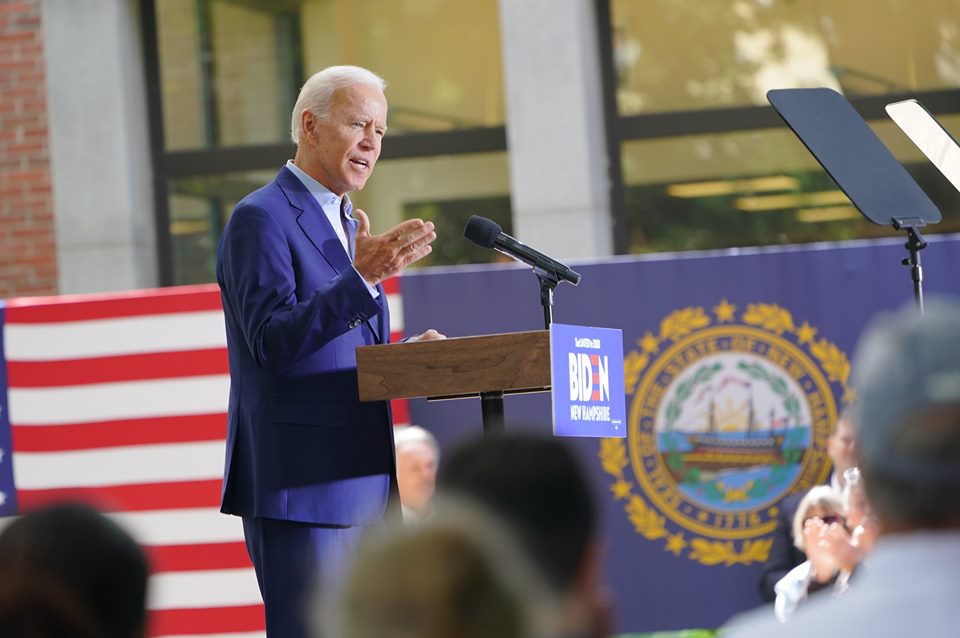
Bower said the Biden administration is also likely to renew alliances with Asian partners. (File photo: Joe Biden/Facebook)
MANILA – With the election of President-elect Joe Biden, the United States is expected to reinvest in the economic security of Asia, particularly in Southeast Asia, according to Bower Group Asia president and CEO Ernest Bower.
“Expect the Biden administration to reinvest in Asian architecture, particularly Asean-based architecture and structures for economic security and cooperation such as the East Asia Summit, the Asean-US Summit and related fora which are not necessarily Asean-centric, like APEC,” Bower said. “Then you can see less bottlenecking and a more policy-based approach, more predictable outcomes.”
Bower said the Biden administration is also likely to renew alliances with Asian partners.
“The Biden team will invest in renewing its five treaty alliances in Asia, and Biden’s team believes that these relationships have been, in many cases, badly damaged, and those bonds with Australia, Japan, Korea, the Philippines, and Thailand will be at the top of the list for Biden’s Asia team as they focus on the list of repairing the damage done by four years of very transactional, very ideological policy,” he said.
He, meanwhile, noted Manila and Washington may “experience some issues around human rights around the drug war in the Philippines and other issues such as the freedom of the press”.
“Expect to see a great new US ambassador sent to Manila, along the lines of the traditional highly-experienced career officers or someone who may have left the state department as a senior officer under the Trump administration may be called back and is needed back in the ranks of the State Department, but expect a well-connected pro to succeed who has left Manila and been moved to Jakarta,” he said.
“It’ll be a question of how Asia wants to engage in those issues, but I think we’ll make progress. It could cause some pain points in the bilateral relationship, particularly with the Duterte administration, but I think that’ll be well-managed by a good ambassador,” he noted.
If the Philippines is willing, now or after 2022, Bower said Biden and the US will look for chances to expand investment in security cooperation, economic partnership, and deepening strong ties across sectors.
Bower said this would include the preservation of the Visiting Forces Agreement with the Philippines.
“I expect continuity and more careful diplomacy on the South China Sea,” he said. “I think that the US-China relationship will remain very confrontational, rhetoric, and characterized by competition, but that rhetoric will be lowered. I expect the Biden administration to be less aggressive on Taiwan, more forward-leaning on Hong Kong, Uighurs, Zhenjiang, continuity on tough policy in the South China Sea with much more emphasis on Asean, and a return to a much higher level of engagement with treaty allies,” he said.
However, Stratbase ADR Institute president Prof. Dindo Manhit said the middle-power countries should realize that even if the US presence in the Indo-Pacific is crucial to ensure a rules-based order, “the region’s future should not be dictated by or charted under a unipolar hegemony”.
“As the region’s political landscape continues to evolve, there is a crucial need for middle powers to recognize their role and the importance of creating a network of like-minded states to protect and maintain an open and multipolar Indo-Pacific region,” Manhit said.
He added that the current global disorder, with the rise of evolving security threats in both traditional and non-traditional spaces, “demands that the region utilize effective minilateral collaborations among strategic partners and allies”.
South China Sea will remain a crucial issue between the United States and China in the coming years with the election of Biden as the new US president, according to regional policy experts.
Department of National Defense (DND) Secretary Delfin Lorenzana recognized that among the biggest challenges faced by the Asia-Pacific is the regional security surrounding the South China Sea.
“While the US and China continue to assert that their actions are defensive, the fear of miscalculation is ever-present like the near collision of two frigates belonging to the US and China two years ago,” he said.
He said the recent decision of China and its government to arm its Coast Guard and patrolling vessels in the South China Sea “has up the ante even more”. “And if ever a shooting war happens, the Philippines which is right smack in the middle of the conflict will be involved whether she likes it or not,” he added.
Lorenzana said that to illustrate how important the South China Sea is and the crucial role of the Philippines in the region, he received personal calls and personal visits from the defense ministers and secretaries of Japan, China, Australia, France, and the US in the past five months.
He said the tension in the South China Sea would continue to rise as China, the US, and other nations accuse each other of provocation and destabilization in the region.
With this, Lorenzana sees the need for the Asean members – Brunei, Indonesia, Cambodia, Laos, Malaysia, Myanmar, the Philippines, Singapore, Thailand, and Vietnam to act as one.
“The 10 ASEAN nations could not even agree to a common communique several years ago. Complicating the matter is China’s preference for bilateral dialogue as against multilateral one,” Lorenzana said.
Lorenzana said that in 2019, President Rodrigo Duterte invoked the arbitral ruling, telling the Chinese leader “it was final, executory and non-negotiable”.
“President Xi replied: ‘But Mr. President, we also claim the area,” Lorenzana recalled.
Lorenzana and Bower made these comments during the virtual Pilipinas Conference organized by Stratbase Albert del Rosario Institute on November 25.




















