
Canada News
RCMP must acknowledge the force’s racist underpinnings

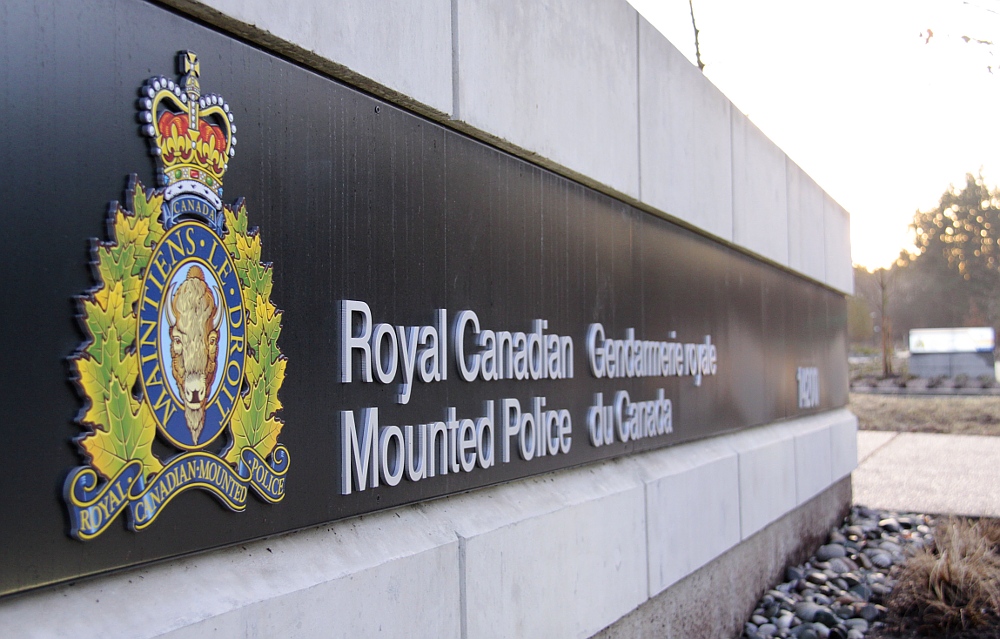
The RCMP is poisoned by at least two kinds of systemic racism. One is embedded in its history. The second arises from the beliefs and practices of history but exists in modern form. (File Photo: waferboard/Flickr, CC BY 2.0)
Evidently, RCMP Commissioner Brenda Lucki, other police officials and various politicians would benefit from a primer on racism and systemic racism and what these concepts have to do with policing. Lucki has had to backpedal since mid-June after initially denying the existence of systemic racism in her organization. To understand systemic racism in the force, one must first scrutinize and acknowledge the RCMP’s colonial history.
The design and creation of any social institution reflects the attitudes and beliefs of its founders. The premises introduced during the founding of an organization will become embedded in its structures. When an organization’s founders are animated by stereotypical ideas of the superiority of certain peoples, and the inferiority of others, these stereotypes will be baked right into the organization’s design. They will influence how recruitment is conducted, and which groups are favoured sources of recruits. They will influence how the practices of the organization are developed, and whom those practices disadvantage and advantage. They will influence how people are trained and promoted. They will determine what accountability mechanisms focus on, and what sorts of conduct are excused or disciplined.
The same stereotypes and prejudices present at the founding of an institution will be reproduced and perpetuated, and ultimately taken for granted. The personnel attracted to the organization, trained in its methods and rewarded for reflecting its values so well will themselves perpetuate the system with all its racist (and often sexist and ableist) characteristics. They will be so comfortable with the environment that it will be difficult for them even to see its flaws. The structure and belief system will seem normal. Demands for change will seem extreme.
Systemic racism has nothing to do with a few “bad apples.” A favourite figure in today’s discussions of racism is the so-called bad apple, who acts on his or her own racist ideas but does not represent a widespread threat. That bad apple is, to put it kindly, largely a figment of the imagination of those who want to argue that there is no such thing as “systemic” racism. The bad apple is a scapegoat, a way for our public institutions to engage in denial about the abiding racism which exists in the very fabric of their structures. The bad apple allows leaders to say the problem is limited and can be solved by blaming an individual, or a handful of individuals. That way, they can avoid engaging in the hard work of acknowledgement and system-wide reform to address the ongoing harms of systemic racism.
The RCMP is poisoned by at least two kinds of systemic racism. One is embedded in its history. The second arises from the beliefs and practices of history but exists in modern form.
Historically, the RCMP, once known as the North-West Mounted Police (NWMP), was the agent enforcing Canada’s racist policies against Indigenous peoples. These policies called for the assimilation, relocation or elimination of Indigenous peoples, so that their lands could be made available for settlement and economic development. The Indian Act was a primary driver of assimilation; the Criminal Code was used to penalize Indigenous peoples for their cultural practices and eliminate those along with the Indigenous identity they expressed.
The RCMP aided in the forced relocation of Indigenous peoples from lands coveted for settlement. It took children from their families and communities to residential schools. It enforced criminal law against Indigenous peoples and their culture. The NWMP took part in the forcible suppression of the Métis struggle to make what is now Manitoba their homeland within Confederation.
By deliberate government design, the NWMP and its successor the RCMP were systems created to enforce laws designed to remove or assimilate Indigenous peoples. These laws had a racist foundation, based on notions that Indigenous peoples were inferior and less than fully human. There can be no more powerful example of systemic racism than being an official enforcement mechanism of racist laws. Yet we look in vain on the RCMP website for a detailed account of the many ways the force played this cruel historical role.
Over the last century, the RCMP continued its enforcement of a race-based state agenda. For example, in the 1950s the RCMP implemented the forced displacement of Inuit peoples from Inukjuak, Quebec, to Resolute Bay and Grise Fiord in what is now Nunavut, in accordance with government policy. The force was also involved in the slaughter over decades of Inuit sled dogs. Today, the force perpetrates police abuse and violence against Indigenous peoples, acts to suppress protests against mining and resource development and enforces court injunctions secured by corporations without adequate attention to Indigenous laws requiring protection of their lands.
The RCMP has been either silent or very kind to itself about its role in the colonization of Canada and the concomitant suppression of Indigenous peoples. The piecemeal apologies given thus far for specific acts of RCMP wrongdoing against Indigenous peoples are woefully insufficient. Upon closer scrutiny, these apologies address, in general terms, the force’s shortcomings in connection with Indian residential schools and missing and murdered Indigenous women without specifying and grappling with the RCMP’s acts and omissions that caused harm. These apologies do not address other RCMP actions over more than a century which furthered the colonial agenda. Such apologies cannot in isolation root out the systemic bias against Indigenous peoples that was baked into the RCMP during the 19th century.
Until the RCMP fully recognizes its role as an engine of colonial repression, driven by the state’s racist law and policy, and examines its structures, norms and practices in light of its colonial roots and legacy, it will continue to harbour and act upon the norms and values of an earlier age. It will have no claims to the trust of Indigenous peoples in this country, or to the respect of any person here who wishes to build a more just society.
The RCMP cannot become what it desires to be — namely a modern, effective, healthy and inclusive organization — until it clearly repudiates the ideas of white racial superiority and Indigenous non-personhood that are part of its legacy.
Small incremental changes grafted onto the systems now in place at the RCMP are doomed to be insufficient to challenge its historical and present belief system. An institutional overhaul, driven by an acknowledgement and repudiation of the racist foundations of the force, is the only way forward.
This article first appeared on Policy Options and is republished here under a Creative Commons license.