
How coronavirus self-isolation fatigue may lead to more beach drownings this summer

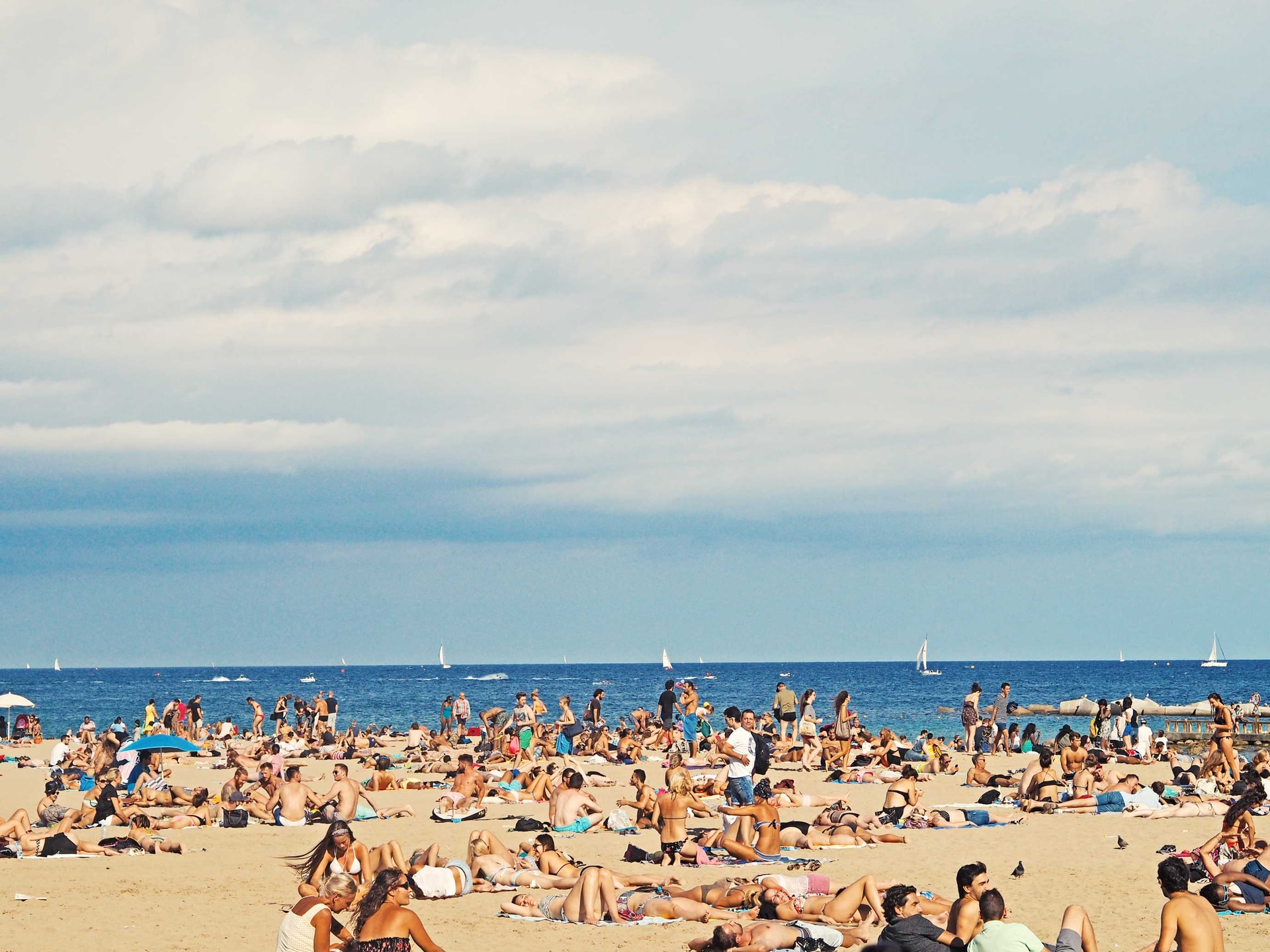
Unfortunately, there are several COVID-19-related factors that have the potential to significantly increase the number of beach drownings and rescues. (File photo: Federico Giampieri/Unsplash)
The easing of physical distancing restrictions can’t come soon enough for those tired of self-isolation, and for many the beach represents a welcome therapy after an extended time indoors and alone.
In Australia, popular beaches in Sydney, including the iconic Bondi Beach, were completely closed to public access during the government-imposed lockdown period. When they reopened under restricted conditions in late April (fall in the southern hemisphere), the unexpectedly large crowds led authorities to close them again.
More recently, crowded beaches in the Great Lakes, Florida, Texas, California and the United Kingdom show that people are eager to find their spot on the sand.
While going to the beach to bathe or swim is seen as an enjoyable recreational experience, aside from social distancing concerns, beaches can be dangerous environments and it is not uncommon for drownings to occur. Unfortunately, there are several COVID-19-related factors that have the potential to significantly increase the number of beach drownings and rescues.
Beach hazards in a time of COVID-19
First, many of those people seeking out beaches may be infrequent beachgoers, unfamiliar with beach hazards, such as rip currents, and safety practices, including strategies on how to react when caught in a rip current as recommended by the Break the Grip of the Rip campaign in the United States.
Second, summer travel plans have been altered for many, meaning local and non-holiday beaches — many of which are not patrolled by lifeguards — may see larger crowds and could put bystanders who attempt rescues at greater risk.
Third, and most important, in normal years, lifeguard services would intervene to ensure that people don’t put themselves into dangerous situations. This year is different.
Several jurisdictions from the U.K. and the Great Lakes have cancelled their lifesaving programs due to COVID-19-related budget and health concern restraints.
Coronavirus-related staff cuts and furloughs prevented Holland State Park in Michigan from setting up the flags to warn swimmers of the daily hazard along that section of Lake Michigan. The lack of warning flags and lifeguards has already been blamed for the drownings of a six-year-old and a 17-year-old on June 6. This is just but one example of how cutting funding to beach safety programs could cost lives.
Masking the truth about the surf hazard
There are interesting parallels between drowning prevention and efforts to flatten the COVID-19 curve.
Many people do not wear a mask in public despite evidence that masks reduce the potential for COVID-19 transmission. For example, if you have gone grocery shopping and avoided infection, you may become complacent and feel that masks and hand-washing are unnecessary. Or you may bend to peer pressure if you meet up with friends who are not wearing masks or social distancing.
Read more:
Why your tourist brain may try to drown you
These same behaviours come into play with drownings. Evidence suggests that if you didn’t drown on your last visit to the beach, you’ll be confident that you won’t drown on your next visit — despite changing waves, tides and other conditions.
Or if you are with a group of friends who are better swimmers, there is a greater chance that you will venture into deeper water to avoid the social cost of staying close to shore. You may also mirror the risky behaviours of other beachgoers.
Ignoring the warning signs
The time and financial investment made in travelling to the beach after being limited by stay-at-home orders for weeks and months means that more people may enter the water, even if the conditions aren’t ideal.
Beach users escaping self-isolation at home may be tired of warnings and further restrictions on the beach and may ignore them, particularly if they believe that lifeguards are being overly cautious. This was the greatest concern expressed at a recent (virtual) conference to celebrate the creation of a legislated lifesaving program in Costa Rica.
In the Great Lakes, the problem is made worse by the high-water levels that have limited the amount of beach available. Even where lifeguard services are still provided, the limited beach width means that people will either crowd together on the beach or move away from others, increasing the lifeguard’s patrol area — and the risk that someone will need rescue or will drown.
Restricting access to beaches to limit crowds and the potential for a second wave of COVID-19 cases, will in turn limit the number of drownings as long as people heed those closures.
COVID-19 has created a perfect storm that could make beaches more popular than ever before and raise the risk of drowning. So far, most of the concern has focused on the lack of social distancing and the looming threat of a second COVID-19 wave, but that focus may soon shift to drowning. Are we going to love our beaches to death?
Chris Houser, Professor of Earth and Environmental Science, and Dean of Science, University of Windsor and Rob Brander, Professor, UNSW
This article is republished from The Conversation under a Creative Commons license. Read the original article.




















