Health
Fast COVID-19 vaccine timelines are unrealistic and put the integrity of scientists at risk

(Pixabay)
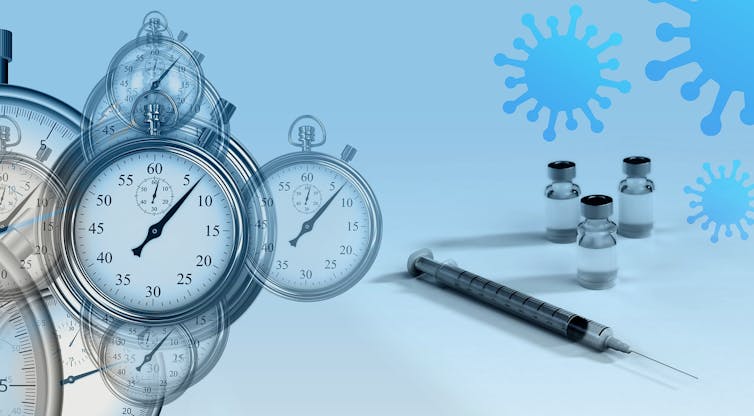
The average times of the fastest sprinters in the 100-metre dash are in the ballpark of 10 seconds. So, what would you think if someone promised to run the race in one second?
It typically takes a minimum of 10 years for a vaccine to complete the three consecutive phases of the clinical research pipeline. This is because of the scope and length of the experiments, the need to critically assess the results at each stage and the mountains of paperwork that are involved.
What are the chances that this can be reduced to 12 months? Indeed, it has been implied that this process can be accelerated to “warp speed.”
We contend that a safe and effective vaccine against severe acute respiratory syndrome-coronavirus-2 (SARS-CoV-2), which is the causative agent of coronavirus disease COVID-19, most likely cannot be made available to the public in time to make a substantial difference to the natural outcome of this pandemic. People often cling to hope even when prospects of success are low. However, this can have negative consequences if that hope is not realized.
We are academic scientists who manage vaccine research programs. In fact, Dr. Bridle received COVID-19-focused funding to develop a novel vaccine platform. Although many of us are working hard towards developing vaccines against SARS-CoV-2, we worry that some in the scientific community have offered too much hope for this to be accomplished in a timely fashion. Sometimes these promises are used by politicians and governments to inform public policies. As a result, the integrity of the scientific community is now in the limelight and, arguably, at risk.
Herd immunity
Vaccines are an effective way for a population to achieve what is known as “herd immunity.” This is the concept that the pandemic will end once approximately 60-70 per cent of people become immune to SARS-CoV-2. An alternative is to let SARS-CoV-2 run its natural course until herd immunity is achieved. With physical distancing, some epidemiologists argue this could take two years, during which time a vaccine could be developed.
However, vaccinating at the tail end of a pandemic when disease incidence is very low and declining may be of little utility, hence the race to develop a vaccine for COVID-19. If one is not in widespread use within the first half of 2021, it will probably be too late to have a meaningful impact on control of COVID-19.
Lessons from SARS and MERS
Educators often rely on past performance to predict the future performance of students. In this respect, how was the performance of the scientific community in the wake of the original SARS-CoV, or Middle East respiratory syndrome (MERS)-CoV? The fact is, no vaccine against a coronavirus has successfully navigated the rigours of clinical testing, despite having up to 17 years to do so.
The same applies to other dangerous respiratory pathogens, such as respiratory syncytial virus. Whether enough has been learned from these past experiences to get the design of COVID-19 vaccines right remains to be seen, and still does not negate the need for a rigorous testing process that will take time.
One concern is that some vaccines can protect against disease (that is, the outcome of an infection) but not against infection (the ability of the virus to get into the body). In this scenario, vaccinated individuals could potentially become asymptomatic carriers of SARS-CoV-2, thereby spreading COVID-19. For this and many other reasons, a cautious approach must be taken to developing COVID-19 vaccines.
Vaccines already in clinical trials
What about the fact that there are front-runner vaccines already in human clinical trials? First, many of the vaccine technologies that can most readily make it to the front of the line are not necessarily the best quality. The easiest way to make a vaccine is to inactivate the pathogen or use pieces of it, and mix them with an adjuvant, which tells the immune system that the pathogen is dangerous and worth responding to.

Illustration of coronavirus structure.
(Pixabay)
However, an inactivated virus or its components do not behave like the live virus, so the immune system sometimes responds to these vaccines in a way that is ineffective or sometimes even dangerous. For example, no vaccine based on the genetic material, known as ribonucleic acid or RNA, from a virus like SARS-CoV-2 has ever been approved. Further, some vaccines developed against the original SARS-CoV, after the epidemic was over, exacerbated the disease in mice.
A vaccine for COVID-19 does not have to be the best one, but it does need to be good enough to accelerate a population’s progression to herd immunity. As experienced peer reviewers, we have some concerns about the rigour of some of the science surrounding COVID-19 vaccines.
Some vaccines are fast-tracking through the regulatory system before studies are completed and with minimal details of experimental results being released. Executives of a big pharmaceutical company whose vaccine is among those closest to the finish line recently sold their stocks after releasing “positive results” that were superficial, partial and that included three of eight healthy young volunteers experiencing severe adverse events.
Events like this are causing the public to become skeptical. A promising vaccine should have solid data to back it up. Those touting vaccines against COVID-19 that are in clinical trials should be asked to provide comprehensive details and results of their study. This enables objective and rigorous evaluations by the broader scientific community. A lack of complete transparency would be cause for concern.
Getting from trials to clinics
Assuming a vaccine succeeds in human trials, it then needs to be manufactured in massive quantities at an affordable price, undergo quality control testing and be distributed worldwide. Even if by some miracle this spectrum could be bridged at warp speed, one then needs to wonder if up to 70 per cent of individuals can be effectively vaccinated.
(Pixabay)
Uptake of a vaccine could be compromised by anti-vaxxers, as well as by perceptions that warp-speed manoeuvring might be the result of cutting too many corners and compromising safety. Then there are those who simply do not respond as well to vaccines, which includes the elderly who are in the greatest need of protection.
Considering what we now know about SARS-CoV-2 vaccines, we need to take a more cautious approach and one could question if any of the vaccines that are now in pre-clinical testing can possibly help with the current pandemic. We sincerely hope that our pessimism about vaccines currently in clinical trials being ready in time is soundly proven wrong.
Even if a vaccine doesn’t get developed in time, not all is lost. The array of vaccines being engineered will help with outbreaks beyond COVID-19. They can be vetted by scientists and the best technologies and associated research teams could be shortlisted to be called upon for future outbreaks. Although clinical research likely cannot be shortened to 12 months while maintaining integrity of the science, the current attempt to do so will build new and reasonable efficiencies into health regulatory policies. This will facilitate getting a wide variety of future health solutions to patients faster, but not at warp speed.
Byram W. Bridle, Associate Professor of Viral Immunology, Department of Pathobiology, University of Guelph and Shayan Sharif, Professor of Immunology and Associate Dean, Research and Graduate Studies, University of Guelph
This article is republished from The Conversation under a Creative Commons license. Read the original article.