
News
Italian premier locks down entire country to stop virus

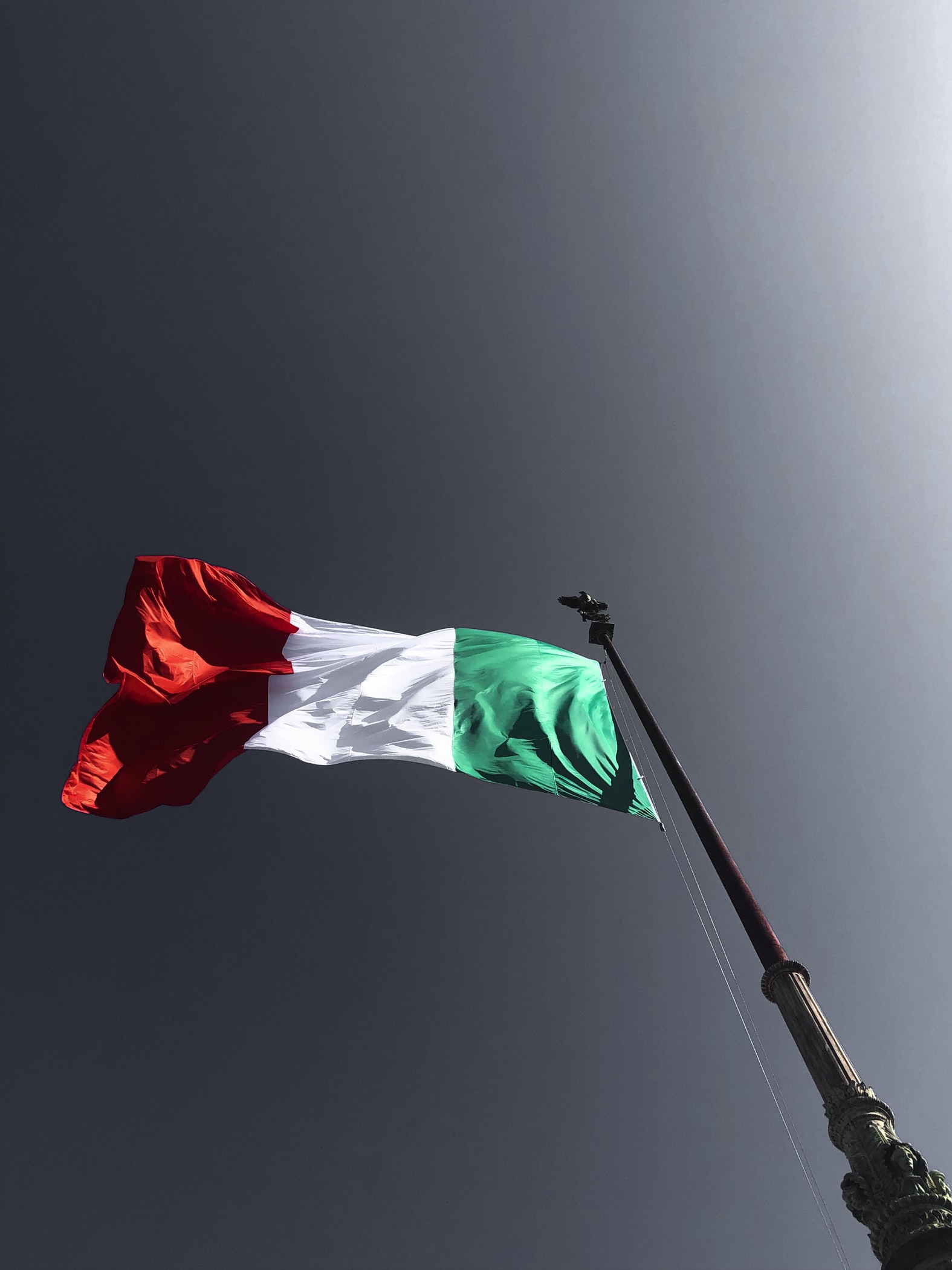
“Our habits must be changed, changed now. We all have to give up something for the good of Italy. When I speak of Italy, I speak of our dear ones, of our grandparents and of our parents,” Conte said. “We will succeed only if we all collaborate and we adapt right away to these more stringent norms.” (File Photo: Emma Fabbri/Unsplash)
MILAN — Italian Premier Giuseppe Conte put his entire country on lockdown Monday to combat the coronavirus, banning all but the most important travel and putting the final kibosh on social gatherings after Italians failed to take previous warnings to heart amid skyrocketing infections.
Two days after imposing the same strict measures on a quarter of the country, in the hard-hit north, Conte urged all 60 million Italians to stay home. The only travel allowed will be for proven work reasons, for health conditions or other cases of necessity.
“Our habits must be changed, changed now. We all have to give up something for the good of Italy. When I speak of Italy, I speak of our dear ones, of our grandparents and of our parents,” Conte said. “We will succeed only if we all collaborate and we adapt right away to these more stringent norms.”
The nationwide restrictions take effect Tuesday until April 3 and include extending the closures of schools and universities and closing pubs, eateries and cafes at dusk.
Conte took to task young people who continued to gather socially as the virus spread, saying “this night life … we can’t allow this any more.”
Italy registered 1,807 more confirmed cases as of Monday evening, for a national total of 9,172. The number of dead in Italy also increased by 97 to 463 — most of them elderly with previous ailments.
For most people, the new coronavirus causes only mild or moderate symptoms, such as fever and cough. For some, especially older adults and people with existing health problems, it can cause more severe illness, including pneumonia.
The vast majority of people recover from the new virus. According to the World Health Organization, people with mild illness recover in about two weeks, while those with more severe illness may take three to six weeks to recover. In mainland China, where the virus first exploded, more than 80,000 people have been diagnosed and more than 58,000 have so far recovered.”
Despite registering the largest number of cases outside of China, Italy has seen only superficial compliance with measures aimed at reducing social contact, including closing cinemas and theatres and banning fans from soccer games. The government gradually expand the so-called red zones.
Restrictions on movement initially applied to 11 towns in northern Italy with a total population of around 50,000 people before being expanded Sunday to all of Lombardy and 14 provinces in the neighbouring regions of Veneto, Piedmont and Emilia Romagna.
On the first business day since the government locked down a broad swath of the north, confusion reigned over who could go where and under what circumstances Monday.
Streets in Milan, Italy’s financial hub and the main city in Lombardy, were unseasonably quiet. For the first time, checkpoints were set up at the city’s main train station to screen travellers. People at Milan Central Station were required to sign a police form, self-certifying why they were travelling.
“Until a few days ago, the thinking was the alarm would pass in some weeks, we just need to follow the rules. Now we need to explain to citizens that the situation is very, very serious, our hospitals are at the point of collapse,” the mayor of the Lombardy city of Bergamo, Giorgio Gori, told RAI state television.
People circulating inside the city and in the provinces were subjected to spot checks to ensure they had valid reasons for being out. Violators risked up to three months jail or fines of 206 euros ($225).
Earlier Monday, civil protection authorities shut down all ski areas nationwide after one tried to tempt kids who are locked out of school to the slopes. That signalled an end to patience with the sort of wheeling-and-dealing that is often admired in Italy.
Under the extended measures, casual errands are out. The time-honoured Italian tradition of an espresso at the corner cafe — gone. Customers now are required to take tables, if possible, the one furthest from the bar. The evening aperitif is also frowned upon; bars close at 6 p.m. Even going to the grocery store is a major expedition.
Sofia Celeste, a single mother of two in Milan, was hoping to avoid going out for groceries by ordering online, but deliveries for Milan are booked solid until next week. “It sounds like we should not go anywhere,” she said. “I organized a dinner with the girls’ babysitter, and was going to do some shopping, but even then I feel like it’s risky.”
Her water-delivery man — who has a heart condition — arrived Monday wearing a mask. “He said, `I have to work,”’ Celeste recounted. Her small family in isolation is being sustained by emails from the parish priest saying they are missed and a note from the catechism teacher sending the kids messages and prayers.
The regions affected by the decree are among the most productive in Italy. Industry leaders worried about a perception being created abroad that all business was shut down and commercial deliveries of exports cannot be made.
The civil protection agency has emphasized that commercial freight is not affected by the crackdown.
Sportscar maker Ferrari, in Modena province, which went on lockdown Sunday, said that production was continuing after the company “activated all of the measures necessary” to allow employees to keep working. But it noted that continued production “is subject to that of our suppliers, with whom we are in constant contact.”
Pirelli tire maker said there would be no immediate impact on its Italian production, 7.5% of the group’s total, split between one plant inside the containment area and one outside. Pirelli said that precautions were being taken to safeguard the health of workers, and it did not anticipate issues transporting goods.
For travellers and commuters, procedures at Milan’s main train station were tightened significantly. Police officers in masks backed by pairs of masked armed soldiers checked tickets and documents of people arriving and departing.
Patrizia Peluso arrived at the station Monday from a five-day holiday with her two children in Lapland, Finland. They had to reroute their return flight through Rome after airlines cancelled flights to Milan. They grabbed a Naples-Turin train in Rome, connecting two cities not subject to the quarantine, and were among the few passengers to get off in Milan.
Before letting them pass the gates, soldiers confirmed their residence in Milan and asked their reason for travelling.
“I explained we were away on holiday, and I have to return to work. If not, I wouldn’t have come back at all,” Peluso said.
A study of epidemics in the last 25 years in France indicates that closing schools and public transport helps slow the spread of viruses and is economically efficient if a disease is significantly more lethal than the common flu, as the coronavirus appears to be, said Jerome Adda, dean for research at Bocconi University in Milan.
This epidemic, he said, will prove to be critical training not only for the medical profession but for the general population.
“It is a constant struggle between humankind and viruses,” Adda said. “We have to learn how to deal with this.
This is not the first time we get a viral epidemic, and it won’t be the last.”
——–
Barry reported from Soave, Italy. Associated Press writers Nicole Winfield and Frances D’Emilio in Rome also contributed to this report.




















