Canada News
Government of Canada honours the national historic significance of the Park House

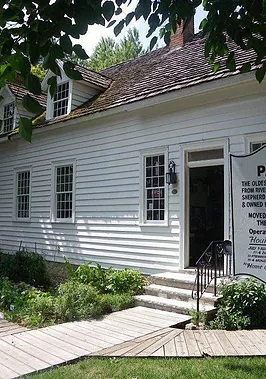
FILE: Historically, the Park House is an early example of Pièce sur Pièce log construction and is said to have been built in the 1790s at the mouth of the Rouge River in Detroit. (Photo: Park House Museum/Website)
Considered one of the oldest houses in southwestern Ontario, the Park House is a rare example of a once-common colonial building type found in settlements and fur-trading posts across colonial North America.
Today, Dr. Richard Alway, Chair of the Historic Sites and Monuments Board of Canada and representative for Ontario, commemorated the national historic significance of the Park House with a plaque unveiling ceremony in Amherstburg, Ontario.
This 18th century house with its French-framed poteaux-en-coulisse (grooved post) construction, asymmetrical design, centre-passage plan, and distinctive roof profile, is the material expression of the physical, cultural, and economic mobility of the French-descended people in the Detroit River region.
The combined dwelling and warehouse had several owners over the years who were involved in river-based trade between the 1790s and mid-1800s.
Although the precise date of its construction is unknown, it has long been contended that its Loyalist owners floated it down the Detroit River to Upper Canada when the British ceded Detroit to the Americans in 1796. In 1823, it was purchased by the Park family, and would remain in the family for over 100 years, earning its namesake. Between 1881 and 1936, it was home to Theodore Park, who was a local physician and expanded the house to include a waiting room and an office for his practice.
The house went through a period of having short-term tenants until Hazen Price and the Rotary Club purchased it and saved it from potential demolition. In May 1972, the Park house was rolled to its current site at the corner of Dalhousie and Rankin streets where it has operated successfully as a museum.
The designation of historical sites such as Park House reflect the rich and varied heritage of our country and provides an opportunity for Canadians to connect with their diverse history.
The Government of Canada, through the Historic Sites and Monuments Board of Canada, commemorates the significant people, places, and events that shaped our country as one way of helping Canadians and youth connect with their past. The commemoration process is largely driven by public nominations. To date, more than 2,150 designations have been made.
Quotes
“On behalf of the Government of Canada, I am pleased to commemorate the national historic significance of the Park House. As one of the oldest houses in southwestern Ontario, the Park House tells the story of traders and artisans who populated the Windsor region in the 18th century.
online pharmacy buy kamagra polo with best prices today in the USAHistoric designations reflect Canada’s rich and varied history and I encourage all Canadians to learn more about the Park House’s important contributions to Canada’s heritage.”
Dr. Richard Alway, O.C., O.Ont.,
Chair of the Historic Sites and Monuments Board of Canada and Representative for Ontario
Quick facts
- The Park House is a comfortable 18th century dwelling located on the commercial main street of Amherstburg, Ontario, on a lot bordering the Detroit River.
- French-framed poteaux-en-coulisse (grooved post) construction, asymmetrical design, and centre-passage plan, are rooted in a common French-Canadian vernacular architectural language.
- The house’s architecture and construction techniques are rooted in the French colonial vernacular style that spread not only to southern Ontario, but across the continent from Louisiana and all the way to British Colombia.
- The Historic Sites and Monuments Board of Canada is celebrating its 100th anniversary in 2019.
- Created in 1919, the Historic Sites and Monuments Board of Canada advises the Minister of Environment and Climate Change regarding the national historic significance of places, people and events that have marked Canada’s history.