
News
Iraq’s stability on the line as US, Iran tensions soar

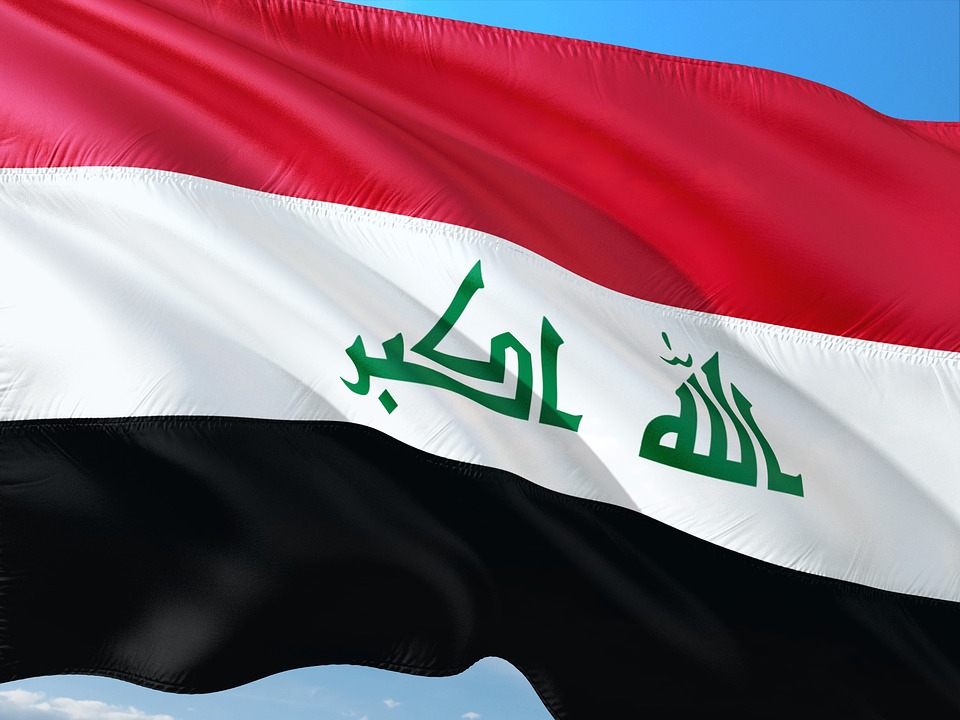
As the pressure mounts, divisions within Iraq’s pro-Iranian factions have burst into the open, threatening to collapse a fragile government coalition and end a rare reprieve from the violence that has plagued the country for years. (Pixabay photo)
BAGHDAD — As the United States and Israel escalate their push to contain Iranian influence in the Middle East, countries in Tehran’s orbit are feeling the heat.
Pro-Iranian militias across Lebanon, Syria and Iraq are being targeted, both with economic sanctions and precision airstrikes hitting their bases and infrastructure. This is putting the governments that host them in the crosshairs of an escalating confrontation and raising the prospect of open conflict.
Nowhere is that being felt more than in Iraq. It is wedged between Saudi Arabia to the south and Iran to the east and hosts thousands of U.S. troops on its soil. At the same time, powerful Shiite paramilitary forces linked to Iran pose a growing challenge to the authority of the central government.
As the pressure mounts, divisions within Iraq’s pro-Iranian factions have burst into the open, threatening to collapse a fragile government coalition and end a rare reprieve from the violence that has plagued the country for years.
“Regional challenges facing Iraq will make it even more difficult for Adel Abdel-Mahdi to bring the (militias) under control,” said Randa Slim, a senior fellow at the Washington-based Middle East Institute, referring to Iraq’s prime minister.
The divisions among Iran’s Shiite allies in Iraq have been spurred by a spate of airstrikes blamed on Israel that have hit weapons depots and bases belonging to the Iran-backed militias, known collectively as the Popular Mobilization Forces, or PMF.
There have been at least nine strikes since July both inside Iraq and across the border in Syria, sparking outrage among PMF leaders. They blame Israel and by extension its U.S. ally, which maintains more than 5,000 troops in Iraq.
Israel has not confirmed its involvement in the attacks, and U.S. officials have said Israel was behind at least one strike inside Iraq.
The attacks have fueled calls for a U.S. troop withdrawal by hard-line anti-American groups in the country that have strong ties to Iran.
“The Americans are hostage here … If war breaks out, they will all be hostages of the resistance factions,” said Abu Alaa al-Walae, secretary general of the Sayyed al-Shuhada Brigades, one of the prominent militia factions with strong ties to Iran. He spoke in a televised interview this week.
Such bellicose talk is deeply embarrassing for Iraq’s prime minister, who has struggled to balance his country’s alliance with both the U.S., which was invited back by the Baghdad government to help fight the Islamic State group, and Iran, which is Iraq’s most important trading partner. As the crisis over Tehran’s unraveling nuclear deal with world powers has escalated over the past months, that position is becoming increasingly untenable.
This week, there was a sense of foreboding following an attack by drones and cruise missiles on key Saudi Arabian oil installations. Yemen’s Houthi rebels claimed it was in response to the yearslong Saudi-led war there, but U.S. and Saudi officials said it was launched from the north. Iran and Iraq lie to the north of Saudi Arabia, while Yemen is in the south.
Iraq’s government was quick to deny that the attack originated from Iraqi territory, a claim that was later said to have been confirmed by Secretary of State Mike Pompeo in a phone call with Abdel-Mahdi.
The episode, however, demonstrated the Iraqi government’s tentative hold over the militias and raised questions about what they might do if the U.S. starts bombing Iran, for instance. Qassem Soleimani, head of Iran’s elite Quds Force and the architect of its regional entrenchment, met this week with Iraqi Shiite politicians and PMF leaders in Baghdad, apparently to discuss scenarios.
A directive issued by Iraq’s prime minister in July integrating and placing Iranian-backed militias under the command of the state’s security apparatus forces by July 31 has so far not been implemented.
Instead, PMF billboards reading “Death to America” have popped up between lanes of traffic in central Baghdad, following allegations of Israeli involvement in the series of airstrikes. One poster bears a picture of what looks like the ghost of the Statue of Liberty wearing a black hood. “America is the reason for insecurity and instability in the region,” it reads.
Meanwhile, divisions within the PMF’s leadership have surfaced in public, which is likely to exacerbate tensions. The head of the PMF, Faleh al-Fayyadh, has twice clashed with his deputy, Abu Mahdi al-Muhandis, in the past month, including when he walked back a statement by al-Muhandis in which he held the U.S. responsible for the spate of attacks on PMF bases.
The PMF is headed by al-Fayyadh but practically run by al-Muhandis, a military commander who has been designated a terrorist by Washington. Both men are firmly in Iran’s camp. Soleimani met with both men this week, a senior politician told The Associated Press.
Earlier this month, a document attributed to al-Muhandis was circulated in which he ordered the formation of a PMF air force directorate and the appointment of Salah Mahdi Hantous, who’s been on a U.S. sanctions list since 2012, as its chief. In a statement published on its website, the PMF later denied the report.
The document nonetheless angered Shiite politicians including the powerful cleric Moqtada al-Sadr, who tweeted that a PMF air force would spell the end of the Iraqi government and turn Iraq into a “rogue state.” Days later, he flew to Iran and held a meeting with Iran’s supreme leader Ayatollah Ali Khamenei.
Iraq’s top Shiite cleric, Grand Ayatollah Ali al-Sistani, whose 2014 religious decree calling for volunteer fighters against the Islamic State gave rise to the PMF, views these militias’ growing political and economic influence with suspicion and has pushed for Abdel-Mahdi’s directive to be implemented.
In surprisingly blunt comments, al-Sistani’s representative in Beirut, Hamid al-Khafaf, said progress in Iraq hinges on bringing all arms under state control.
Political analyst Hisham al-Hashemi said the current power struggle among Iraq’s Shiite militias is between PMF factions that support the state, and those whose loyalty rests more with Iran.
He questioned the government’s ability to impose its authority on PMF factions.
Referring to the removal earlier this year of blast walls that snaked through the city to protect from suicide car bombs, he said: “The Iraqi government, which removed the concrete blocks from around Baghdad, is unable to remove the signs of ‘death to Israel and America.”’
——
Karam reported from Beirut.




















