
News
Sudanese say US pressure was key to reaching transition deal

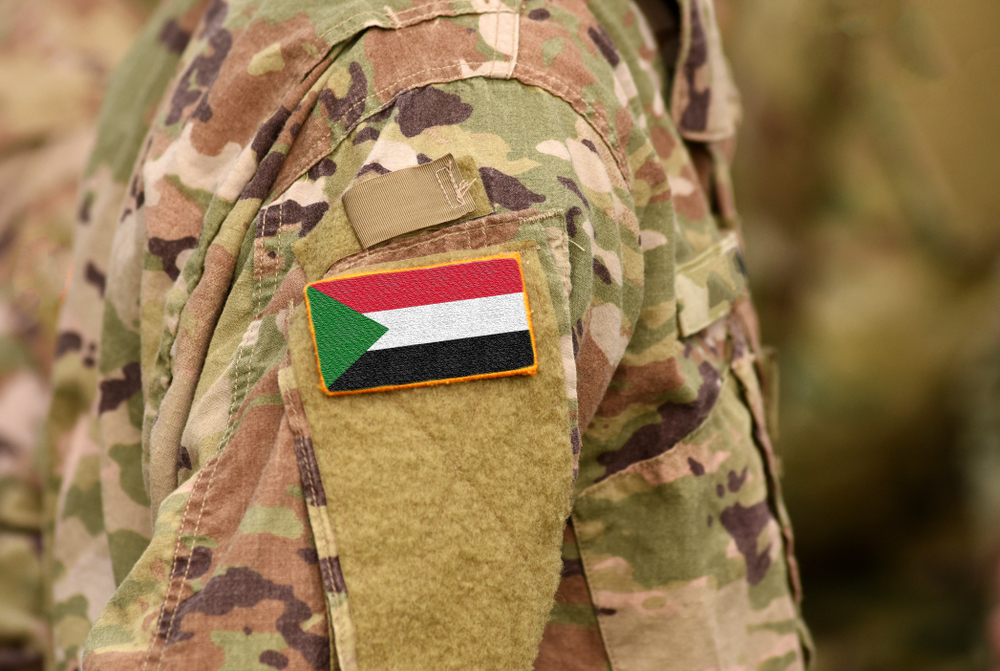
The agreement, which raised hopes of a democratic transition following the military overthrow of long-ruling autocrat Omar al-Bashir in April, was announced days after the protesters held mass marches through Khartoum and other areas. (Shutterstock photo)
CAIRO — The power-sharing agreement reached between Sudan’s military and pro-democracy protesters last week came after the United States and its Arab allies applied intense pressure on both sides amid fears a prolonged crisis could tip the country into civil war, activists and officials said.
The agreement, which raised hopes of a democratic transition following the military overthrow of long-ruling autocrat Omar al-Bashir in April, was announced days after the protesters held mass marches through Khartoum and other areas.
But those familiar with the negotiations say the main breakthrough happened at a secret meeting the day before the protests, when diplomats from the U.S., Britain, Saudi Arabia and the United Arab Emirates pressed the two sides to accept proposals from the African Union and Ethiopia.
“It was a tense but crucial meeting.
It melted the ice,” a leading activist said on condition of anonymity to discuss the back-room negotiations. “The meeting was the cornerstone of Friday’s deal.”
The two sides agreed on a jointly run sovereign council that will rule for a little over three years while elections are organized. A military leader will head the council for the first 21 months followed by a civilian leader for the next 18.
They also agreed on an independent Sudanese investigation into security forces’ deadly crackdown on the protests last month — though it’s unclear if anyone will be held accountable. The military also agreed to restore the internet after a weekslong blackout.
Much could still go wrong, and last month’s violence erupted at a similarly hopeful moment. But for now the deal appears to be on track, with the two sides expected to formally sign it this week.
Two leading activists, a Sudanese military official and two Egyptian officials described intense U.
S. efforts to force a deal after veteran diplomat Donald Booth was appointed special envoy in mid-June. They spoke on condition of anonymity because they were not authorized to discuss the talks.
State Department officials declined to comment on U.S. efforts to broker the deal, saying only that Washington welcomes the agreement and commends the AU and Ethiopia for their mediation efforts.
The Arab officials said the U.S. not only ramped up pressure on the military, but also on Saudi Arabia, the United Arab Emirates and Egypt, which supported the military’s overthrow of al-Bashir and sided with the generals when the protesters remained in the streets.
Two Egyptian officials with direct knowledge of Booth’s meetings in Cairo last month said the U.S. urged President Abdel-Fattah el-Sissi to back the AU and Ethiopian proposal and “pressure” Gen. Abdel-Fattah Burhan, the head of the ruling military council, to respond positively.
“We received a direct message from the White House: Facilitate a deal between the military and the protesters,” one of the officials said.
They said the same message was conveyed to Saudi Arabia and the United Arab Emirates, close U.S. allies that had pledged billions of dollars in aid to the military after al-Bashir’s overthrow.
The two Arab nations were seen as having major influence over Gen. Mohamed Hamdan Dagalo, who has sent Sudanese forces to aid their war in Yemen. Dagalo, known by the nickname “Hemedti,” is seen by many as the most powerful figure on the military council, and his paramilitary Rapid Support Forces led last month’s violent dispersal of the protesters’ main sit-in.
The Sudanese military official says the generals received the same message.
“The Americans demanded a deal as soon as possible. Their message was clear: power-sharing in return for guarantees that nobody from the council will be tried,” he said, referring to the June 3 crackdown. Protesters say security forces killed at least 128 people, while authorities put the death toll at 61, including some security personnel.
The crackdown left protesters in a precarious position, and raised fears that Sudan could share the fate of Syria, Yemen and Libya, which spiraled into civil war after their own popular uprisings.
The U.S. and its allies also put pressure on the protesters, who are represented by a coalition known as the Forces for the Declaration of Freedom and Change. The activists say the U.S. and Arab countries reached out to individual factions, which then threatened to negotiate separately with the military. Protest leaders gave in when it appeared the coalition was at risk of fracturing.
The efforts culminated in a secret meeting on July 29 at the home of a Sudanese businessman that was attended by protest leaders as well as Burhan and Dagalo.
Officials from the U.S., Britain, Saudi Arabia and the United Arab Emirates also attended, in a show of unity that pushed the two sides together. By the end of the over three-hour-long meeting, the two sides had agreed to thrash out an agreement within days.
Protest leaders went ahead with the rallies the following day, saying they needed time to prepare people for the agreement, and tens of thousands took to the streets in another show of popular support for a transition to civilian rule. Five days later, on July 5, the two sides announced that they had reached a power-sharing deal.
——
Associated Press writer Deb Riechmann in Washington contributed.




















