
Canada News
‘Climate change in action:’ Scientist says fires in Alberta linked to climate change

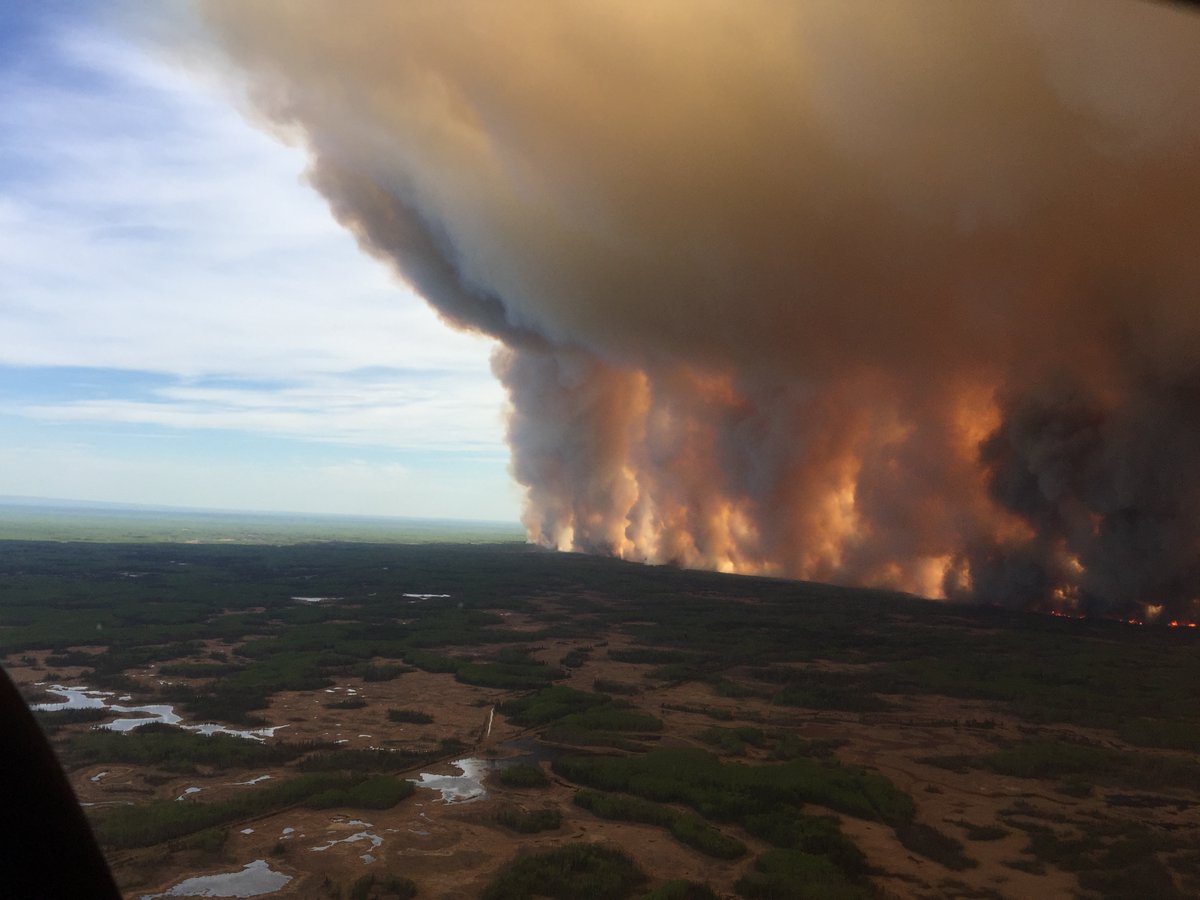
FILE: The Chuckegg Creek wildfire (HWF-042) is burning out of control in the High Level Forest Area, to the southwest and west of the town of High Level. The wildfire has been very active today and has crossed Highway 58 approximately 20 kilometres west of the town. (Photo: @AlbertaWildfire/Twitter)
EDMONTON — In May 2016, a wildfire near Fort McMurray forced more than 80,000 people to flee the northern Alberta city, destroyed 2,400 buildings and burned nearly 6,000 square kilometres of forest.
A year later, the fire season in British Columbia broke records as 2,117 blazes consumed more than 12,000 square kilometres of bush.
Both have been connected to climate change in two separate research papers published earlier this year by scientists with Environment and Climate Change Canada.
As another extreme fire season starts with more people on the run, scientists say they are already seeing signs that climate change is playing a role again.
“We are seeing climate change in action,” says University of Alberta wildland fire Prof. Mike Flannigan.
“The Fort McMurray fire was 1 1/2 to six times more likely because of climate change. The 2017 record-breaking B.C. fire season was seven to 11 times more likely because of climate change.”
The largest community evacuated in Alberta so far this year has been High Level. The vast Chuckegg Creek fire still churns in the woods south of town. It grew to 2,660 square kilometres in the first few weeks and remains one of several blazes currently burning out-of-control in the province.
Alberta Premier Jason Kenney has repeatedly said the cause of the fires is complex.
“I accept the science on anthropogenic climate change,” he said at a news conference last month. “But, in this particular instance, I can tell you we are on the five-year average for forest fires in Alberta.
“The large one right now is happening in an area where there has not been a fire for 80 years and so, regardless of other factors, it was due eventually for a large wildfire.”
Kenney’s comments aren’t wrong, but fire scientists say they don’t tell the whole story.
“Northern Alberta is covered by the boreal forest,” says Flannigan. “The boreal forest burns. It survives and thrives in a regime of semi-regular stand-replacing, stand-renewing high-intensity fire.”
It takes time for scientists to research and connect individual events to climate change, but Flannigan says it has become a major factor in Canadian fire seasons.
“We burn about 2.5 million hectares a year on average — that’s using about a 10-year average,” he says. “It’s more than doubled since the late ’60s and early ’70s.
“Colleagues and I attribute this to human-caused climate change. I can’t be any more clear than that.”
Most fire experts use a 10-year average for comparisons but, even using a five-year model, the number of fires in Alberta so far this year is already closing in on that number.
Alberta Wildfire data shows that, as of Friday, there were 569 wildfires in the province. The five-year average is 616. But they have already burned nearly 6,692 square kilometres, much higher than the five-year average of 1,387 square kilometres.
“There’s been a lot of research that’s shown as we warm, we get more fire,” says Flannigan.
He says there are three reasons: longer fire seasons; drier fuels and more lightning, which research has shown is increasing by 10 to 12 per cent with every degree of warming.
“Increasing temperatures, like those observed across Canada, will lead to drier fuels, and thus increased fire potential, as well as longer fire seasons,” says a federal report that looked into the Fort McMurray fire.
“The study demonstrated that the extreme Alberta wildfire of 2016 occurred in a world where anthropogenic warming has increased fire risk, fire spread potential, and the length of fire seasons across parts of Alberta and Saskatchewan.”
A study by federal scientists into British Columbia’s 2017 wildfire season found the area burned was seven to 11 times larger than it would have been without human influences on the climate.
Extreme high temperatures combined with dry conditions increased the likelihood of wildfire ignition and spread, the report says.
There’s already one sign that climate change is playing a role on the Chuckegg Creek fire near High Level, says Flannigan.
“Getting May fires up there is really early for that part of the province,” he says, explaining the area would normally start seeing fires in July. “Same with the Fort McMurray fire — that fire started May 1.
“The 2017 fire season in British Columbia — their busiest month is August — it started July 7 and that was really, really early for extreme fire weather for them.”




















