
News
Huawei hit by US export controls, potential import ban

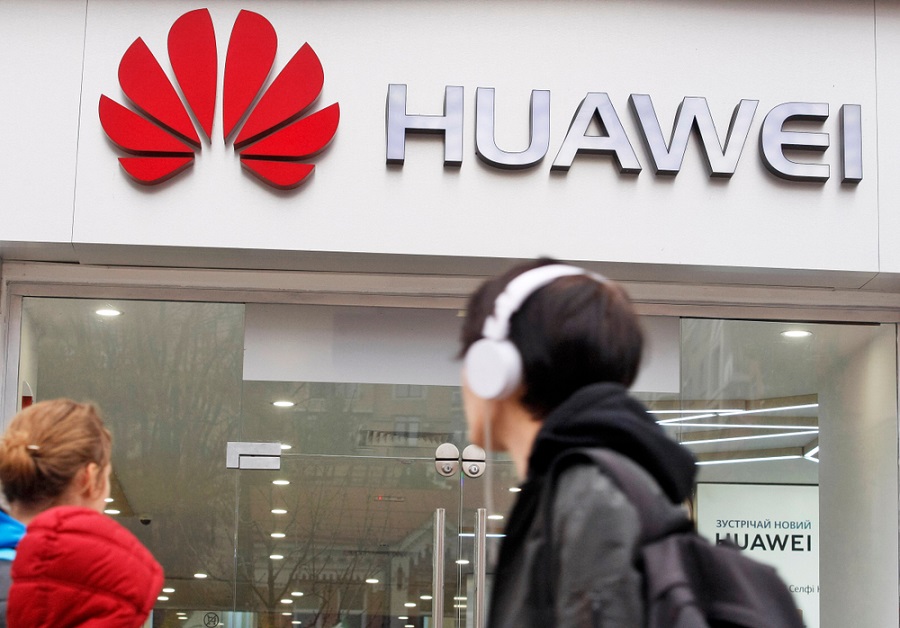
Huawei would be the largest business ever subjected to the controls, a law enforcement measure that requires it to obtain U.S. government approval on purchases of American technology, said Kevin Wolf, who had been the assistant secretary of commerce for export administration in the Obama administration. (viewimage / Shutterstock.com)
In a fateful swipe at telecommunications giant Huawei, the Trump administration issued an executive order Wednesday apparently aimed at banning its equipment from U.S. networks and said it was subjecting the Chinese company to strict export controls.
Huawei would be the largest business ever subjected to the controls, a law enforcement measure that requires it to obtain U.S. government approval on purchases of American technology, said Kevin Wolf, who had been the assistant secretary of commerce for export administration in the Obama administration.
“It’s going to have ripple effects through the entire global telecommunications network because Huawei affiliates all over the planet depend on U.S. content to function and if they can’t get the widget or the part or the software update to keep functioning then those systems go down,” he said.
Asked if that could include barring Apple from selling its Android operating system, which Huawei uses on its handsets, Wolf said it would be premature to say until he’s seen a published order from the Commerce Department’s Bureau of Industry and Security to be sure of the scope.
The executive order declares a national economic emergency that empowers the government to ban the technology and services of “foreign adversaries” deemed to pose “unacceptable risks” to national security — including from cyberespionage and sabotage.
While it doesn’t name specific countries or companies, it follows months of U.S. pressure on Huawei. It gives the Commerce Department 150 days to come up with regulations.
Washington and Beijing are locked in a trade war that partly reflects a struggle for global economic and technological dominance, and Wednesday’s actions up the ante.
The export restriction is “a grave escalation with China that at minimum plunges the prospect of continued trade negotiations into doubt,” said Eurasia Group analysts in a report.
“Unless handled carefully, this situation is likely to place U.S. and Chinese companies at new risk,” the report said.
It appears the law invoked in Wednesday’s executive order, the 1977 International Emergency Economic Powers Act, has never before been declared in a way that impacts an entire commercial sector. It has routinely been used to freeze the assets of designated terrorists and drug traffickers and impose embargoes on hostile former governments.
The order addresses U.S. government concerns that equipment from Chinese suppliers could pose an espionage threat to U.S. internet and telecommunications infrastructure. Huawei, the world’s biggest supplier of network gear, has been deemed a danger in U.S. national security circles for the better part of a decade.
U.S. justice and intelligence officials say Chinese economic espionage and trade secret theft are rampant. They have presented no evidence, however, of any Huawei equipment in the U.
S. or elsewhere being compromised by backdoors installed by the manufacturer to facilitate espionage by Beijing. Huawei vehemently denies involvement in Chinese spying.
Huawei said blocking it from doing business in the United States would hamper introduction of next-generation communications technology in which the company is a world leader.
“We are ready and willing to engage with the U.S. government and come up with effective measures to ensure product security,” the company said in a statement.
The restrictions “will not make the U.S. more secure or stronger,” the company said. It said the United States would be limited to “inferior yet more expensive alternatives,” which would hurt companies and consumers.
A senior U.S. administration official, who briefed reports on condition of anonymity, said in a hastily arranged call that the order was “company and country agnostic” and would not be retroactive. Officials said “interim regulations” were expected before final rules were set but were vague on what that meant.
In a statement, Federal Communications Commission Chairman Ajit Pai called the executive order “a significant step toward securing America’s networks.”
“It signals to U.S. friends and allies how far Washington is willing to go to block Huawei,” said Adam Segal, cybersecurity director at the Council on Foreign Relations. Many in Europe have resisted a fierce U.S. diplomatic campaign to institute a wholesale ban on the Chinese company’s equipment in their next-generation 5G wireless networks.
Democratic Sen. Mark Warner, vice chairman of the Senate Intelligence Committee and a former telecoms executive, called the order “a needed step” because Chinese law compels Huawei to act as an agent of the state.
The order’s existence in draft form was first reported by The Washington Post last June. Segal said that with U.S.-China trade talks at a standstill, the White House “felt the time had finally come to pull the trigger.”
It is a “low-cost signal of resolve from the Trump administration,” Segal said, noting that there is little at stake economically.
All major U.S. wireless carriers and internet providers had already sworn off Chinese-made equipment after a 2012 report by the House Intelligence Committee said Huawei and ZTE, China’s No. 2 telecoms equipment company, should be excluded as enablers of Beijing-directed espionage.
Last year, Trump signed a bill that barred the U.S. government and its contractors from using equipment from the Chinese suppliers.
The FCC also has a rule in the works that would cut off subsidies for companies that use any equipment banned as posing a national security threat. Huawei’s handsets are virtually nonexistent in the U.S., and last week the FCC rejected a Chinese phone company’s bid to provide domestic service .
Huawei says it supplies 45 of the world’s top 50 phone companies. But only about 2 per cent of telecom equipment purchased by North American carriers was Huawei-made in 2017.
The domestic economic impact will be restricted mostly to small rural carriers for whom Huawei equipment has been attractive because of its lower costs. That could make it more difficult to expand access to speedy internet in rural areas.
Blair Levin, an adviser to research firm New Street Research and a former FCC official, said the order is likely to widen the digital divide.
Roger Entner, founder of telecom research firm Recon Analytics, tweeted: “Banning Huawei in the U.S. has the FCC in a conundrum: Low cost Huawei equipment helps to build out broadband in rural America faster.” He wondered if the FCC would subsidize small rural carriers.
Requests for comment from a group representing small carriers, the Competitive Carriers Association, were not immediately returned. Administration officials told reporters they will welcome comments from the telecommunications industry as regulations are set.
They did not say whether subsidies would be considered.
Early this year, the Justice Department unsealed criminal charges against Huawei, a top company executive and several subsidiaries, alleging the company stole trade secrets, misled banks about its business and violated U.S. sanctions on Iran. The sweeping indictments accused the company of using extreme efforts to steal trade secrets from American businesses — including trying to take a piece of a robot from a T-Mobile lab.
The executive charged is Huawei’s chief financial officer, Meng Wanzhou, who is also the daughter of the company’s founder. She was arrested in Canada last December. The U.S. is seeking to extradite her.




















