
News
UN says Congo’s Ebola outbreak not yet a global emergency

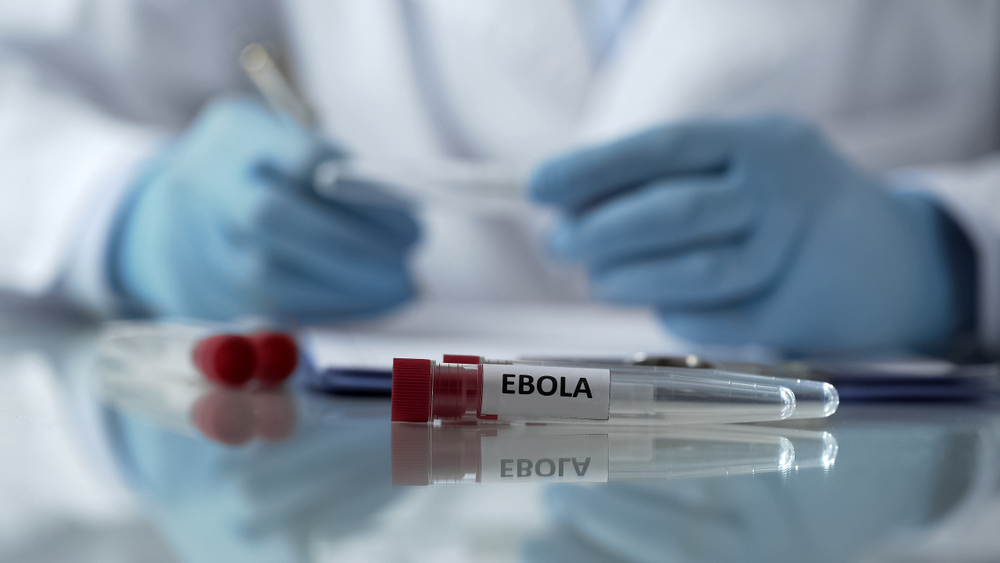
Following a meeting of its expert committee, the U.N. health agency called for efforts to be redoubled to stop the deadly virus, noting that the recent spike in Ebola cases raises the risk of spread to other countries. (Shutterstock Photo)
GENEVA – The World Health Organization said Friday that while the ongoing Ebola outbreak in Congo is of “deep concern,” the situation does not yet warrant being declared a global emergency.
Following a meeting of its expert committee, the U.N. health agency called for efforts to be redoubled to stop the deadly virus, noting that the recent spike in Ebola cases raises the risk of spread to other countries.
The outbreak announced on Aug. 1 has become the second-deadliest in history, behind the West African one from 2014-16 that killed more than 11,300 people. Congo’s health ministry on Thursday reported 1,206 confirmed and probable cases, including 764 deaths.
This is the second time the expert committee has decided this outbreak is not yet a global emergency. Committee chair Robert Steffen called Friday’s decision unanimous and said the experts had feared making the declaration might even hurt response efforts. He did not give details but said experts were “moderately optimistic” the outbreak could be contained within a “foreseeable time.”
Ahead of the WHO announcement, a top Red Cross official said he was “more concerned than I have ever been” about Ebola’s possible regional spread.
Emanuele Capobianco, head of health and care at the International Federation of Red Cross and Red Crescent Societies, cited Congolese health ministry data showing 40 new cases over two days this week. He called that rate unprecedented in this outbreak.
To be designated a public health emergency of international concern, a situation must be “serious, unusual or unexpected,” threaten to infect other countries and require “immediate international action.”
Emergency declarations almost always boost global attention and donor funding. WHO has noted it is woefully short of the $148 million it says is needed to fight Ebola for the next six months. To date, the agency has only received $74 million.
This outbreak, occurring close to the borders of Uganda, Rwanda and South Sudan, has been like no other. Mistrust has been high in a region that had never faced an Ebola outbreak before, and insecurity caused by rebel groups has hurt aid efforts.
Rebecca Katz, a global health security expert at Georgetown University, in a statement called WHO’s decision disappointing, saying the U.N. agency and its experts were “taking too narrow of an interpretation” of what constitutes an international emergency. She called the difficulty of co-ordinating the response “deeply concerning.”
Ahead of the announcement, Trish Newport, Doctors Without Borders’ representative in Goma, a major crossroads city close to the outbreak, said that declaring a global emergency wouldn’t necessarily help stop the epidemic.
“Bigger is not necessarily better,” she said and called for a new approach, saying that after nine months of the same strategy “the epidemic is definitely not under control.”
Doctors Without Borders is calling for patients to be treated in existing health centres rather than Ebola-specific clinics: “It’s very clear that people do not like or trust the Ebola centres and they are not coming to be treated.”
Newport said 75% of new Ebola cases have no obvious link to previous patients, meaning that officials have lost track of where the virus is spreading.
WHO’s Dr. Michael Ryan, who heads the emergencies program, disputed that assessment, insisting that officials are eventually able to connect most Ebola cases to a previous patient after an arduous forensic process.
Previous global emergencies have been declared for the 2014 Ebola outbreak in Sierra Leone, Liberia and Guinea, the emergence of Zika virus in the Americas and the international attempt to eradicate polio. WHO was criticized for not declaring the 2014 Ebola outbreak an international emergency until nearly 1,000 people had died and the disease had spilled across borders.
Tariq Riebl, who is based in a current Ebola hot spot, Butembo, for the International Rescue Committee, said a major obstacle to stopping the outbreak is that officials are simply unaware of how many Ebola cases there are.
“We’re discovering people when it’s way too late,” he said, noting numerous cases were buried in secret and never reported to authorities. “Given the average number of cases we’re seeing now, this is not going to be over for at least another six months or more.”
–––
Cheng reported from London.




















