
Business and Economy
America’s newest crew capsule rockets toward space station

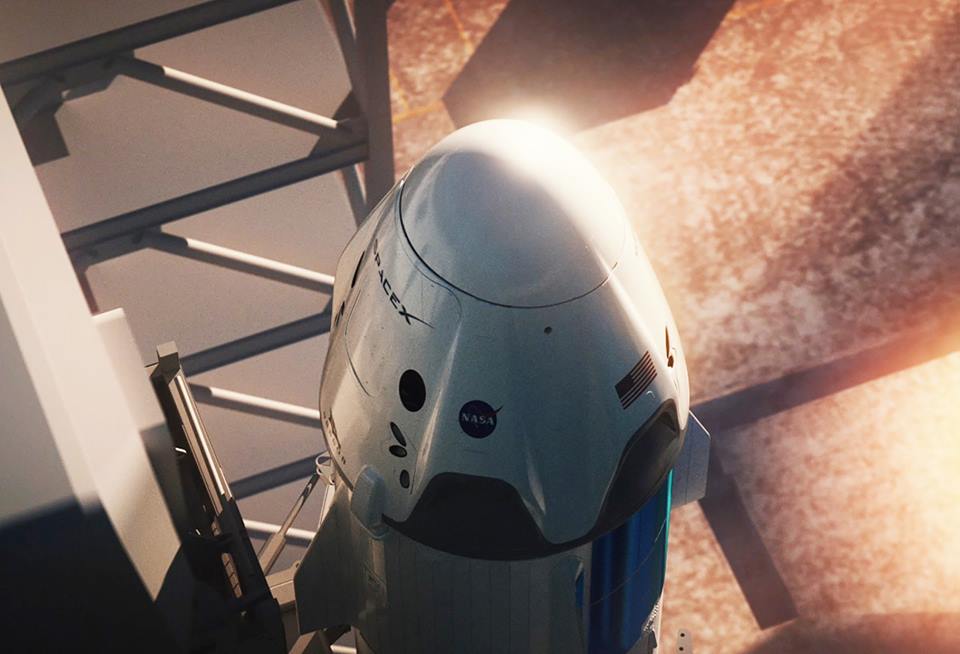
America’s newest capsule for astronauts rocketed Saturday toward the International Space Station on a high-stakes test flight by SpaceX. (Photo: International Space Station/Facebook)
CAPE CANAVERAL, Fla. — America’s newest capsule for astronauts rocketed Saturday toward the International Space Station on a high-stakes test flight by SpaceX.
The only passenger was a life-size test dummy, named Ripley after the lead character in the “Alien” movies. SpaceX needs to nail the debut of its crew Dragon capsule before putting people on board later this year.
This latest, flashiest Dragon is on a fast track to reach the space station Sunday morning, just 27 hours after liftoff.
It will spend five days docked to the orbiting outpost, before making a retro-style splashdown in the Atlantic next Friday — all vital training for the next space demo, possibly this summer, when two astronauts strap in.
“This is critically important … We’re on the precipice of launching American astronauts on American rockets from American soil again for the first time since the retirement of the space shuttles in 2011,” said NASA Administrator Jim Bridenstine. He got a special tour of the pad on the eve of launch, by SpaceX founder and chief executive Elon Musk.
An estimated 5,000 NASA and contractor employees, tourists and journalists gathered in the wee hours at Kennedy Space Center with the SpaceX launch team, as the Falcon 9 rocket blasted off before dawn from the same spot where Apollo moon rockets and space shuttles once soared. Across the country at SpaceX Mission Control in Hawthorne, California, company employees went wild, cheering every step of the way until the capsule successfully reached orbit.
Looking on from Kennedy’s Launch Control were the two NASA astronauts who will strap in as early as July for the second space demo, Doug Hurley and Bob Behnken. It’s been eight years since Hurley and three other astronauts flew the last space shuttle mission, and human launches from Florida ceased.
NASA turned to private companies, SpaceX and Boeing, and has provided them $8 billion to build and operate crew capsules to ferry astronauts to and from the space station. Now Russian rockets are the only way to get astronauts to the 250-mile-high outpost. Soyuz tickets have skyrocketed over the years; NASA currently pays $82 million per seat.
Boeing aims to conduct the first test flight of its Starliner capsule in April, with astronauts on board possibly in August.
Bridenstine said he’s confident that astronauts will soar on a Dragon or Starliner — or both — by year’s end. But he stressed there’s no rush.
“We are not in a space race,” he said. “That race is over. We went to the moon and we won. It’s done. Now we’re in a position where we can take our time and make sure we get it right.”
SpaceX already has made 16 trips to the space station using cargo Dragons. The white crew Dragon is slightly bigger — 27 feet (8 metres) tip to tip — and considerably fancier and safer.
It features four seats, three windows, touch-screen computer displays and life-support equipment, as well as eight abort engines to pull the capsule to safety in the event of a launch emergency. Solar cells are mounted on the spacecraft for electrical power, as opposed to the protruding solar wings on cargo Dragons.
“It’s an incredibly sleek looking vehicle from the inside and it’s very easy to operate,” Hurley told reporters just hours before liftoff. He marvels at how the Dragon has just 30 buttons and touch screens, compared with the space shuttle cockpit’s 2,000 switches and circuit breakers.
For the test, the Ripley dummy was strapped into the far left seat, wearing the company’s snappy white spacesuit. The other seats were empty, save for a small plush toy resembling Earth that was free to float upon reaching zero-gravity. “Super high tech zero-g indicator added just before launch!” Musk tweeted. True to his word, the toy rose weightlessly above the seat once the capsule was in orbit.
As many as seven astronauts could squeeze in, although four will be the norm once flights get going, allowing for a little cargo room. About 450 pounds (200 kilograms) of supplies are going up on this flight.
The capsule is designed to dock and undock automatically with the space station. Cargo Dragon must be manoeuvred with the station’s robot arm.
Like Ripley, the capsule is rigged with sensors. Engineers will be carefully watching sound, vibration and other stresses on the spacecraft, while monitoring the life-support, communication and propulsion systems. Some of the equipment needs more work — possibly even redesign — before serving human passengers.
“We’re going to learn a ton from this mission,” said NASA’s commercial crew program manager, Kathy Lueders.
Flight operations team members — some of them new to this — also need the six-day trial run, according to Kennedy Space Center’s director, Robert Cabana.
The objective is to make the next demo flight, with Hurley and Behnken, as safe as possible. The more immediate goal is to avoid harming the space station and its three occupants: an American, Canadian and Russian.
Despite SpaceX’s success at recovering and reusing its rockets, NASA is insisting on brand new boosters from SpaceX for the crew capsule flights. The first-stage booster used Saturday landed on a floating platform in the Atlantic, following liftoff. SpaceX plans to recycle the newly flying capsule for a high-altitude abort test this spring, along with a booster launched and retrieved a week ago.




















