
News
Scientist who popularized term “global warming” dies at 87

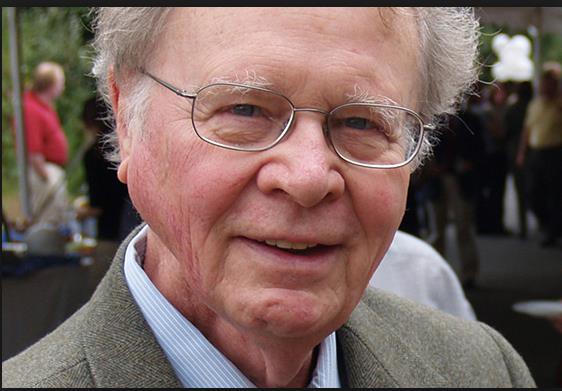
A scientist who raised early alarms about climate change and popularized the term “global warming” has died. Wallace Smith Broecker was 87. (File Photo: Lee Lerner/Facebook)
NEW YORK — A scientist who raised early alarms about climate change and popularized the term “global warming” has died. Wallace Smith Broecker was 87.
The longtime Columbia University professor and researcher died Monday at a New York City hospital, according to a spokesman for the university’s Lamont-Doherty Earth Observatory. Kevin Krajick said Broecker had been ailing in recent months.
Broecker brought “global warming” into common use with a 1975 article that correctly predicted rising carbon dioxide levels in the atmosphere would lead to pronounced warming. He later became the first person to recognize what he called the Ocean Conveyor Belt, a global network of currents affecting everything from air temperature to rain patterns.
“Wally was unique, brilliant and combative,” said Princeton University professor Michael Oppenheimer. “He wasn’t fooled by the cooling of the 1970s. He saw clearly the unprecedented warming now playing out and made his views clear, even when few were willing to listen.”
In the Ocean Conveyor Belt, cold, salty water in the North Atlantic sinks, working like a plunger to drive an ocean current from near North America to Europe. Warm surface waters borne by this current help keep Europe’s climate mild.
Otherwise, he said, Europe would be a deep freeze, with average winter temperatures dropping by 20 degrees Fahrenheit or more and London feeling more like Spitsbergen, Norway, which is 600 miles north of the Arctic Circle.
Broecker said his studies suggested that the conveyor is the “Achilles heel of the climate system” and a fragile phenomenon that can change rapidly for reasons not understood. It would take only a slight rise in temperature to keep water from sinking in the North Atlantic, he said, and that would bring the conveyor to a halt. Broecker said it is possible that warming caused by the buildup of greenhouse gases could be enough to affect the ocean currents dramatically.
“Broecker single-handedly popularized the notion that this could lead to a dramatic climate change ‘tipping point’ and, more generally, Broecker helped communicate to the public and policymakers the potential for abrupt climate changes and unwelcome ‘surprises’ as a result of climate change,” said Penn State professor Michael Mann.
In 1984, Broecker told a House subcommittee that the buildup of greenhouse gases warranted a “bold, new national effort aimed at understanding the operation of the realms of the atmosphere, oceans, ice and terrestrial biosphere.”
“We live in a climate system that can jump abruptly from one state to another,” Broecker told the Associated Press in 1997. By dumping into the atmosphere huge amounts of greenhouse gases, such as carbon dioxide from the burning of fossil fuels, “we are conducting an experiment that could have devastating effects.”
“We’re playing with an angry beast — a climate system that has been shown to be very sensitive,” he said.
Broecker received the National Medal of Science in 1996 and was a member of the National Academy of Science. He also served a stint as the research co-ordinator for Biosphere 2, an experimental living environment turned research lab.
Broecker was born in Chicago in 1931 and grew up in suburban Oak Park.
He joined Columbia’s faculty in 1959, spending most of his time at the university’s laboratory in Palisades, New York. He was known in science circles as the “Grandfather of Climate Science” and the “Dean of Climate Scientists.”
“His discoveries were fundamental to interpreting Earth’s climate history,” said Oppenheimer. “No scientist was more stimulating to engage with: he was an instigator in a good way, willing to press unpopular ideas, like lofting particles to offset climate change. But it was always a two-way conversation, never dull, always educational. I’ll miss him.”




















