
News
Indiana governor says passing hate crime law ‘long overdue’

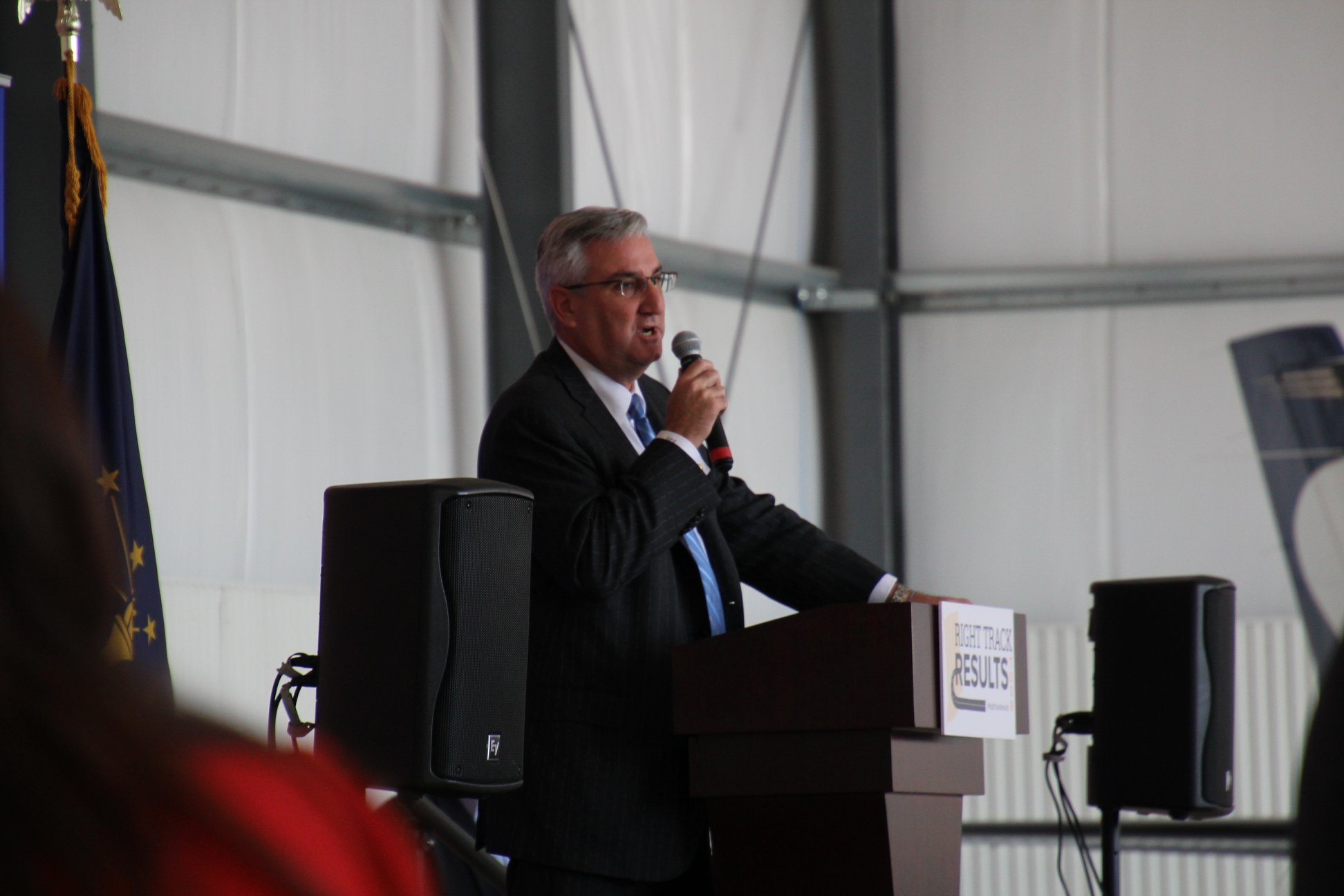
“It’s not only the right thing to do, it’s long overdue,” Holcomb said Friday during an interview with The Associated Press. “I’m convinced the overwhelming majority of Hoosiers feel the same way.” (File Photo: Eric Holcomb/Facebook)
INDIANAPOLIS — The spray-painting of a swastika outside a suburban Indianapolis synagogue this summer was the final straw for Republican Gov. Eric Holcomb, who quickly called for Indiana to join the 45 states that have hate crime laws.
“It’s not only the right thing to do, it’s long overdue,” Holcomb said Friday during an interview with The Associated Press. “I’m convinced the overwhelming majority of Hoosiers feel the same way.”
As the annual legislative session draws near, though, some warn that such a proposal could spark a bitter cultural debate that would bring unwanted attention to the deeply conservative state, much like the 2015 religious objections law that critics widely panned as a sanctioning of discrimination against the LGBT community and that drew a stiff rebuke from big business.
“If this is a big, knock-down, drag out, ‘RFRA-esque’ discussion, it is not going to help anyone,” said House Speaker Brian Bosma, using an acronym for 2015’s Religious Freedom Restoration Act, which was signed into law by Vice-President Mike Pence when he was Indiana governor. “We need to do it in such a way that’s not a net negative and brings undue attention to our state.”
Bosma would know. The Indianapolis Republican helped shepherd a bill to “fix” the law through the Statehouse — steps that were taken only after businesses protested, groups vowed a boycott and the state was lampooned on late-night TV.
An overwhelming majority of states have hate crime laws, which vary to some degree but generally allow for stiffer sentences to be given to people who are convicted of crimes motivated by hatred or bias. Only Indiana, Georgia, South Carolina, Wyoming and Arkansas do not.
What remains to be seen is what sort of law might be palatable to Indiana legislators — whether it would be open-ended and general or whether it would specify characteristics that would be covered, such as race, gender, religion, sexual orientation and gender identity, which is what Holcomb wants.
While many business leaders support the governor’s call for a hate crime law and view the absence of one as a sign of intolerance, many religious conservatives, including some rank-and-file legislators, see it as an unnecessary exercise that could lead to other unwanted social changes.
For years, they’ve stymied efforts to put a hate crime law on the books, arguing that judges can already consider factors such as bias when determining sentences.
“Nobody is for hate crime, but it’s a Pandora’s box,” said Ron Johnson, who leads the Indiana Pastors Alliance and believes Christians are persecuted by gay rights supporters. “It opens the door to all the rest of this craziness that we are seeing.”
Some conservatives argue that adopting a hate crime law would create a “protected” class of citizen and grant additional acceptance to those who are lesbian, gay, bisexual or transgender.
Another common refrain among lawmakers who oppose the idea is that it would target “thought crime.” All crimes are bad, they say, regardless of what motivates them.
Holcomb says “nothing could be further from the truth.”
“You want to have a moronic thought … that’s your right,” he said. “But when it becomes a criminal action, you’ve crossed the line.”
For those who have received intimidating threats driven by hatred or bias, the issue is far less abstract than many critics portray.
Across the U.S., the number of reported hate crimes increased by about 17 per cent in 2017, according to the FBI. In Indiana, the number has fluctuated in recent decades, ranging from about 40 to over 100 crimes per year that would fit the description.
But those figures depend on how law enforcement agencies categorize crime, which can be subjective, and how many of them report their statistics to the FBI, which can fluctuate.
Indiana has a complicated history when it comes to prejudice and bigotry. The state was a stop along the Underground Railroad, but in the 1920s, local politics was dominated by the Ku Klux Klan, with some estimates indicating that one-quarter of the native-born white men were members.
In the 1960s, Indiana-born author and diplomat John Bartlow Martin described the state in a memo to Robert Kennedy as “suspicious of foreign entanglements, conservative in fiscal matters, and with a strong overlay of Southern segregationist sentiment,” according to Indiana historian Ray Boomhower.
Aside from the synagogue vandalism that prompted Holcomb to publicly call for a hate crime law, activists say graffiti swastikas have been appearing in more public places. Last year, a man pleaded guilty to battery after authorities say he attacked a woman in Bloomington while shouting racial slurs and trying to remove her headscarf.
And Matthew Heimbach, of Paoli, has become a prominent figure in the white nationalist movement, once spearheading a group that described itself as “fighting to secure the existence of our people and a future for white children.”
David Sklar, assistant director of the Indianapolis Jewish Community Relations Council, said the only reason anyone should worry about a hate crime law “is if you are a criminal.”
“Will passing a hate crime statute ultimately stop a hate crime from happening? Chances are probably not,” Sklar said. “But it is equally important to make sure that a person receives the right amount of jail time and for the state to say, ‘We will not tolerate these things and we will make our laws reflect that.”’




















