News
New Okinawa chief embodies complexity of Japan’s US bases

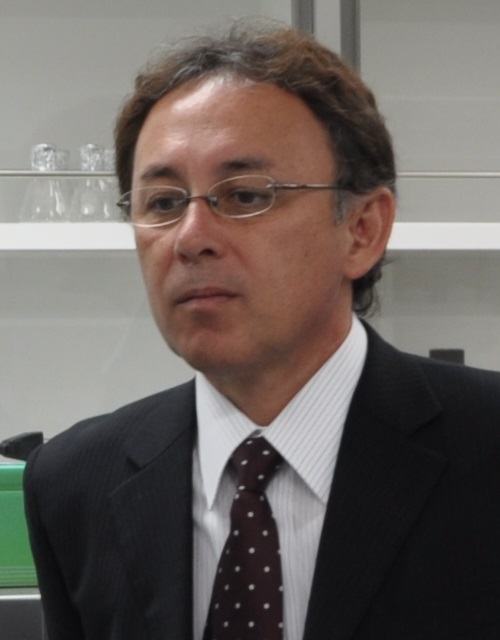
“We are all family on earth,” he told reporters. “How we can co-exist in understanding and peace should be our starting point.” (File Photo By OIST/Wikimedia, CC BY 2.0)
TOKYO — The celebratory crowds in Okinawa chanted the unusual first name of the southern Japanese island’s newly elected governor, shouting, “Denny! Denny! Denny!” The scene highlighted one of the first and most important questions for Denny Tamaki: How will he tackle the U.S. military presence in Okinawa as someone who is half American?
Tamaki, 58, the first person with an American parent to lead Okinawa, defeated a candidate backed by the conservative pro-U.S. ruling party in Sunday’s election by a comfortable margin of 80,000 votes.
At contention was the plan, decades in the works, for a new U.S. air base being built in Henoko on Okinawa’s coast.
Tamaki said he would talk to the U.S. about how the people of Okinawa have rejected the new air base.
“We are all family on earth,” he told reporters. “How we can co-exist in understanding and peace should be our starting point.”
Tamaki is also emerging as a new kind of leader, standing for tolerance and diversity, in a nation long known for uniformity and conformity.
His father is a U.S. Marine he has never met. His mother is Okinawan. Little is known about his father, who is believed to have left Japan before Tamaki was born. Dual citizenship is technically illegal for Japanese adults, especially for politicians.
Although Tamaki rarely talks in detail about his parental roots, he has always said he embodies the predicament of Okinawa.
His body language after his election victory was telling. He shouted “Banzai!” in a traditional Japanese election celebration. He then danced, swaying his arms rhythmically, Okinawan-style, with his supporters, acknowledging he just couldn’t help himself.
Tamaki’s political career began in local politics in 2002, and he was elected to parliament in 2009. Married, with two sons and two daughters, Tamaki has also been a radio broadcaster and a musician. He has sung in a rock band since junior high school, and wrote lyrics for some of Okinawa’s top acts, including the Rinken Band.
He still gets up on stage with a guitar to sing in English, although his English is limited, like most Japanese. He lists Robin Williams and Tom Hanks as his favourite actors and Eric Clapton as his musical inspiration.
“He is super popular. It doesn’t matter he is half-American,” said Noritaka Yagi, who runs a taco stall in Uruma, Okinawa. “He appeals to people’s emotions.”
Tamaki said his election victory was about change, putting “identity over ideology.”
“Let’s move forward to a new Okinawa,” he said in a tweet after his win over Atsushi Sakima, a mayor who had argued that Okinawa should work with the national government to sort out the problem.
Still, enormous challenges remain for Tamaki.
The effort to reduce Okinawa’s burden of hosting the U.S. forces would mean confronting Japan’s national defence policy, which is based on a bilateral security treaty that followed World War II. Japan sees the U.S. as its most important ally and remains highly dependent on the U.S. for defence.
Okinawa houses about half of the 54,000 American troops stationed in Japan and makes for 64 per cent of the land space used by the U.S. bases in the country. Okinawa makes up less than 1 per cent of Japan’s land space.
Adding to the complexity is the history. Okinawa was occupied by the U.S. after the rest of Japan regained sovereignty in 1952, and was officially returned to Japan only in 1972.
Okinawa was also where one of the bloodiest land battles of World War II was fought. The tragic story is well known of the Himeyuri students and teachers, who were front-line nurses for the Imperialist Japanese Army and committed suicide to avoid surrender.
Even after the war, crimes by members of the U.S. military, including hit-and-runs as well as rapes, have outraged the people of Okinawa. The planning for Henoko dates back to a 1995 rape of a schoolgirl in which three American servicemen were convicted. They are also angry about noise pollution and the dangers of crashes from military aircraft.
“It is so symbolic that a man who is part American will be leading the movement against the U.S. bases,” said Masaaki Gabe, professor of international politics at the University of the Ryukyus in Okinawa.
Reflecting widespread opinion, Gabe believes Japan will likely try to bulldoze the Henoko construction. Many in Okinawa have given up and feel the rest of Japan doesn’t care, he added.
“Denny Tamaki has effectively drawn attention to this extremely complex problem,” he said. “In that sense, he has given us hope.”