
Lifestyle
Skip student loan forbearance do this instead

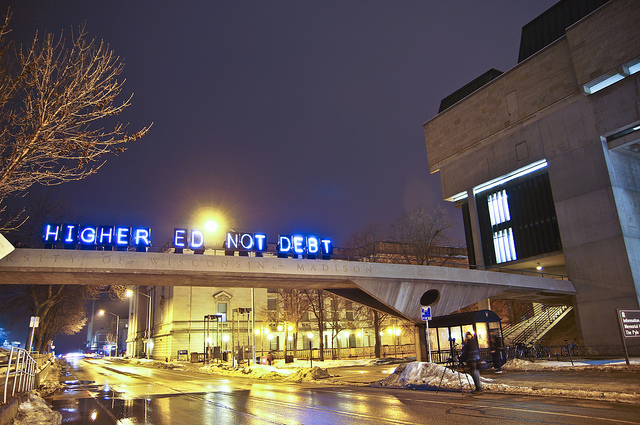
“Ask Brianna” is a column from NerdWallet for 20-somethings or anyone else starting out. I’m here to help you manage your money, find a job and pay off student loans. (File Photo: Joe Brusky/Flickr, CC BY-NC 2.0)
“Ask Brianna” is a column from NerdWallet for 20-somethings or anyone else starting out. I’m here to help you manage your money, find a job and pay off student loans — all the real-world stuff no one taught us how to do in college. Send your questions about postgrad life to askbrianna?nerdwallet.com.
Forbearance is a way to stop making student loan payments temporarily. It is not a long-term affordability strategy, or a way to put off repayment indefinitely.
And that means very few people should use it — probably far fewer than are doing so right now.
In the second quarter of this year, 2.8 million federal student loan borrowers had loans in forbearance, according to the U.S. Department of Education. Almost 70 per cent of borrowers who started repaying loans in 2013 used forbearance at some point in the next three years, according to the U.S. Government Accountability Office; a fifth had loans in forbearance for 18 months or longer.
Many students didn’t truly grasp what they signed up for when they scrambled to afford an education they were told they needed to succeed. Forbearance is the quick fix they turn to when the bill overwhelms them.
But if forbearance isn’t a good idea, what are borrowers in trouble supposed to do? Follow these guidelines:
— Use income-driven repayment to make your loan payments more affordable over the long term.
— Choose forbearance only for short, one-off financial crises, like when you have a big auto repair or medical bill to pay.
Here’s why.
WHAT FORBEARANCE IS
Forbearance allows you to pause payments, generally for up to 12 months at a time for federal loans.
There are different types, but discretionary forbearance is the one that can creep up on you. It’s available to anyone with financial difficulties, and there’s no limit to how long you can get it for. Interest will keep adding up, meaning at the end of the forbearance period, you’ll owe more than you did before.
For instance, after putting $30,000 in loans on hold for 12 months at 6 per cent interest, you’d owe about $31,800.
Think of forbearance as a last resort. It’s too easy to renew it and let your balance grow, while also spending each month without factoring in a student loan payment.
“Because forbearance can be applied for virtually any reason, you want to keep that for a potential emergency down the road, where you may not qualify for anything else,” says Betsy Mayotte, president of The Institute of Student Loan Advisors, a non-profit that offers free student loan advice.
WHAT FORBEARANCE ISN’T
Forbearance is not the same as deferment, another way to stop making student loan payments.
Deferment is a better option, since you won’t pay interest on subsidized student loans when they’re in deferment. You’ll qualify for deferment in certain circumstances — when you’re unemployed, for instance — so ask your student loan servicer if that’s an option before going with forbearance.
Forbearance isn’t as easy to avoid when you have private loans. Private lenders generally offer few ways to lower payments unless you’ve already fallen behind, Mayotte says. But it’s worth asking for interest-only or interest-free payments as an alternative.
SMARTER WAYS TO GET RELIEF
Most people with student loans have federal loans, which means they’re eligible for income-driven repayment. These plans lower payments to a percentage of income; you can pay $0 if you have no earnings.
To qualify, some plans require you to show you can’t afford the standard 10-year schedule, but one plan — called Revised Pay As You Earn — is available to all federal borrowers. Sign up for free at www.studentloans.gov.
Depending on the plan and the type of loans you have, the government may pay part of the interest that accrues if your payments don’t cover it. Your loans will also be forgiven if there’s any balance after 20 or 25 years of payments.
Income-driven repayment will help get you through a crisis, but staying on it for decades will mean owing more in interest. Under current rules you’ll also be taxed on the balance forgiven.
Use income-driven repayment strategically by staying on it once you’ve found steadier financial footing. You can pay extra each month without penalty to get rid of your loans faster, and a lower payment is there as a safety net if you need it.
This is your chance to take back control of your loans, and to keep them from dictating the life you can afford.




















