
Lifestyle
Rose of Sharon: not a real rose, but worth growing

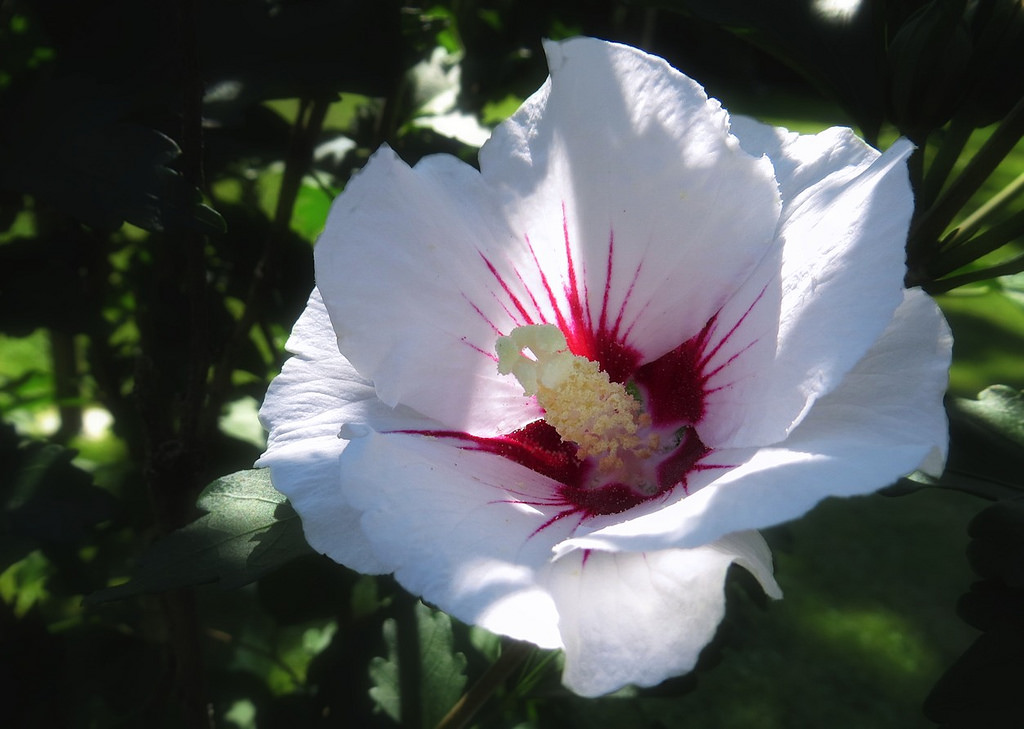
Rose of Sharon blossoms on new growth, so the time to prune it is in late winter, before new growth begins. (File Photo: Chris Sorge/Flickr, CC BY-SA 2.0)
An unsung hero of the late summer garden is rose of Sharon (Hibiscus syriacus). This shrub’s branches are studded with pastel blossoms year after year, despite drought, poor soil or general neglect. Cold winters or sweltering summers similarly leave it unfazed.
Despite its tolerance for frigid winters, rose of Sharon has always seemed to me a “Southern” shrub. Perhaps that’s because I was inundated with this plant during the two years I sojourned in the most southern county of a barely Southern state. More likely, I connect rose of Sharon with the South because of its family connections. Rose of Sharon is not a rose at all, or even distantly related to one. Rather, hibiscus, cotton and okra are its kin — all “Southern” plants, even though some species of hibiscus, like rose of Sharon, are perfectly at home in cold winter weather. They do like sun and hot summers, though.
FAMILY MATTERS
Rose of Sharon and its relatives are part of the Mallow Family. The most famous “mallow” plant is the wetland marsh mallow. Marshmallows were originally made from the candied roots of marsh mallows.
Only a glance at rose of Sharon’s blossoms reveals its kinship with other members of the family. From the centre of each flaring trumpet of petals protrudes a tubular column of male and female flower parts, the male parts bristling out along the column and the female parts splayed out at the far end. Those petals might be purple, red, pink, white — on some plants even blue. And those trumpets, on some varieties of rose of Sharon, are made up of more than a single row of petals.
You surely are familiar with the plant I’m talking about, but if not, let me clinch recognition with additional description. Rose of Sharon is an upright shrub, perhaps 8 to 10 feet tall. It’s not a delicate shrub, fine with twigs, but one with branches that are relatively thick and few. The shrub rarely sends up new shoots (“suckers”) at or near ground level, so it tends to become like a small, low-branching tree having a single or just a few main stems that live for a long time.
BEAUTY WITH LITTLE TROUBLE
This growth habit tells you something about rose of Sharon’s pruning needs. They are, in a word, few. Like PeeGee hydrangeas and climbing roses, all that rose of Sharon needs is very occasionally to have a decrepit stem cut back low in the plant. If flowering seems too sparse, shortening some stems in the upper part of the shrub will provide the necessary invigoration.
Rose of Sharon blossoms on new growth, so the time to prune it is in late winter, before new growth begins.
The plant’s glory goes on for an extended period, but only once a year. If you plan on planting it, don’t expect to pay any attention to it in autumn, winter, spring or early summer, during which the plant is drab but, thankfully, inconspicuously so.
Wait! Before you dismiss rose of Sharon for its single season of glory, think of forsythia and lilac, both popular and both also at their best in a single season, a short one at that.
No female of passing beauty gave rose of Sharon its name. Rose of Sharon was named for a place: a fertile plain along the Mediterranean coast in western Israel. The plant growing there, the “rose of Sharon” mentioned in the Bible, was probably a wild tulip. Our rose of Sharon’s native home is in India and China, but it was originally thought to originate at the Middle Eastern location.