
Health
Helping nature: Inducing labour avoids cesarean for some moms

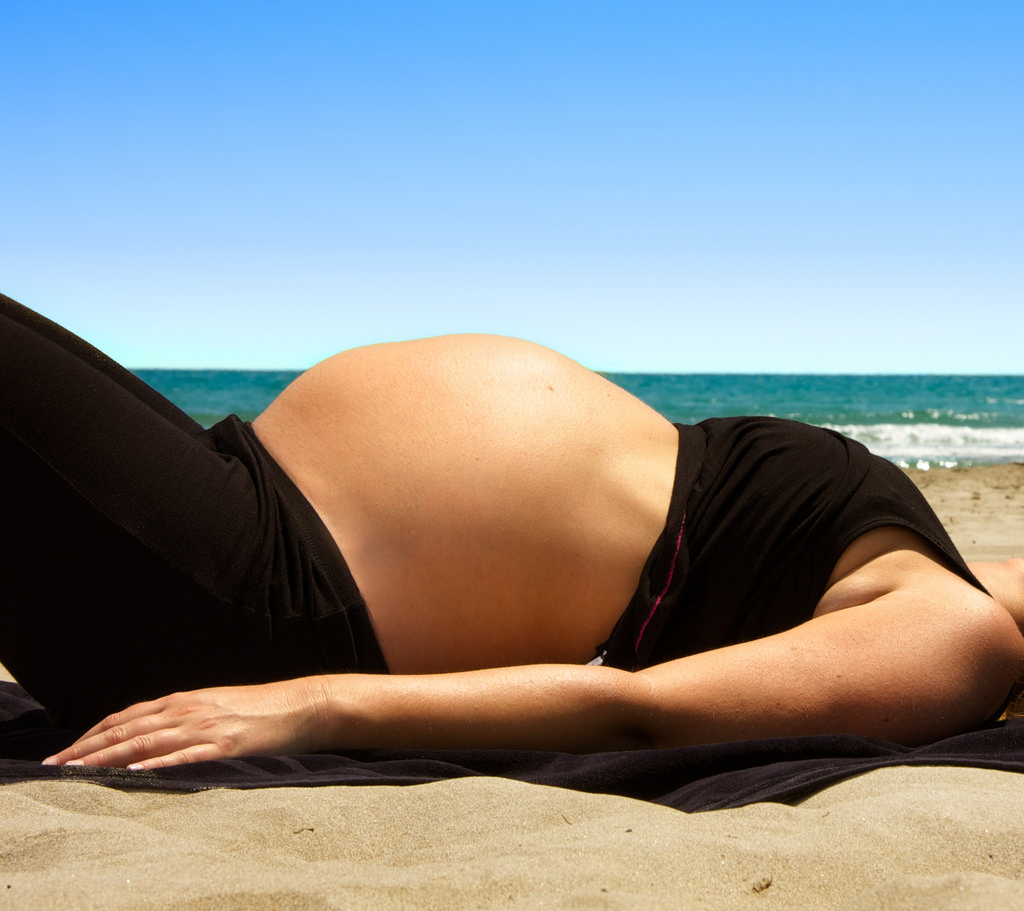
“Many women don’t want all of the medical care that goes with induction” (File Photo: N G/Flickr, CC BY-ND 2.0)
Move over, Mother Nature. First-time moms at low risk of complications were less likely to need a cesarean delivery if labour was induced at 39 weeks instead of waiting for it to start on its own, a big study found. Their babies fared better, too.
The results overturn the longtime view that inducing labour raises the risk for a C-section, and prompted two leading OB-GYN doctor groups to say it’s now reasonable to offer women like those in the study that option.
But only certain pregnant women qualify, and the study did not track how inducing labour affected breastfeeding or other mom-baby issues later. Some groups such as Lamaze International still advocate letting nature take its course rather than giving medicines to make the womb start contracting.
“Many women don’t want all of the medical care that goes with induction” such as an IV and fetal monitoring, said Lisa Kane Low, past president of the American College of Nurse-Midwives and associate dean of the University of Michigan School of Nursing. “It can result in a very different type of experience.”
Being induced doesn’t mean moms can’t have “natural childbirth” — they can forgo pain medicine or use a hospital’s homelike birthing centre rather than delivering in “an operating room in a sterile suite with a big light over your head,” said the study leader, Dr. William Grobman, an OB-GYN specialist at Northwestern University in Chicago.
“Everyone has a different definition of what a natural birth
is,” said Dr. Cynthia Gyamfi-Bannerman of New
York-Presbyterian/Columbia University Medical Center, which
participated in the study.
“Some women feel that natural just means delivering vaginally” and more were able to do that when labour was induced, she said.
Results of the federally funded study were published Wednesday by the New England Journal of Medicine.
ABOUT THE STUDY
About 40 per cent of U.S. women giving birth are first-time moms, and at least half are low risk — no problems requiring early delivery or a cesarean. Many women ask to be induced now, to let them plan delivery and ensure their doctor is available, but the risks and benefits are unclear.
Previous studies suggesting that inducing labour raises the risk for a C-section were observational and compared different types of women giving birth under different types of circumstances. This was the first very big experiment to time labour induction for 39 weeks — when a pregnancy is considered full term and complication rates are lowest.
More than 6,100 women at 41 hospitals were randomly placed in two groups: one had labour induced at 39 weeks; the other waited for labour to start on its own and were induced only if a problem developed or they hadn’t delivered by 42 weeks.
HOW MOMS AND BABIES FARED
Deaths and severe complications were fewer among babies of women who were induced — about 4 per cent versus 5 per cent in the other group — but the difference was so small it could have occurred by chance alone. Significantly fewer babies in the induced group needed breathing tubes or extra oxygen after birth, and they spent less time in the hospital.
Nineteen per cent of induced moms had a cesarean versus 22 per cent of the others. Doctors estimate that one C-section would be avoided for every 28 women induced.
Nine per cent of induced women developed dangerous high blood pressure at the end of pregnancy versus 14 per cent of the others. Study participants who were induced, such as Aleksa Owen, said they had less pain and felt more in control.
“I was pretty open to any kind of birth, whatever works to keep the baby safe and myself safe as well,” said Owen, a 34-year-old graduate student from the Chicago suburb of Woodridge, Illinois. Her son was born in October 2016 and “I felt like I had a sense of control throughout the process.”
THE COST
It’s not clear which option costs more; researchers plan to study that. Induced women spent more time in the labour and delivery unit but went home sooner after birth. Insurers often pay a fixed rate for births, complicating cost comparisons.
The labour and delivery suite is one of the most expensive places in a hospital, said Dr. Nanette Santoro, OB-GYN chief at the University of Colorado School of Medicine. If all eligible moms decided to be induced, “I do not believe we would have the resources to accommodate them,” but may have to adapt based on this study, she said.
WHAT OTHERS THINK
Christen Sadler, a certified nurse-midwife and president-elect of Lamaze International, said other research suggests that “letting labour start on its own is almost always best for moms and babies” unless there’s a problem that requires intervening.
Nan Strauss, policy chief for the advocacy group Every Mother Counts, agreed: “Inducing labour disrupts the complex hormonal processes that help labour progress, prepare the baby for birth, and promote successful breastfeeding and bonding.”
The American College of Obstetricians and Gynecologists and the Society for Maternal-Fetal Medicine says it’s reasonable for doctors to offer labour induction “after discussing the options thoroughly” with first-time moms at low risk who had an ultrasound early in pregnancy to verify when they will reach 39 weeks.
Dr. Michael Greene of Massachusetts General Hospital noted that women in the study were younger than U.S. mothers on average and fewer were over 35, calling into question how generalizable the results are.
Still, the study “should reassure women that elective induction of labour at 39 weeks is a reasonable choice” that’s unlikely to harm moms or babies, he wrote in a commentary in the journal.




















