
Canada News
Premiers announce agreement in principle on flow of alcohol across borders

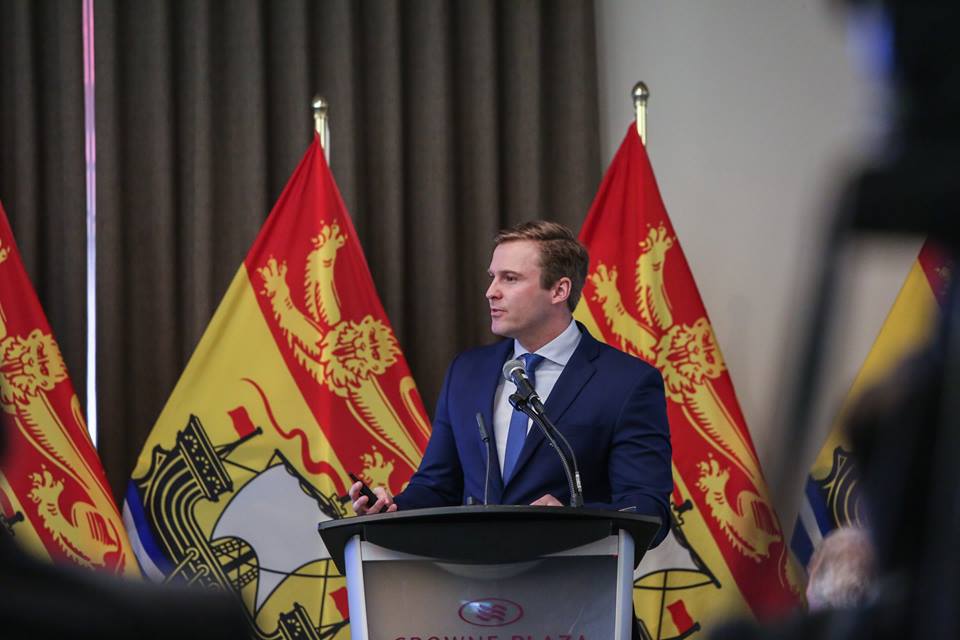
New Brunswick Premier Brian Gallant. (File photo: Brian Gallant/Facebook)
ANDREWS, N.B. — Canada’s premiers have agreed in principle to reduce barriers limiting the amount of alcohol that can move across provincial and territorial borders, but failed to produce clear timelines or details around personal limits.
New Brunswick Premier Brian Gallant said provinces are willing to increase import limits, although some want to consult with the public to determine how it will be done.
“Make no mistake about it, there is an acknowledgment that we have to look at this issue,” he said at the close of two days of meetings in the seaside community of St. Andrews, N.B. “There’s an acknowledgment that there should be pushes to have significant increases to import limits.”
Gallant hinted that a full deal was close, but that some provinces were reluctant. He wouldn’t name those provinces.
In many cases, he said any potential move on alcohol would also involve changing existing legislation.
“We have all committed to take action over the next weeks and months,” Gallant said at the closing news conference. “That’s where we landed on the consensus.”
A statement released by the premiers said that some jurisdictions may eliminate limits entirely, as is now the case in Manitoba and Alberta.
For its part, Gallant said New Brunswick remained committed to doubling its limit on the amount of beer and alcohol that can be taken across its borders.
He also said the premiers agreed to take “immediate and meaningful action” to bring down barriers regarding First Aid course content and restrictions on the use of wide base single tires and size and weight restrictions in the trucking industry.
They will also work on the licensing of abattoirs and on business registration requirements.
Manitoba’s Brian Pallister said the agreement as it stands is important in the face of measures by U.S. President Donald Trump when it comes to cross-border trade.
“These premiers took positive steps in the last couple of days,” Pallister said. “We are a trading nation and we have to demonstrate that we understand the benefits to the Canadian family of trading more effectively within our own boundaries if we wish to make the case to others that they should pull the wall down between us and them.”
The premiers confirmed that they will meet this fall with Prime Minister Justin Trudeau to discuss interprovincial trade.
Meanwhile, eight premiers met for breakfast Friday to discuss universal pharmacare with former Ontario health minister Eric Hoskins, who chairs the Advisory Council on the Implementation of National Pharmacare.
Linda Silas, president of the Canadian Federation of Nurses Unions, was also in the meeting and said she is encouraged there is support from the provinces after they came out last year in favour of a national plan.
“They are all in support of reforming our system, they see it in their budgets,” said Silas. “They want to know who is going to pay for the transformation because there will be initial costs, and also how will the pie be divided after that.”
Hoskins, who quit his cabinet post in February to take on the federal appointment, said it’s still early days as the advisory council carries out consultations across the country.
He said consensus will have to be built, but he expressed optimism that something can be done, pointing out that estimates suggest 10 per cent of Canadians are unable to afford their drugs.
“We are not yet at the stage where we’ve established what the best cost-sharing mechanism might be, let alone the model itself,” he cautioned.
Hoskins said there are more than 100 different public plans across the country and in excess of 500,000 private plans.
“We pay between 30 and 40 per cent higher than the other similar industrialized countries pay for their medications,” he said. “Part of the reason is that we have such a diverse number of purchasers.”
The parliamentary budget office pegs the total cost of pharmacare at about $20 billion and says about $4 billion in cost savings can be realized with a national plan.
“The parliamentary budget office has indicated that we could spend considerably less if we were to make certain changes and find efficiencies for example in bulk purchasing and other areas,” said Hoskins.
In their final communique, the premiers emphasized that a successful pharmacare program would require “adequate and sustained federal funding” and that the participation of the provinces “must be voluntary.”
“Any jurisdiction that wishes to maintain full control over drug insurance should have the right to opt out unconditionally, with full compensation should the federal government participate financially in the establishment of a pharmacare plan,” said the communique. “Quebec has already indicated its intention to follow that path and all provinces and territories reserve the right to do the same.”
The meetings focused mainly on trade issues, although the talks were publicly upstaged by Ontario Premier Doug Ford and Saskatchewan Premier Scott Moe who announced that Ontario will intervene in Saskatchewan’s court challenge of Ottawa’s carbon tax plan.
On Friday, Ford was asked whether he found any other allies and he downplayed the issue.
“It’s their choice, right?” said Ford. “Premier Moe and myself, we’re deciding to take a different avenue when it comes to the carbon tax.”
Ford also joined Quebec Premier Philippe Couillard and Manitoba Premier Brian Pallister on Thursday in calling for more help from the federal government in dealing with asylum seekers who cross their borders.
All three premiers want Ottawa to review its current policy, and they also called for full compensation for the “impacts to services resulting from the increase in non-point of entry border crossings.”
All premiers also called on Ottawa to do more to help with the roll out of legalized cannabis, which is slated for October, and they urged the federal government to work with Greyhound to extend its notice period to communities affected by its elimination of passenger bus routes in Western Canada.




















