
Lifestyle
Pediatricians recommend IUDs as first choice for birth control in teen girls

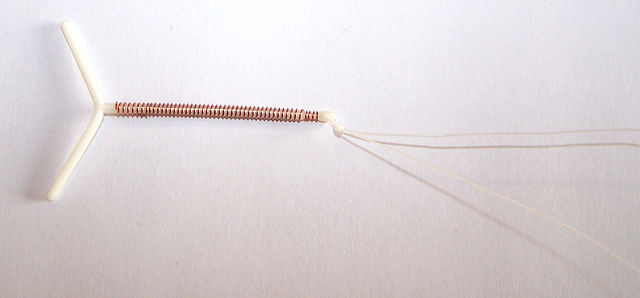
Teen girls who are considering contraception should look to intrauterine devices as their first-line choice, as they provide the greatest protection against an unplanned pregnancy, the Canadian Paediatric Society recommends. (Photo By:Wikimedia Commons, CC BY-SA 2.0)
TORONTO -Teen girls who are considering contraception should look to intrauterine devices as their first-line choice, as they provide the greatest protection against an unplanned pregnancy, the Canadian Paediatric Society recommends.
The position statement, the CPS’s first on the issue, was set to be released Thursday during the organization’s annual meeting in Quebec City.
Known as IUDs or IUSs, the small and often T-shaped devices are placed inside the uterus and are more than 99 per cent effective in preventing pregnancy, compared to 91 per cent for birth-control pills and 82 per cent for condoms, the CPS says.
IUDs, or intrauterine devices, typically incorporate copper in their design, which is toxic to sperm; IUSs, or intrauterine systems, release a small amount of hormones over time. Both act continuously over the course of several years, but can be removed at any time by a health-care provider.
“Intrauterine contraception and the long-acting reversible contraceptives in general … those should be your first line because they’re the most effective,” said Dr. Giosi Di Meglio, a co-author of the paper and an adolescent medicine specialist at the Montreal Children’s Hospital.
That doesn’t mean that young women shouldn’t choose the pill or other forms of birth control like a skin patch or injectable contraceptive, she said in an interview from Quebec.
“What we’re saying is this should be an option and this should be something that we think about that leads our list of options.”
Di Meglio said that depending on the particular type, copper-based IUDs may not need to be replaced for five to 10 years, while the protective lifespan of IUSs ranges from three to five years, depending on the make.
The devices do carry a small risk of tissue perforation during insertion through the vagina, and doctors also monitor patients for possible bacterial infection for a few weeks after the device is implanted. But Di Meglio said such an occurrence is rare and can be treated with antibiotics.
Studies suggest that intrauterine devices are not a direct conduit for infection, and there is a theoretical possibility that IUSs may actually decrease the risk of infection, she said.
Still, the idea of having a device inserted may cause anxiety for some teen girls, and Di Meglio concedes the procedure can initially be somewhat uncomfortable.
“You get a few pretty intense cramps, but nothing more than you would have with a really bad period,” she said. “It subsides pretty quickly and then for the next few days, you might have a few cramps on and off.”
Di Meglio said a girl can get an IUD or IUS any time after getting their first period and ideally prior to becoming sexually active. By age 17, about half of Canadian youth are having sex, the CPS says.
“We’re not recommending that this be used the minute the kid has their first period, but there are certain benefits in using the hormonal IUS -one of them being that it can reduce the amount of bleeding or also reduce cramping a lot,” she said.
“We have even used it for that reason instead of for contraception in kids who have not even had sex.”
Andrew Townsend of Planned Parenthood Toronto welcomed the CPS recommendation, saying the clinic gets a lot of questions from young people who “still view the pill as the first kind of birth control that they should start on or that they have to start on.
“Something like IUDs being a recommended option is great because different people have different needs,” he said, adding that a growing number of clients being seen in the clinic are opting for the implanted devices. The program provides information and health-care services to those aged 13 to 29.
While intrauterine contraception may be the most effective means of preventing unplanned pregnancy, the up-front costs of the devices are high compared with the pill and other methods, said Di Meglio.
One hormone-releasing IUS that lasts five year costs the Quebec government’s prescription plan about $325, while copper-based IUDs run from about $60 to $100, she said. For those not covered under private insurance, the provincial plan covers 65 per cent of the cost of birth control pills and IUDs.
Coverage by public insurance plans varies across the country. In Ontario, for instance, long-acting reversible contraceptives are fully covered for women under age 25, along with the physician’s fee for implanting one of the devices.
Di Meglio said that over time, IUDs and IUSs are actually more cost-effective than most other birth-control methods because of how long they last before needing to be replaced.
The CPS statement also recommends that practitioners adopt a collaborative approach that empowers youth to make informed decisions about their birth control options, weighing the benefits, risks, side-effects and suitability of each method based on individual preference.
“At the end of the day, we just want to facilitate whatever contraceptive they choose,” Di Meglio said.




















