
Lifestyle
Transparent patch designed to detect pathogens like E. coli in packaged foods

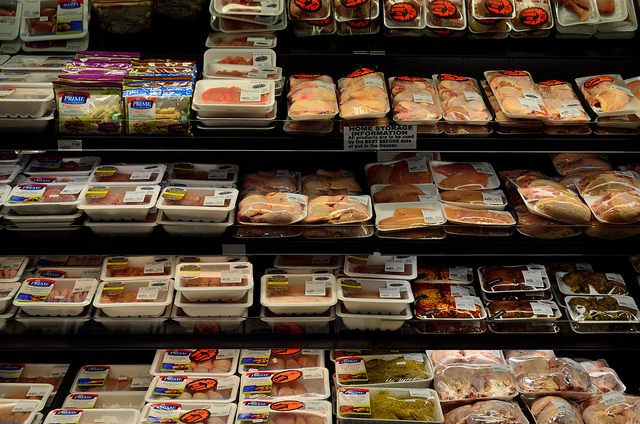
Researchers at McMaster University have developed a transparent test patch for food packaging that detects the presence of potentially deadly bacteria like E. coli, with the aim of telling consumers and the grocery industry whether a product is safe to eat. (Photo by Open Grid Scheduler / Grid Engine/Flickr, Public Domain)
TORONTO — Researchers at McMaster University have developed a transparent test patch for food packaging that detects the presence of potentially deadly bacteria like E. coli, with the aim of telling consumers and the grocery industry whether a product is safe to eat.
Dubbed “Sentinel Wrap,” the patch triggers a molecular signal that a disease-causing agent has contaminated products like meat, bottled water or milk.
“Right now, if you want to know if there’s any contamination in a food sample, you need to bring it into a lab … and it takes at least a day or two to find out if there’s any pathogen present in that food sample,” said mechanical-biomedical engineer Tohid Didar, one of the product’s developers.
“Our goal was to be able to find this at the site, either at home when you want to start using it or on the shelf when you’re buying it or for the supermarket manager who is handling this or even the person who transports it,” he said from Hamilton.
The patch is dotted with tiny drops containing DNA molecules, created on an ink-jet printer, that target a specific bacteria — in this case Escherichia coli, which can cause severe illness and even death. In May 2000, a virulent strain of the pathogen sickened 2,500 people and killed seven in Walkerton, Ont., after the town’s water supply became contaminated.
E. coli mostly lives in the intestines of cattle, but the bacteria have also been found in chickens, deer, sheep and pigs. The animals’ feces containing the bug can find its way into groundwater.
Didar said the patch could be incorporated into food packaging material, so that it comes into contact with the product. If a pathogen is present, the drops would “light up” — a response that could be read by a smart phone camera with a specialized filter or a simple hand-held device that picks up fluorescence.
“So as soon as the bacteria is present, the bacteria itself or what the bacteria secretes triggers these sensors and they start shining up,” said Didar. “And just the same way you can scan a bar code, you can scan a sample and see if there’s E. coli present in the food sample or not.”
The test patch does not affect the contents of the package, he added.
Graduate student Hanie Yousefi, lead author of the study, said the device has the potential to replace the traditional “best-before” date on food and drinks by showing if a pot roast, for instance, should be ditched or a carton of milk poured down the drain.
“In the future, if you go to a store and you want to be sure the meat you’re buying is safe at any point before you use it, you’ll have a much more reliable way than the expiration date,” she said.
So far, the new technology has been developed to detect only E. coli. In a proof-of-concept study, published Friday in the journal ACS Nano, the research team tested the patch in meat, chicken, water, milk, sliced apple and apple juice exposed to the bacteria.
Those tests showed the device detected the targeted bug, but did not create false-positive results when it came in contact with harmless bacteria present in the foods and beverages.
Statistics from the World Health Organization show food-borne pathogens represent a major threat worldwide, causing about 600 million illnesses and 420,000 deaths each year. About 30 per cent of those cases involve children aged five and younger.
Didar said Sentinel Wrap could also be designed to pick up other disease-causing food-borne bacteria like salmonella and listeria.
Mass-producing such a patch would be fairly cheap and simple, say the researchers, who are in the process of discussing their product with the grocery industry.
“A food manufacturer could easily incorporate this into its production process,” said Didar, noting that when an outbreak of a food-borne illness occurs, the patch could help industry and food-safety regulators more easily trace the source of contamination.
However, getting the invention to market requires a commercial partner and regulatory approvals, he said, and more research is needed to expand its capacity: the longer-term goal is to design a multiplex patch that can detect a number of pathogens at the same time.
Beyond the food sector, the McMaster team envisions other potential uses for Sentinel Wrap.
“This is actually very exciting for us to imagine other applications,” said Didar. “For example, if you have an injury on the skin, you want to put a dressing on it. The wound dressing you use could also have these molecules to detect the presence of certain infectious bacteria on the skin.
“Or in the hospital on surfaces,” he said, referring to such disease-causing bacteria as Clostridium difficile and the superbug MRSA, or methicillin-resistant Staphylococcus aureus. “Because we have a very serious problem with infections in the hospital, especially on surfaces.”




















